


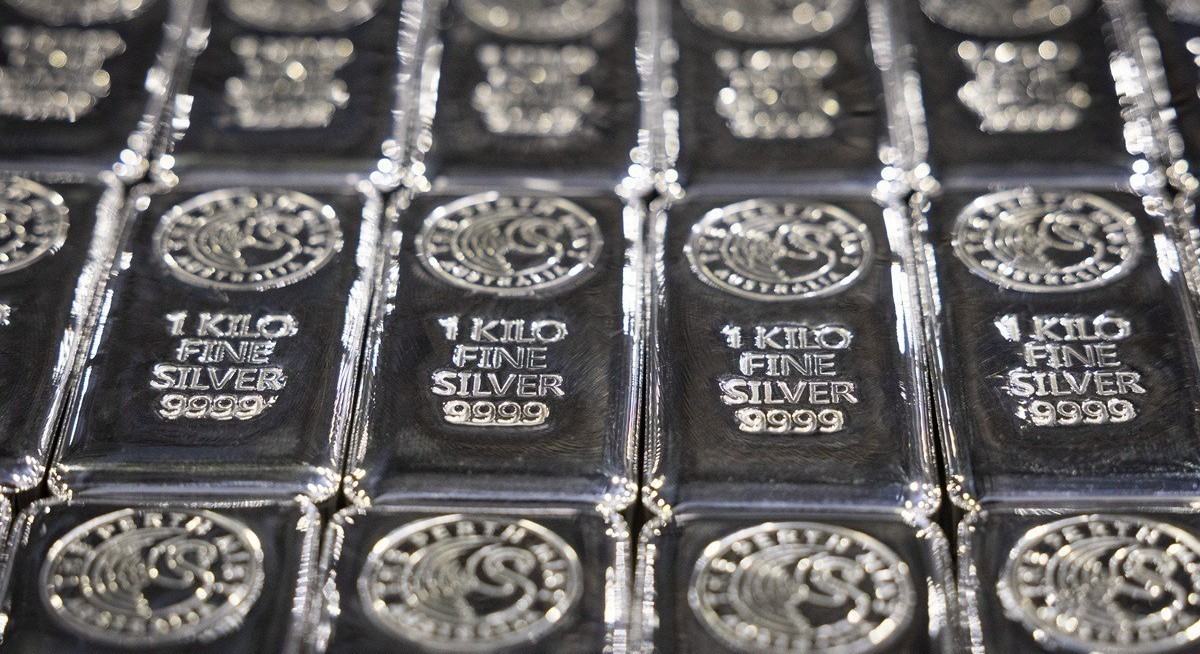


On Dec 29, spot silver spiked to an all-time high of US$84.01 an ounce before pulling back, underscoring the metal’s reputation for sharp swings. Gold also remains near records after a strong year.
Neil Wilson, UK investor strategist at Saxo Markets, says the latest leg higher appears tied to year-end positioning as well as the same big drivers that have carried precious metals through 2025. “Gold and silver hit fresh record highs as they seemed to benefit from some end-of-year hedging by investors,” he says. “The structural tailwinds that have driven both of these to record highs this year persist, be it central bank demand for gold or surging industrial demand for silver.”
Wilson adds that softer US inflation and employment readings have reinforced expectations for policy easing. “Geopolitics remains a factor, too,” he says, pointing to a risk backdrop that continues to support safe-haven allocations.
Thin market, big moves
See also: Waking up from a ‘pleasant fiction’ to invest in an era of scarcity
Silver’s rise has been notable not just for its scale, but for how quickly it has unfolded. Stephen Innes, managing partner at SPI Asset Management, frames the rally as a mix of scarcity and crowded positioning that can overwhelm traditional valuation anchors in a market with less depth than gold.
“Silver does not move like a gentleman,” Innes says. “It does not advance further in orderly channels or adhere to polite valuation frameworks.”
He argues that the price action itself is signalling strain. “An eighteen percent weekly gain is not enthusiasm; it is stress,” he says, describing the move as “positioning colliding with scarcity”.
See also: Scarce investments
Innes also links the rally to industrial reality, where demand for conductivity runs through energy transition and data infrastructure themes. “Solar panels, electric vehicles, advanced electronics, and power grids all function without silver’s conductivity,” he says, adding that when supply tightens, downstream users can feel it quickly.
While the metal’s industrial role has long been recognised, investor focus has sharpened as markets increasingly treat silver as both a growth-linked input and a macro hedge. Innes describes a change in tone that he sees first in hard assets. “Precious metals are starting to trade with a hyperinflationary feel,” he says. “Not the textbook kind taught in economics courses, but the lived version where people stop asking what something should be worth and start asking whether it will be available tomorrow.”
Fed policy and the momentum question
Some strategists caution that silver’s outperformance versus gold has moved beyond what fundamentals alone would justify in the short term.
Carsten Menke, head of Next Generation Research at Julius Baer, points to the way monetary policy headlines have fed price action. He notes that after an initially negative reaction to a US Federal Reserve rate cut, gold and silver rallied after the Fed announced a bond-buying programme, which boosted sentiment across precious metals.
Menke says the response echoed the market psychology associated with past quantitative easing programmes, when investors worried about currency debasement and inflation. However, he argues that narrative does not necessarily match the evidence. He says historical evidence suggests no inflationary impact from such programmes, and he expects more US dollar weakness for cyclical and structural reasons rather than “active debasement by policymakers”.
Menke also highlights how far silver has run relative to gold since the rally resumed in early November. Silver’s outperformance has widened to more than 20 percentage points, he says, which he views as hard to justify on fundamentals given the similarities in the backdrop for both metals.
For more stories about where money flows, click here for Capital Section
“Rather than fundamentals, we believe that such a stark outperformance is not fully justified,” Menke says, adding that it reflects “the strong momentum of speculative traders and trend followers in the silver market”. He maintains a cautious stance. “While short-term risks are skewed to the upside because of the momentum in the market, we reiterate our view that prices have moved too far too fast and we therefore remain Neutral,” he says.
A longer-cycle shift
Even with questions over stretched positioning, longer-term projections from GlobalData remain constructive, especially for silver, where industrial demand is central to the thesis.
Ramnivas Mundada, director of economic research and companies at GlobalData, argues the 2025 move is more than a routine safe-haven swing. “The 2025 rally in precious metals marks the beginning of a deep, structural shift in the international monetary system, from a US-centric framework toward a more multipolar order,” he says.
Mundada says the move reflects a “strategic response” to multiple pressures, including geopolitical instability, a slowing US economy, trade frictions and “the accelerating trend toward de-dollarization”. In that context, silver’s appeal is not only as a hedge, but also as an input into parts of the economy still expanding even as growth moderates.
GlobalData expects the uptrend to continue through 2026, though with volatility. It forecasts gains of around 8% to 15% for gold and 20% to 35% for silver by end-2026, and sees scope for silver to test US$85 to US$100 an ounce as deficits deepen in areas tied to solar panels and EVs. Mundada also flags the risk of sharp pullbacks as sentiment swings, and notes the potential for higher input costs to ripple through the technology supply chain.




