


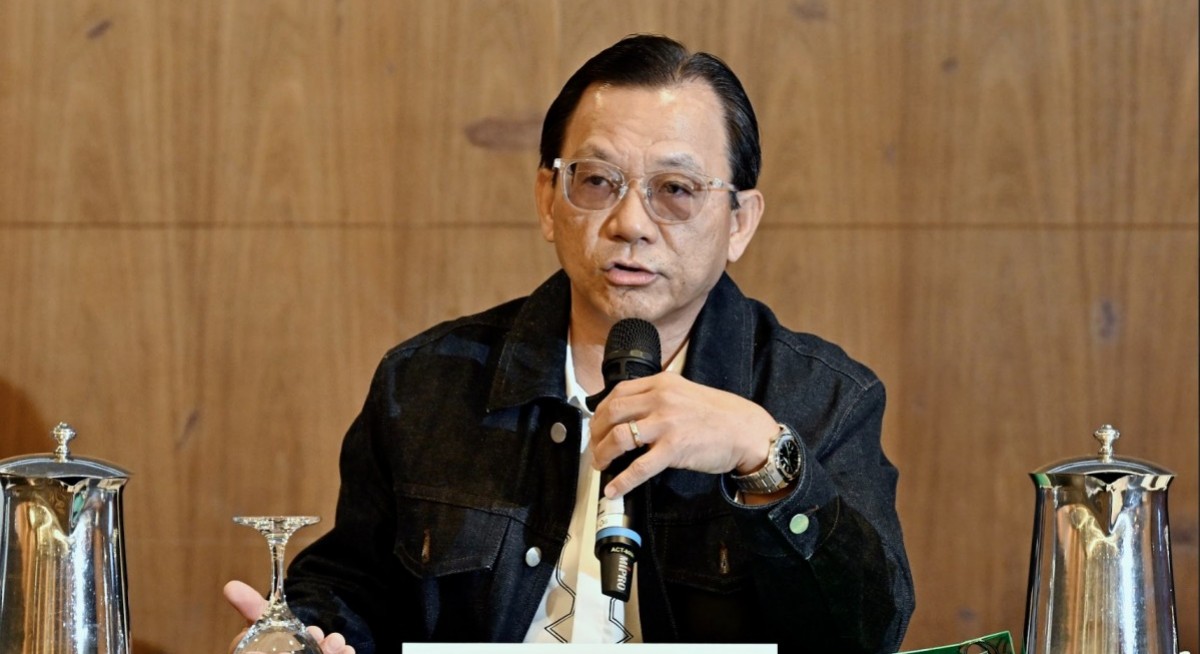


At the briefing, Chong described the drama in the 20 days to Dec 11. Hongkong Land had plans to divest its one-third stake in Marina Bay Financial Towers (MBFC) 1, 2 and 3, One Raffles Quay (ORQ) and its 100% stake in One Raffles Link. Keppel REIT and Suntec REIT each own a one-third stake in One Raffles Quay and MBFC Towers 1 and 2. Before Dec 11, Keppel REIT held a one-third stake in MBFC Tower 3, Hongkong Land held a one-third stake, and DBS held the remaining one-third. DBS is also the anchor tenant of MBFC Tower 3.
Chong says: “We only had 20 days to respond, not 20 working days, 20 days including weekends to respond. Hongkong Land wanted to set up a fund for its assets. As part of the joint venture agreement, they have to offer it to the remaining JV partners. So they offered us one-sixth and Keppel REIT one-sixth in MBFC Towers 1 and 2, and ORQ. When we did our analysis, we analysed both one-sixth and one-third because whichever party doesn’t take up the one-sixth, it will be offered to the other JV (joint venture) partner.”
He adds: “We could not just assume Keppel REIT will take up the one-sixth stake. When we analysed the one-sixth stake, we estimated that our balance sheet can bear the higher aggregate leverage, bringing it to around 45%. We would subsequently reduce leverage.”
As it turned out, Suntec REIT did not accept the one-sixth stake in ORQ and MBFC Towers 1 and 2. Keppel REIT accepted the right of first refusal for MBFC Tower 3.
“We are looking at speeding up divestment of assets, rather than equity fundraising. That was in the plan,” says Chong. If Suntec REIT acquired the entire one-third stake, its aggregate leverage would have risen to 50%. At that level, the risk would have been entirely different as he tells it.
The banks were supportive, Chong says, as the assets are well known. Both location and assets are prime Grade A. The tenants are well known too. Standard Chartered and HSBC anchor MBFC 1 and 2.
“The challenge, of course, is that good assets never come cheap. They were fully priced. So the buyer has to take a view on future rental growth and future capital value increase over time. We would be buying for the next cycle. We also looked at accretion,” adds Chong.
Based on pro forma numbers, Keppel REIT’s acquisition of a one-third stake in MBFC Tower 3 would have been 6.4% dilutive to distributions per unit (DPU), based on a blended interest cost of debt of 3.3% a year, and the dilution would be 3.6% if the blended interest cost is 2.2%. Keppel REIT’s DPU for FY2025 was 5.23 cents, down 6.6% y-o-y.
To fund the acquisition, Keppel REIT raised $886.3 million through a preferential equity offering of 23 new units for every 100 existing units held, at 96 cents per unit. Although the equity fundraising fell short of the 100% subscription target, it was underwritten by the three local banks.
Divesting Australian assets remains a work-in-progress. According to Chong, most of its assets Down Under are “pretty mature” given that occupancies at 177 Pacific Highway, Sydney (100%), 477 Collins Street, Melbourne (100%) and 21 Harris Street, Sydney (97.8%) are well above the CBD average in those cities.
“Obviously, one aspect is to have high occupancy before investors are keen to look at the asset, especially for the Australian market, because the buyer wants the incentives to be borne by the vendor. Therefore, buyers always want fully leased buildings unless they want to tear them down. We have three buildings that are 100% occupied,” says Chong.
According to Suntec REIT’s presentation on Jan 23, tenant incentives in Adelaide and Melbourne are at 45% to 50%. This means that the landlord is providing concessions equivalent to nearly half the total rent over the lease term to secure a tenant. This high percentage is usually offered in high-vacancy markets via rent-free periods or cash for fit-outs.
It appears that Melbourne’s CBD retail and office sector is weak because the return to office has been slow. “Though we see green shoots, it will take at least two years for Southgate to fill up nicely. Other than Adelaide (55 Currie Street’s occupancy is 66%), the other four assets are ones that we can look at,” adds Chong, referring to thoughts on divestment.
Outlook for office
To stay ahead of Singapore and the region’s corporate and economic trends, click here for Latest Section
CBRE says Australia’s economy is forecast to grow 2% in 2026, supported by immigration, the infrastructure and care sectors, and with interest rates likely to remain on hold. Investment volumes are forecast to grow 5%–10% in 2026, led by office and industrial sectors, with cap rates tightening 25 to 40 basis points through 2028.
“Total returns for CBD office assets are forecast to exceed historical averages over the next three years, led by Brisbane and Canberra, supported by improving net effective rents and modest cap rate tightening. New CBD office supply will be sharply constrained — three of the next five years will see no new Sydney completions, and most other cities will have four years with no new supply. This scarcity will drive rental growth,” CBRE says.
CBRE forecasts +3.3% net effective rent growth in 2026, with Brisbane (+7.3%) and Sydney (+6.6%) leading the pack. Melbourne’s recovery is expected to begin in 2027 as incentives decline from their current peaks.
Chong says the Australian market is starting to be “open to more transactions”. North Asian capital and pension funds are looking at Australian investment property. “The kicker will be when Australian interest rates come down, then the capital market transaction will pick up,” he adds.
New sponsor
In the meantime, Suntec REIT’s manager is in the process of being acquired by Acrophyte Asset Management, which, subject to regulatory approval, will be Suntec REIT’s new sponsor. “We are in transition to a new sponsor. We need to sit down and talk through the bigger picture. But as you know, the sponsor has an asset ready for acquisition,” says Chong.
JP Morgan notes that the transition to the new sponsor remains subject to MAS approval, which could be granted within the next one to two weeks. Under the new sponsor, management could consider pipeline assets such as 9 Penang Road, which may be accretive if fully debt-funded, although this would push gearing above 45%, JP Morgan notes. It adds: “Management would not consider dilutive equity-raising to acquire assets. Non-complementary assets to the portfolio, such as US hotels, would also not be under consideration.”
On June 29, 2015, Suntec REIT announced the divestment of 9 Penang Road, then known as Park Mall, for $411.8 million. In conjunction with the divestment, Park Mall Investment Limited, a joint venture in which Suntec REIT held a 30% interest, was established to redevelop Park Mall into a commercial development comprising two office blocks with an ancillary retail component.
In 2021, Suntec REIT sold its 30% stake in Park Mall Investment to Haiyi Holdings, an entity controlled by Gordon Tang. Tang and his wife, Celine, also own Acrophyte Asset Management. Separately, the couple hold about 9.2% of OUE REIT and are reportedly friends with the Riadys.
In an update, Maybank Securities notes that FY2025 DPU surged 13.6% y-o-y to 7.035 cents, underpinned by savings in financing costs, a resilient Singapore portfolio and the retention of Managed Investment Trust status in Australia.
“Overseas performance remained a drag, though we saw progressive lease commencements in 4Q2025 in Australia. Lower financing expense (–12.8% y-o-y) and a $2 million reversal of Australian withholding tax provision further supported DPU growth,” says Maybank. It has a buy rating and a $1.56 target. Suntec REIT is up 23.7% in the past year. Its Jan 30 price of $1.46 translates into a DPU yield of 4.8%.




