


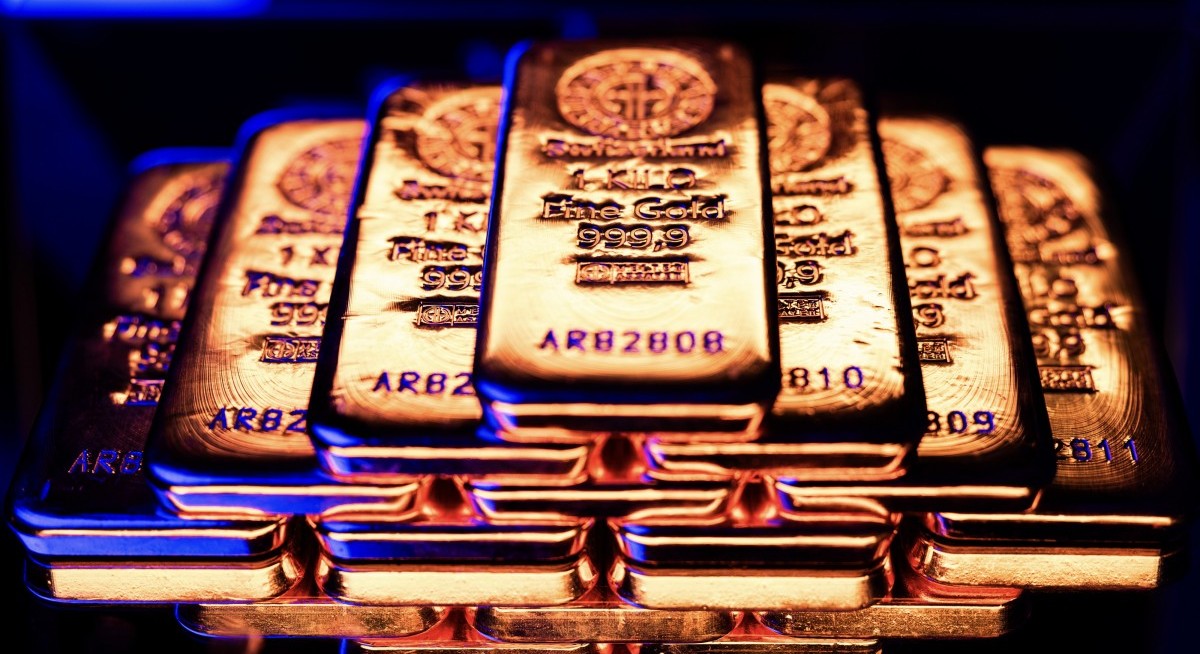


Understanding this context will likely explain the recent surge in gold prices. The spike in gold prices can be attributed to a combination of geopolitical risks and uncertainty, central bank purchases and gold stockpiling, a weaker US dollar, expectations of further interest rate cuts, and higher inflation forecasts. All these factors are collectively pushing gold prices to all-time highs.
Is now the right time to invest in gold?
The more information an investor has to analyse a financial instrument, the higher the chances of successfully profiting from it. Also, timing investments correctly can yield profits, but it is much harder to pull off consistently. The points discussed previously can be used to forecast gold prices. They are mostly macroeconomic factors that require a general understanding of the economy and must be viewed from an overall perspective, not individually, as there can be offsetting factors.
But before all of this is done, an exit strategy or plan must be put in place, because realised profits are only realised once the investment position has been liquidated. If an investor wishes to hold it over a longer term, then an exit strategy or plan is less important. Since gold is a non-income-generating commodity, profits depend solely on its price appreciation. There are no interest or dividends paid on gold investments, unlike stocks and bonds.
See also: Understanding price and value in the context of investing, Part 3
The general answer to whether it is the right time to invest in gold is: if an investor expects the current macroeconomic instability to continue, then yes, it is the right time to invest in gold — if not, other alternatives could result in higher profits or lower opportunity cost. There is no correct time to invest in anything, for that matter. The correct time to invest is always dependent on an investor’s risk profile and the time they have to study individual asset classes or financial instruments.
Another way to look at it is, there are plenty of investable financial instruments that are not necessarily gold to fulfil an investor’s financial or investment goals. A 10% per annum goal could be achieved by investing in gold right now, but so could investing in a basket of high-dividend stocks or corporate bonds that pay similar yields.
The surging price of gold and the fear of missing out
See also: Investing what-ifs: Conducting a scenario analysis
The question then is, isn’t more actually better? Why shouldn’t investors put money in an asset class that is expected to perform better and be a bigger winner? This is very much easier said than done; if not, a vast majority of individuals would be successful investors. Investors should understand that just because something is rising in value doesn’t mean it will continue to do so indefinitely.
The way to address the fear of missing out in the context of gold is to research the factors that affect its price thoroughly. If investors can ascertain this, the fear of missing out can be appropriately addressed.
Firstly, geopolitical uncertainty. The more chaos an investor expects in global politics, the more confident an investor should be to invest in gold. Investors should also bear in mind that these forecasts should include a time frame. For example, if they expect higher geopolitical tensions over the next six months, they should invest beforehand to capitalise on a potential surge in gold prices and exit within that period. This also applies to the status quo — if investors expect the current geopolitical uncertainty to persist over the next few months, they should aim to liquidate or lock in profits before this period ends.
Investors can also study individual countries and how their central banks or economies demand or supply gold. This would mainly involve the largest suppliers, consumers, and holders of gold, such as the United States, China, India, Russia, and Australia. This way, investors can forecast how the policies of major suppliers, holders and consumers of gold are expected to affect the price of gold. Higher demand, driven by larger gold reserves, would cause the price of gold to appreciate, for example. Conversely, a lower supply or a supply that is not sufficient to meet the demand would also cause the price of gold to appreciate.
A weaker expectation for the US dollar will cause the price of gold to appreciate, as the US dollar is the world’s top reserve currency, with more than half of global foreign exchange reserves denominated in it. This is mainly tied to the status of the US government and economy, so investors expecting more stability and trust in the nation should refrain from buying gold, since the strength of the US dollar and price of gold are inversely related.
Interest rate and inflation expectations also impact the price of gold. Lower interest rate expectations will increase the price of gold because alternatives pay lower interest, thereby lowering the opportunity cost of holding other financial instruments. Higher inflation expectations also raise gold’s price because it serves as a hedge against inflation or a decline in currency value. Therefore, investors expecting higher interest rates and lower inflation should not purchase gold.
If all these major factors point to gold’s price appreciation, then investors can and should confidently invest in gold, but they should plan a time frame and an exit strategy.
For more stories about where money flows, click here for Capital Section
Gold investing strategies
If an investor decides to invest in gold, it is essential to carefully plan a strategy that aligns with the investor’s profile. Some strategies may be more appropriate than others, and investors ought to understand that there is no one-size-fits-all strategy.
The first is for investors who prefer to invest in asset classes rather than individual financial instruments within them. Examples include investors who invest in indexes such as the Singapore Straits Times Index, the S&P 500 Index or the Nasdaq Composite Index. These are investors who invest in a broad range of assets, where individual monitoring of each instrument is not feasible. For these investors, buying gold futures or ETFs would be suitable because the trade-off between risk and return is at the asset-class level, with less monitoring required.
It can also be used to hedge against other asset classes such as stocks and bonds. However, it is essential to note the amount of allocation. If gold is purchased for hedging purposes, it should not be the central allocation in an investor’s portfolio and should be adjusted in line with expectations for economic conditions. The more uncertainty an investor expects, the higher the allocation towards gold and vice versa.
On the other end of the spectrum, investors who purchase a handful of financial instruments which they can feasibly monitor can also buy gold futures or ETFs. They can also purchase individual stocks whose primary business is gold. These include upstream gold miners all the way down to downstream gold retailers. The difference here is that these companies are not only exposed to gold prices, but also to idiosyncrasies that could make the investment more valuable. For these investors, if they want exposure to gold but do not want to be fully exposed to its price, purchasing stocks can be a more effective way to manage their portfolio. This is because the stocks of these individual companies have annual reports and financial statements that investors can study and analyse, providing additional information they can utilise to optimise their portfolio, whether for income or hedging purposes.
For shorter-term investors or traders, the fees for investing in gold should be considered. Depending on the frequency of trade, buying futures, ETFs, or stocks should be compared, as it can become material or substantial if done frequently.
Investing in gold, or anything for that matter, should be done if investors have an information advantage, which can be obtained through individual research. It is easier to invest in gold as a commodity, which is suitable for most investors. Still, investors keen on further research can gain exposure to gold by investing in gold-related businesses or stocks.
That said, gold and precious metal-related stocks will be examined in one of the upcoming articles of this series on investable commodities.




