


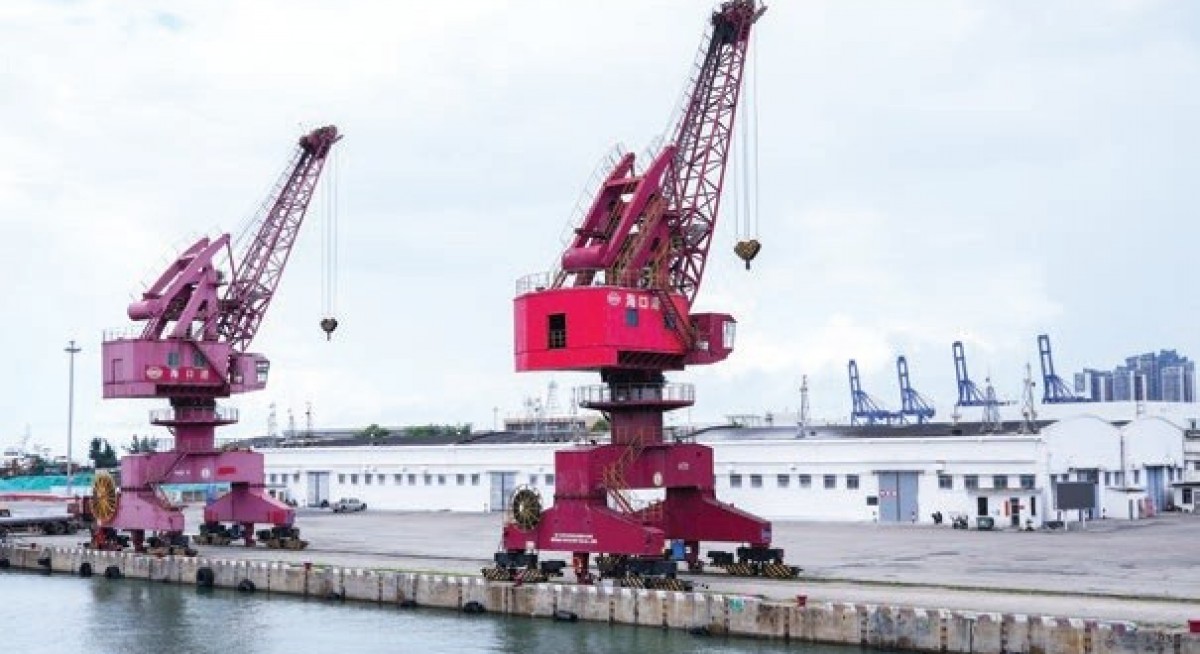


Hainan’s special customs operations include the key change around the way the zero tariff principle will be applied. If goods are not on the list of taxable imported goods then they will be tariff free. The Hainan FTP has the shortest negative list for foreign investment of any other entry port in China, so there are zero tariffs on most imports.
In terms of China’s institutional opening-up, it signifies that China is no longer relying on preferential policies to attract foreign investment. Instead, it is using self-driven institutional reforms to build a rules-based and high-standard business environment. The objective is to shift from flow-based openness to institutional openness and this reflects China’s ambition to move from a global factory to a global market.
The importance of the shortened negative list cannot be under-estimated when considering Hainan as a differentiated trade hub. The new list gives greater certainty to importers and also makes for a more efficient trade and logistics environment. The Hainan International Trade Single Window enables efficient investment in Hainan.
The Hainan FTP is also advancing measures of financial opening-up with cross-border financing and foreign exchange liberalisation. These policies provide a stable alternative to the trade settlement system based around the US dollar.
See also: China traders rush for exit after cross-border flow crackdown
These advanced financial measures speed up cross-border transactions and trade settlement. More importantly, these measures also reduce counter-party risk because block-chain settlements are virtually instantaneous. Currency risk is essentially eliminated. These financial measures are core strengths which connect China’s economy with Asean and the world stage.
The special customs operations reshape Hainan’s attractiveness as a destination for international capital as they make it easier and more efficient to undertake business operations in Hainan by facilitating the free flow of talent between Hainan and the global market.
The changes also improve regional standards of port operation and enhance regional economic integration. The integration with Belt and Road Initiative (BRI) operating standards delivers an additional smooth entry point for BRI partners. The ability to move through the Hainan FTP with advanced fast customs clearances means these efficiencies will reshape the trade flows in the Asia Pacific region.
See also: China trading tycoon loses US$1.7 bil in one day after curbs
When these features are combined with the lowest individual income tax in China, Hainan becomes a particularly attractive destination for international business operations.
Technical outlook for the Shanghai market

The Shanghai index trend has turned down. Sure, there may be some rallies, but the trend direction has changed. The questions now revolve around how far the index can fall.
And the answer is not encouraging.
The rally rebound in late November started in mid-air from near 3,835 rather than from an historical support level. These types of rebounds are less reliable than rebounds that start from near historical support levels. The failure of this rally comes as no surprise.
There are two support features. There is a minor support level near 3,793 but it is approximate and not well defined. It is more likely to function as a pause point rather than as a base for a rally rebound.
For more stories about where money flows, click here for Capital Section
The downside has no decent historical support until around 3,700. A reaction away from 3,888 has 3,700 as the downside target. This is the base of the lower edge of the previous trading band.
What tips the analysis from bullish to bearish? It’s the relationships shown by the Guppy Multiple Moving Average (GMMA) indicator.
First, the short-term group of moving averages has moved completely below the lower edge of the long-term GMMA. This is the first time this has happened since May 2025. This shows that traders have lost faith in any rally recovery. They are sellers whenever the index rises. The rapid expansion of the short-term GMMA confirms that traders have developed a bearish outlook.
The view taken by investors has also turned bearish. The long-term GMMA is compressing and turning down. There is a clear change of direction and acceleration in the behaviour of the long-term GMMA. This shows investors have lost confidence.
The upper edge of the long-term GMMA is just below the value of the support and resistance level near 3,888. This is a powerful market feature that has dominated market activity for the past few weeks. The market’s inability to move above and stay above 3,888 is bearish.
Daryl Guppy is an international financial technical analysis expert. He has provided weekly Shanghai Index analysis for mainland Chinese media for two decades. Guppy appears regularly on CNBC Asia and is known as “The Chart Man”. He is a former national board member of the Australia-China Business Council. The writer owns China stock and index ETFs




