




It is helpful to gain a broad understanding of Trump’s “madness” because it provides a framework for business decisions. This is where we see the outlines of Trump’s objectives. We don’t ask readers to agree or disagree, and we make no value judgment on what he is doing. The aim is to grasp the strategy behind the, hopefully, feigned madness, so that we can make better business decisions.
Although now less often stated, Trump sees China as the major, if not only, threat to American power and hegemony. Although seemingly disconnected, many of his international decisions are aimed at constraining China’s economic progress.
The attack on Venezuela and the threats against Iran are both connected. Both countries are major oil suppliers to China. By cutting off these supply channels, Trump can attack China’s economic growth by strangling its oil supply.
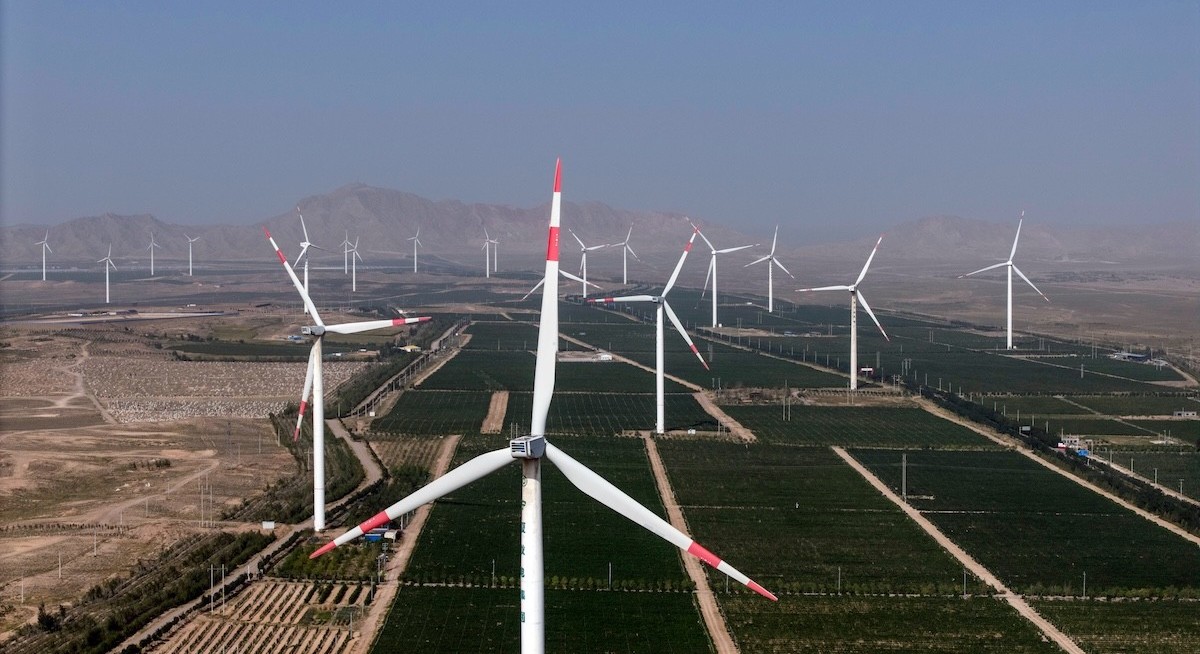
It is an open question as to how much impact this will really have, as Trump does not seem to understand the growth in green energy supplies in China. He apparently believes that China has no wind turbines (windmills) despite ample evidence to the contrary. A reduction in oil supply to China is more likely to accelerate the growth of substitutes, just as the chip war has spurred China’s progress in this area. That’s an opportunity to engage in new business.
See also: China's central bank plans overnight reverse repo in next stage of policy shift
Greenland is also part of this complex web of containment. There are Russia-related objectives, but this capture of Greenland also impacts China’s growth. With climate change, the fabled and once elusive north west passage through the Arctic has now become a reality. It opens new, shorter shipping routes from China to Europe and to the East Coast of the US. Block or control these routes, and the US has another tool to restrict trade with China.
This is the flip side of US actions in the South China Sea. Protecting these sea lanes and supply channels is a growing priority for China. It is the reason for the rapid expansion of its blue water navy.
These blunt tools are combined with weaponised trade measures, including tariffs, sanctions, and potential blockades. Canada’s re-engagement with China has been met with threats of 100% tariffs on all Canadian goods entering the US. This is a type of collective punishment. This is not a direct attack on China. It is a direct attack on China’s customers and on businesses that do or intend to do business with China.
See also: Ex-China exec of advertising giant sentenced to life in US$176 mil bribery case
If this apparent “madness” is designed to obscure a grey-zone style attack, it is designed to isolate China economically. If the attack is successful, the business must decide whether to continue engaging with China. They will also need to consider the defensive or protective actions they need to take to ensure their China business continues.
We cannot influence this global geopolitics, but neither can we pretend it does not really impact us. Understanding the strategy enables us to take appropriate action more quickly to protect or grow our business.
Technical outlook of the Shanghai market
The Shanghai index has developed a Guppy Multiple Moving Average (GMMA) bounce. This is where the market retreats, tests the lower edge of the short-term GMMA, and then rallies.
It is a bullish feature and in the current situation, the rally is supported by other chart features.
The first of these features is the support level near 4,100. This support level was the original target level for the breakout from 3,888. This level was calculated by taking the width of the trading band and projecting this value upwards. This gave a calculated target of 3,888.
Using the same trading band projection method, the next upside target is near 4,100. The current rebound suggests the market will move steadily towards this level.
For more stories about where money flows, click here for Capital Section
The second feature is the placement of the uptrend line. This is a tentative placement. Clearly, the market has retreated and rebounded, but establishing the correct anchor point for the trend line is a compromise. This trend line may be slightly modified in light of subsequent index behaviour.
The critical feature is that the line defines the limits of any retreat. A close and sustained move below signals the end of the uptrend. A test of the trend line as support, followed by a new rebound rally, confirms the continuation of the uptrend.
The final feature is the long-term group of moving averages. These are widely separated. When the market retreated, the long-term group showed no signs of compression. This indicates that investors remained bullish and were buyers as the market retreated.
If the long-term GMMA had compressed in response to the retreat, it would indicate that investors were joining the selling.
Adding further to this bullish conclusion is the steady degree of separation between the long-term and short-term groups of averages. A narrowing of this separation is usually associated with a weakening trend.
The trading bands do not tell us how the move will develop. For that analysis, we use the GMMA.
The GMMA relationships suggest a strong probability of an uptrend continuation.

Shanghai Composite Index closed at 4,151.24 on Jan 28. Chart: Bloomberg
Daryl Guppy is an international financial technical analysis expert. He has provided weekly Shanghai Index analysis for mainland Chinese media for two decades. Guppy appears regularly on CNBC Asia and is known as “The Chart Man”. He is a former national board member of the Australia China Business Council




