


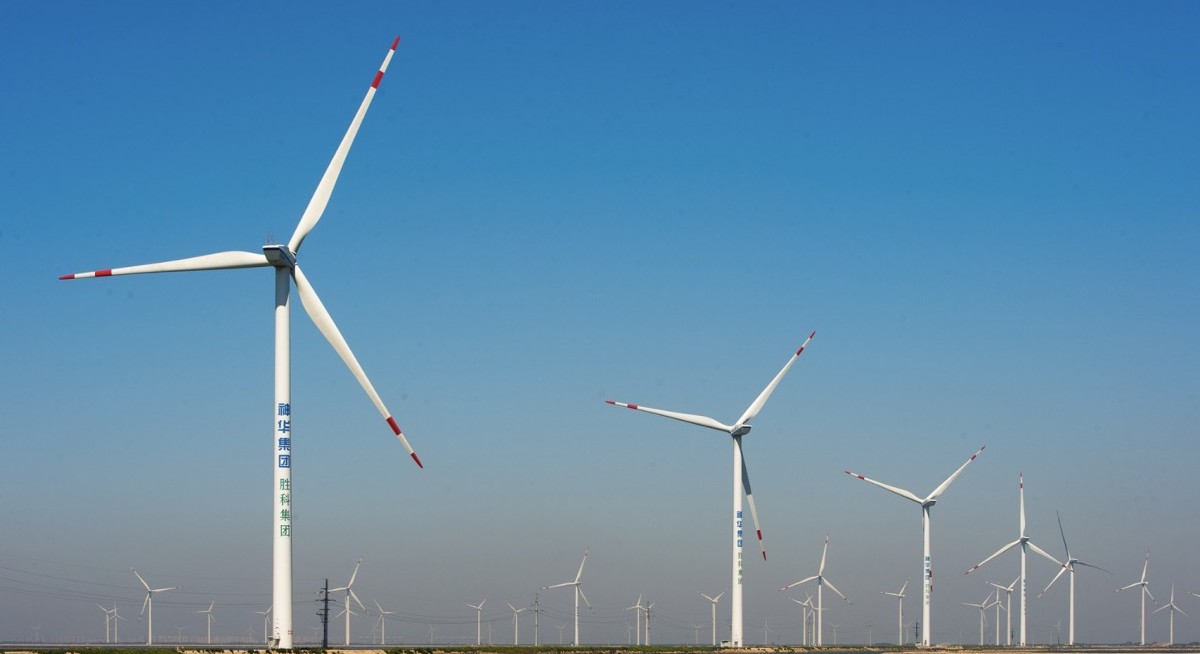


What is certain is that the proposed acquisition will increase Sembcorp Industries’ carbon emissions, as Alinta’s operating asset is a coal-fired power plant in Victoria. Alinta’s generating capacity comprises 3.4GW of installed and contracted generation assets. These include 1.5GW gas, 1.1GW coal, 583MW of wind and solar farms, and 214MW of wind farms. It is currently developing a 400MW battery energy storage system (BESS) and has 1.8GW of onshore wind, gas firming and BESS projects under development. In addition to increasing Sembcorp’s brown assets, the proposed acquisition is likely to destroy balance-sheet value despite being earnings-accretive on a pro forma basis.
A Sembcorp press release dated Dec 11 says: “The estimated purchase price payable is approximately A$5.6 billion, which will be adjusted based on customary completion adjustments. This will be fully paid in cash through Sembcorp’s bridge and working capital facilities.” The A$5.6 billion price excludes Alinta’s debt.
According to Sembcorp’s statement to the Singapore Exchange, for FY2025 ended June 30, Alinta has a book value of A$2.5 billion; the net tangible assets are A$758 million; and net profits before income tax and before non-controlling interests of A$530 million.
As a result, on a pro forma basis, Sembcorp’s net tangible assets fall to just 44 cents from $2.40 as a result of the substantial goodwill (which equates to the amount Sembcorp pays over and above Alinta’s valuation).
See also: KIT announces proposed acquisition of 39% of Keppel Merlimau for $128.1 mil
The pro forma financial effects for FY2024 indicate that EPS will increase by 9% from $0.575 to $0.626, while return on equity (ROE) will increase by 2.0 percentage points from 20.3% to 22.3%. Based on the pro forma financial effects for the 12-month period ended June 30, the proposed acquisition is earnings-accretive, with EPS rising by 14% from $0.572 to $0.651, and ROE increasing by 2.8 percentage points from 19.7% to 22.5%.
The reason ROE and EPS rise is that the acquisition is fully debt-funded. Wong Kim Yin, group CEO of Sembcorp, has stated that there will be no equity fundraising and that the full A$6.5 billion will be raised through onshore Australian dollar-denominated debt.
Hence, from a balance-sheet perspective, based on traditional accounting, Sembcorp’s net debt of $7.38 billion as at June 30 is likely to increase by $5.6 billion to about $13 billion. Based on Sembcorp’s net debt of $7.38 billion and its total equity of about $5.5 billion, its net debt-to-equity ratio works out at 1.34 times. Add the new debt and gearing rises to more than two times.
See also: Sports infrastructure that goes the distance
Although Sembcorp’s gearing can be calculated with the data it provides, during results briefings, the figure is no longer highlighted. Instead, Sembcorp has decided to focus on the interest coverage ratio (ICR), based on Ebitda/Interest expense and Net debt/Ebitda. The pro forma adjusted Ebitda/Interest expense (ICR) based on the 12 months to June 30 falls from 5.4 times to 4.5 times; Net debt/Ebitda rises to 4.6 times from 3.6 times for the same pro forma period.
“Net debt to adjusted Ebtida rises to 4.6 times,” acknowledges Wong. “Whenever we go into an acquisition, we like to deploy capital for cash flow that gives us an opportunity for deleveraging. We expect, given the operating cash flow and deleveraging, that over five years we will be able to manage our leverage. Our access to debt capital and cost of debt capital are in the investment-grade range. There will be no equity issuance risk. We also expect to maintain our dividend and dividend profile. We are very comfortable with 23 cents (dividend per share),” the CEO adds.
Wong is confident of accessing the debt market for the transaction. Interestingly, the local banks have announced they will only finance the early retirement of coal plants. DBS has ceased financing new thermal coal mining projects and coal power assets since 2019 and is unlikely to provide funding for the acquisition of new coal assets.
Long-term investment
In a two-hour Q&A, management and analysts appeared to be going around in circles. None of the answers deviated much from the SGX statement the group issued on Dec 11. The management’s message is that Australia, an AAA-rated OECD country, provides a stable regulatory environment that supports long-term investment.
To help drive the transition to net-zero emissions, the Australian government aims to reduce emissions to 62%–70% below 2005 levels by 2035 and achieve the net-zero goal by 2050. It is estimated that 200 GW of solar, wind, and storage capacity will be required in Australia by 2050, necessitating substantial investment in new renewable energy projects.
Sembcorp believes that this significant demand for clean energy solutions presents further capital investment opportunities to expand its renewables portfolio and low-carbon solutions in Australia and to achieve its target of 25GW of renewables capacity by 2028.
To stay ahead of Singapore and the region’s corporate and economic trends, click here for Latest Section
The announcement states that Australia’s target of achieving net zero by 2050 is directly aligned with Sembcorp’s own ambitions for the same period. With this transaction, Sembcorp’s exposure of generation capacity in developed markets (OECD and Singapore) increases from 25% to 31%. Underlying net profit after tax and minority interest from developed markets also increases from 55% to 64%. Sembcorp will have a more balanced mix of developed-market exposure and access to large, high-growth markets such as India and the Middle East.
Alinta holds a 19% share of electricity generation in the Western Australia Wholesale Electricity Market and a 53% share of the residential gas retail market. It also has a leading Commercial & Industrial (C&I) market share for gas and electricity.
On the East Coast, Alinta owns Loy Yang B. Together with its other East Coast assets (including the Braemar and Bairnsdale gas-fired plants), Alinta has one of the most cost-competitive and reliable generation portfolios on the Australian East Coast and is well positioned to capture market share and growth opportunities, according to the SGX announcement. These points were reiterated throughout the analysts’ questions.
Alinta also owns Wind Farm and the Wagerup Power Station on the West Coast of Australia (together with the Wagerup BESS project, which is under construction), and the Braemar Power Station, Bairnsdale Power Station and the Loy Yang B Power Station on the East Coast of Australia. It has 10.4GW of renewables and firming development projects, including onshore and offshore wind, battery energy storage systems, pumped-hydro, and gas firming across states to support future deployment opportunities, Sembcorp reports. More than 2.1GW of this pipeline is prioritised for development over the next five years, creating near-term opportunities to expand renewable capacity, according to the announcement.
In addition, Sembcorp’s announcement states that Alinta has one of the highest portfolio availabilities in the market, at 93%. It has a proven track record of strong financial performance, the announcement claims. Since 2022, Alinta has maintained stable adjusted ebitda margins of 15%-20%, higher than those of its peers, it adds.
“Alinta’s combination of low-cost generation, efficient gas assets, a high-performing wind farm and competitively contracted renewable power purchase agreements also provides stable cash flows and the flexibility to fund its project pipeline through different market cycles,” the announcement says.
Back to brown energy
Alinta’s main operating asset is the Loy Yang B Power Station, a baseload coal-fired power generator located in the Latrobe Valley, Victoria. It supplies approximately 20% of Victoria’s energy demand with flexible and low-cost baseload electricity.
When asked why Sembcorp was acquiring more “brown assets” since most of Alinta’s cash flow is from a coal-fired plant, Wong replies that “this platform is cash generating and the underlying cash flow generating ability will allow us to deliver and generate cash to fund future growth to the green side, taking brown cash flow to fund green cash flow. After this transaction closes, we have Singapore and Australia, which are very cash-generating, to fund our energy transition going forward”.
To justify acquiring a coal-fired power plant, Sembcorp points out that “this capability is important as the transition accelerates, ensuring reliability while new renewable and storage capacity is built.”
The proposed acquisition of Alinta will increase Sembcorp’s emissions. Sembcorp’s emissions intensity on a pro forma basis will increase to around 0.36 tCO2e/MWh and absolute emissions to 18.1 million tCO2e in 2025. As such, Sembcorp will not meet its 2028 emissions-intensity and 2030 absolute-emissions targets. As this proposed acquisition will expand SCI’s portfolio, Sembcorp will aim to achieve an emissions intensity of 0.26 tCO2e/MWh by 2035.
Sembcorp says it remains committed to achieving net zero (Scope 1 and 2) by 2050. To hit these targets, Sembcorp will grow its renewables and storage technologies portfolio, manage its fossil fuel portfolio via efficiency improvement initiatives, leverage low-carbon technologies, and explore capital-recycling initiatives for the group, the announcement says.
What analysts are saying
CGS International (CGSI), which has lowered its target price despite maintaining an “add” recommendation, points out that Alinta’s generation capacity is largely sold to retail customers on short-term contracts of 1.5 years with variability in ebitda due to swaps and various derivative instruments. The swaps usually form less than 5% of revenue and could swing within 10% of ebitda. Alinta is long in generation and always hedges capacity to ensure it has no naked position. SCI likens the swaps and instruments to Singapore’s Contract for Difference.
CGSI indicates that out of the total A$6.5 billion bridging loan, Sembcorp plans to use A$2 billion to discharge Alinta’s existing debt and shareholder loans. The remaining A$4.5 billion will be refinanced through two tranches: 60%–65% via long-term syndicated loans (7–10 years) and 40% via debt capital market instruments, such as bonds. “We estimate net gearing to expand to 1.9 times by FY2026,” the CGSI report says.
JP Morgan has downgraded Sembcorp from overweight to neutral. “The sheer size (more than 50% of market cap) with new geographic exposure, a bump in leverage (4.6 times Net debt/Adjusted ebitda on pro-forma basis), and the addition of a coal-fired power plant are set to become near-term overhangs as Sembcorp enters a new price-discovery phase,” JP Morgan observes.
In addition, given the stepdown in Singapore gas-power margins, JP Morgan sees limited room for positive surprises from the existing portfolio until the new Alinta plant kicks in from 2H2026. Hence, it has downgraded Sembcorp to “neutral” from “overweight”, with a December 2026 price target of $5.90, down from $7.50 previously.




