




In their bid to be seen as supportive of sustainability, some banks began to curb lending to coal-related businesses, forcing coal companies to look for alternative funding sources.
Yet, production — and demand for coal — continued to reach new highs, as substitution by renewable sources took longer and costlier than expected. When two major producers, Russia and Ukraine, started shooting at each other in 2022, further complications surfaced.
Not only did the coal industry not fade into oblivion, it also attracted renewed attention, including from famed investor, the late Charlie Munger. In 2023, the longtime colleague of Warren Buffett observed that coal producers remained profitable and were trading at inexpensive levels. When he came across another article saying coal was on the way out, Munger, according to an account in the Wall Street Journal published on Nov 26, reportedly said “horse feathers”— an old US slang for “nonsense”.
In May 2023, Munger began scooping up shares of a few US coal companies and posted paper gains as high as US$50 million. Prices have since dropped, but Mohnish Pabrai, a friend of Munger’s quoted by the Wall Street Journal, maintains that the investments would still be profitable if he held them today. For Pabrai, the lesson from Munger, who died two years ago just before his 100th birthday, is this: “You don’t need to slow down, you just keep going.”
See also: Indonesia plans to boost nickel output, fuelling price drop
The Indonesian story
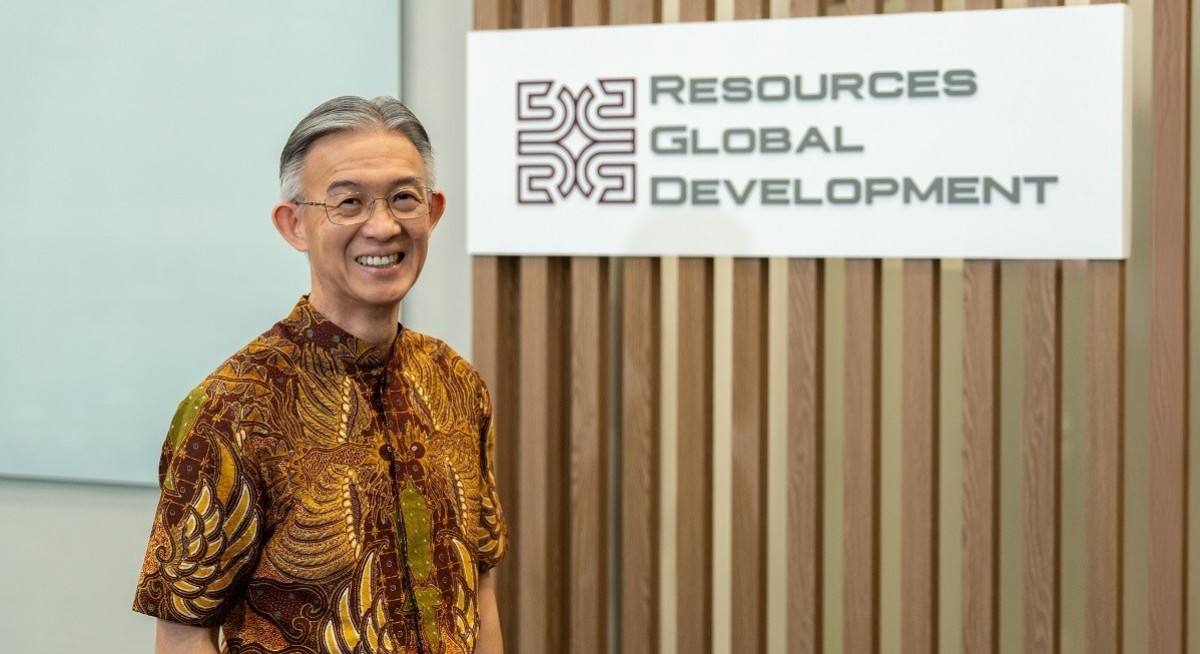
In a somewhat similar vein, the coal industry of Indonesia has kept going as well. “The Indonesian story in the last decade is one of energy resources, energy, and metal play. And it has really caught traction,” says Francis Lee, CEO of Indonesia-based and Singapore-listed coal miner and shipper Resources Global Development (RGD), in an interview with The Edge Singapore.
Besides coal, the archipelago of 17,000 islands is richly laden with lithium, nickel, copper, bauxite and other resources and materials. One particular metal stood out in recent years. With electric vehicles (EVs) gaining popularity, nickel, which used to be mainly a raw material for stainless steel, is now critical as a key raw material in the production of batteries used in EVs.
The growing demand for EVs means that more batteries have to be manufactured, requiring more nickel — and more fuel to power the nickel smelters. The most readily available and reliable fuel is coal.
See also: Copper extends losses as dollar and hawkish Fed pressure metals
Since its Singapore Exchange (SGX) listing in January 2020, RGD has been in the business of coal trading, and also shipping coal and other bulk cargo using its fleet of tugs and barges. After being dug out from the mines deep inland, coal often has to be moved down the inland rivers and transferred to bigger vessels before making its way to end-users in other parts of the archipelago or overseas markets.
RGD, in the midst of this, stands on two pillars of growth, says Lee. Besides its shipping services, RGD, which owns a 9.7% effective stake in 4 coal mines held by an IDX-listed company SINI, beefed up its “mining pillar” with the $14.8 million acquisition of a 30.1% stake in Tri Oetama Persada (TRIOP), a company that controls a coal mine in Central Kalimantan. Production at the TRIOP mine began last year. This coming year, volume — and, by extension, earnings from coal mining — are expected to increase.
The way Lee sees it, the two engines of coal mining and shipping are not only running on their own steam, they are complementary as well. “Our business model is actually quite simple, quite robust. And we are really at the epicentre of the Indonesian story. A rising tide lifts all boats, and we are right there,” says Lee.
To meet growing demand and capture more revenue, RGD is expanding its fleet. It has another five sets of tugs and barges on order. When delivered in this coming year, RGD will be operating a fleet of 41 vessels in total, with a total capacity of 372,000 dead weight tonnage. “The beauty of our shipping business is that the cash cycle is quite short, and [has a] healthy margin that has given us tremendous cash generation to be able to grow organically,” says Lee.
The fleet expansion can be funded using internal resources, but to help fund the acquisition of four mines held by SINI, RGD had in June 2024 raised $10 million by placing out shares at 20 cents each. RGD is starting to see some returns.
Mining at TRIOP, which has reserves of around 64 million tonnes, started in September 2024, and 2025 was the follow-through year. On Nov 26, RGD announced that TRIOP has achieved its 2025 year-end production target of 1.1 million tonnes ahead of schedule, as it was able to step up on its production volume after having already dug out 388,600 tonnes in the first six months of the year. “This strong performance underscores the management’s execution capability, especially as TRIOP is a greenfield coal mine that only commenced production in September 2024,” says RGD.
The company, which outsources production to various contractors as many other mine owners do, does not disclose its exact unit production cost at the RGD level. “I can say that we are very similar to all the industry players. Other companies have announced theirs; we are not too far from them, just about as efficient,” says Lee.
To stay ahead of Singapore and the region’s corporate and economic trends, click here for Latest Section
Lee does allow that given that it is a relatively new mine, there were additional initial costs, especially the work required to remove the surface layer of soil, also known as “overburden” in industry parlance, before coal underneath could be reached. “Once that part is taken away — that cost is taken away — the rest is all fairly similar,” he adds.
What is for sure, TRIOP has already turned in a profit: “nothing to shout about”, but “decent”, says Lee, who sits on the board of Indonesia-listed Paragon Karya Perkasa, a subsidiary of RGD, which gives RGD its effective stake of 30.1% in TRIOP.
For the most recent nine months ended September 2025, PKPK swung into the black with earnings of IDR8.63 billion, or $689,295 at time of reporting, from a loss of IDR9.17 billion. Revenue in the same period jumped from IDR84 billion in the year-earlier period to IDR589.2 billion.
The stronger numbers have yet to be reflected in RGD’s half-yearly reports. In the most recent 1HFY2025 ended June, revenue increased by 74.3% y-o-y to $50.7 million thanks to a larger fleet size. Earnings, on the other hand, were up 24.4% y-o-y to $13.6 million, lifted by a one-time gain on disposal over book value of $4.4 million of a mining interest.
As production volume is further increased next year, RGD expects a more meaningful contribution from TRIOP, as it plans to ride on the growing momentum and apply for a higher production quota of 3 million tonnes for the year.

Resources Global Development is expanding its fleet of tugs and barges but earnings contribution from coal mining is set to increase / Photo: RGD
Natural progression
Like all commodities companies, there are certain industry dynamics affecting RGD. Lee explains that coal mines usually will not give definite production targets as they depend very much on the demand from the end-users — in this case, the smelters. While these smelters will usually have some longer-term arrangement to buy from certain producers, they are themselves subject to variations in their own demand.
According to Lee, as TRIOP is relatively new in the business, there are no long-term contracts for now. What many producers will do is to secure demand for say, half their output, and then leave the other half to sell in the spot market, according to the spot prices of industry benchmarks used by market players. They may therefore make less if prices go down, but of course, the converse is true as well.
Naturally, there will be exceptions. “At the end of the day, [a transaction] is still a negotiation process between a willing buyer and a willing seller. You will hear [of prices] at index plus one, or index minus one — depending on who is more desperate,” says Lee. For example, if a seller has excess stock and is under pressure to sell it, they may offer a discount. If a buyer needs the stock urgently, they may offer to pay a premium over the prevailing spot price. “The index is a guide, but the actual [transacted] price can be up and down a bit,” says Lee.
Producers are also required to follow certain rules. As Napoleon has pointed out, an army marches on its stomach. In the same spirit, the commodities players make or break by how well they control their logistics.
“Getting the resource out of the ground is one thing, but to be able to transport the material to a place where it can be used economically is another,” says Lee, adding that there are mines with high-quality reserves that remain undeveloped simply because the cost of the logistics does not make sense.
Lee says RGD is “very fortunate” that its mines are well placed and will not be held ransom to logistical challenges, while its original business pillar of running the tugs and barges remains very much in demand.
Is this perhaps a trend for companies to try and own both the mines and the infrastructure? Before RGD, Geo Energy Resources, another Indonesia-based coal miner, has already been listed on the SGX since 2012. For years, Geo Energy’s share price was trading at single-digit P/E levels as investors shunned the coal story. However, along with renewed interest in this sector and active investors’ outreach, Geo Energy’s share price has seen more movement, hitting up to 57 cents in May 2022, before easing to close at 43 cents on Dec 16, valuing the company at just over $600 million. RGD, meanwhile, last traded at 20 cents and is valued at $100 million.
In a somewhat similar playbook to RGD but at a larger scale, Geo Energy has moved into adjacent areas of interest. It is in the midst of completing a 92km-long road for the purpose of hauling coal from its mines to the jetty. The road, which costs US$150 million ($194.25 million), will also be leased to other miners to generate another income stream. Most recently, on Nov 26, shareholders gave the go-ahead for Geo Energy to acquire majority stakes in two companies that operate tugs and barges for US$127.5 million, so that it can likewise capture a bigger chunk of the value chain.
Lee calls such moves a “natural progression” as businesses become more competitive. Companies will try to capture bigger chunks of the value within a supply chain to build stronger competitive advantages. “If you start off with one part [of the supply chain] without the other parts, you are leaving quite a fair bit on the table. So everyone would aspire to either vertically integrate, or at least horizontally integrate to support each other. Rather than leave [the other parts of the supply chain] on the table, you might as well capture it when you have the opportunity to do so.”
With the acquisition of the stake in TRIOP, RGD, has in a sense, completed the fit-out of its “twin engine propulsion” — an expanded tug and barge fleet, and a meaningful stake in coal mining.
In 1HFY2025 ended June 30, shipping contributed 59% of the revenue and 64% of the gross profit, while coal mining contributed 40% of revenue and 35% of gross profit. Going forward, revenue from shipping will grow but mining is set to contribute a bigger proportion. Moving a tonne of cargo can generate a few dollars in revenue but selling a tonne of coal fetches between US$40 and US$50. “The numbers of our mining will, in years to come, will overshadow our shipping,” says Lee.
Given the valuable market, will RGD be on the lookout for more mining interests to acquire? According to Lee, in the next year or two, RGD will be focused on getting the two engines “optimised” instead of being “distracted” by acquisitions. “Having said so, if opportunities present themselves, of course, we cannot ignore them. For example, if there is a fire sale somewhere or an asset in which we see great value, we will definitely give it a look. You never know what may appear in the market. But, that aside, we have our hands full focusing on these two engines and we see them playing out nicely,” says Lee.
Also, unless there is a major acquisition, Lee does not see the need for further fundraising. “We don’t do it for the sake of doing it. We do it because there’s a need — there’s a justified value for it,” he says.

The TRIOP mine in Central Kalimantan has estimated reserves of 64 million tonnes / Photo: RGD
Softening stance towards coal as global demand remains resilient?
Throughout the long and at times fascinating history of the global commodities markets, there have been plenty of human dramas, battling over high-stake control of resources. Fortunes were made or lost, when seemingly sure bets were overturned by market prices that went the other way.
Big swings were seen in the coal market as well. When Russia invaded Ukraine in 2022, global prices of key energy sources shot up. Both Russia and Ukraine are major producers of natural gas and coal. Indonesian producers were half a world away, literally, but during that period, they enjoyed their brief moment of supernormal profit too, with rising coal prices. However, prices quickly normalised as bottlenecks eased.
Francis Lee, CEO of Resources Global Development (RGD), believes that producers such as himself prefer prices to be slow and steady. “I think the dynamics of supply and demand is very healthy at this moment,” says Lee.
Lee is upbeat about the demand growth of energy over the long term. First, the “electrification” of everything is a trend that will be seen in everyday items ranging from toothbrushes to cars.
Also, changes in weather patterns are resulting in the growing need for heating and cooling, thereby contributing to higher demand for power and, to a certain extent, consumption of coal. “Unfortunately, the swing between cold and hot is getting more intense,” says Lee.
Last but not least, with the AI boom, data centres are mushrooming all over the world. Unfortunately, the energy required to power these new infrastructural systems of digitalisation cannot be met purely by renewable energy sources. “So again, the need for this incremental energy will in some part drive the consumption of coal,” says Lee.
According to the International Energy Agency (IEA) on Dec 17, global demand for coal has remained resilient and is expected to increase by 0.5% in 2025 over 2024 to reach 8.85 billion tonnes, a new record. However, global coal demand is plateauing and will drop by 3% over the coming five years, as demand is slowly met by renewables and other sources such as gas.
Southeast Asia, according to IEA, will buck the global trend with demand seen to grow by more than 4% a year to 2030. According to the IEA, industrial activity and rising electricity demand in Indonesia are estimated to account for over 56% of the growth. Besides nickel, aluminium smelting capacity, notably in north Kalimantan, is also scaling up, adding around 30 TWh of baseload electricity requirements and reinforcing reliance on coal generation in the near term, says IEA.
This sustained growth in demand might inspire fantasies of surging prices, but current prices of US$40 ($52) to US$50 per tonne, according to Lee, is “quite a comfortable” level for most producers.
Relative to the prices of oil and gas, the cost of using coal as an energy source is really competitive, and Indonesian producers tend to be among the most efficient suppliers, he adds.
On Dec 5, Indonesia’s chief economic minister Airlangga Hartarto announced that the plan to shut down a coal power plant will not go ahead. “Cirebon is one of those that still has a long lifespan, and its technology is also critical, supercritical, and relatively better,” he said. Rather, Indonesia might look at other older coal plants for early shutdown.
Coal remains entrenched in other parts of developing Asia, for similar reasons of cost and efficiency. These developments come on the back of US President Donald Trump rolling back some of the environmental, social and governance (ESG) push in the US. Are some banks, which are turning away funding needs of coal players in the name of sustainability, changing their stance as well? “To be honest, I have not been directly approached, or heard news to the effect that they are softening,” says Lee.
Nonetheless, he has observed some changes. When gas prices spiked last year, some European and American coal plants were reignited. For example, Germany, which phased out all its nuclear plants following the Fukushima disaster of 2011, increased its consumption of coal by 11%. Given the about-turn by governments, Lee says he will not be surprised if financial institutions are not so adamant about coal as well. “They may not come out and say it explicitly, but attitude-wise, I think they are probably softening at this moment,” he says.
Seen from a longer-term perspective, the world economy has realised and accepted that yes, everyone ought to work towards the transition away from fossil fuels eventually. “However, we cannot have a hard stop while the renewables are not ready,” says Lee. “It is probably more realistic to have a transition period whereby we manage consumption while we are developing renewables; we still need [fossil fuels] as a base load, and then see how, in the next 10 to 20 years, to transit over when the technology and costs allow.”




