


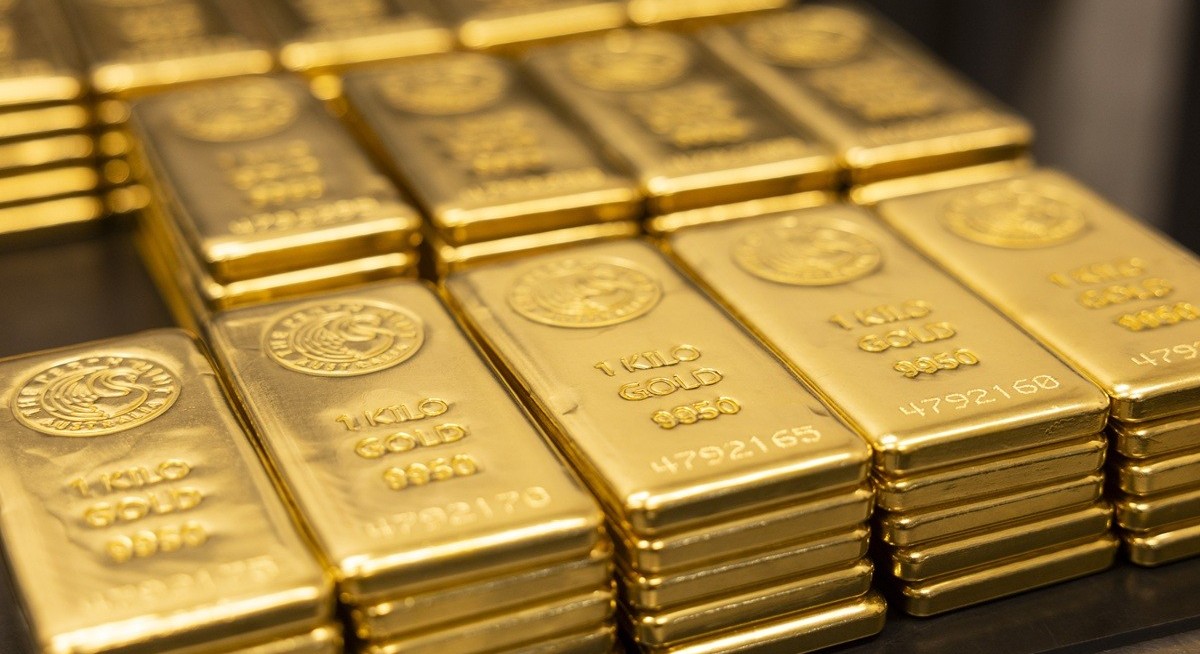


What does an Olympic-sized swimming pool have to do with gold? Hint: it is not Scrooge McDuck diving into his money bin filled with gold coins (and causing a gold tsunami), but something else.
According to the World Gold Council (WGC), the total amount of gold mined as of 1Q2024 would fit in a space just a wee bit more than three Olympic-sized swimming pools.
“Clearly, gold is a scarce asset class now on the demand side,” says DBS chief investment officer Hou Wey Fook. “In investing, as in nature, the rare becomes valuable.”
Flight to safe-haven gold
The price of gold has more than doubled over the past two years, from around US$2,000 ($2,575) per ounce in 1Q2024 to surpass US$5,000 on Jan 26. In 2025 alone, gold broke its own high a total of 53 times, according to the WGC.
According to Dr Xu Le, a lecturer at NUS Business School, gold is neither an ordinary consumable good like food or oil, nor a durable good like housing or automobiles. Instead, it is usually treated as a safe-haven asset, she says to The Edge Singapore.
See also: Gold bulls gut outlooks as Deutsche Bank follows Goldman’s cut
Xu shares a Chinese proverb: “During prosperous times, jade is treasured, while in times of instability, gold is preferred.” She explains that consumers favour luxury goods during periods of stability, while safe-haven assets such as gold are sought during periods of uncertainty.
For Xu, gold is perceived as a store of value because of its characteristics: scarcity, durability (resistance to damage), acceptability (as a means of payment), divisibility (into units), and measurability.
She notes that geopolitical and global economic conditions, movements in the US dollar and various demand and supply factors influence the price of gold.
See also: Countries repatriating gold might be unaware of the downsides: LBMA
To the clouds (and the moon?)
Since the US attack on oil-rich Venezuela at the start of the year and US President Donald Trump’s threats to annex Greenland, the price of gold has ascended to historic highs like a raging bull with rocket boosters, while oil or “black gold” hovers at around US$60 per barrel, like an ailing bear hooked onto a life-support machine.
Speaking to The Edge Singapore, WGC global head of central banks Fan Shaokai says that three groups of buyers — central banks, institutional investors and retail investors — are driving demand for gold as they seek to find safe havens amid escalating global trade disputes, heightened geopolitical tensions and financial market volatility.
“This was supported by momentum buying as surging gold prices attracted broader investor attention, alongside lower opportunity costs as US Treasury yields declined and the US dollar weakened,” adds Fan, who is also WGC’s head of Asia-Pacific (ex-China).
On a similar vein, UOB head of group global markets Kelvin Ng points out that gold is perceived as a safe haven and a strong portfolio diversifier of risk. ”A sudden rise in inflation, renewed strength in the US dollar or inability for the US Fed to cut rates further could also introduce periods of volatility in gold prices,” he tells The Edge Singapore.
As for BNP Paribas commodity strategy director David Wilson, he believes demand for gold will be driven by the continued expectation of a weakening US dollar and worries about US debt sustainability.
“US debt has now surpassed US$38 trillion, up US$1.8 trillion since the start of this year, pushing up average monthly debt interest payments by 7% year on year, a level widely seen as a drag on US growth,” he shares in his analysis.
To stay ahead of Singapore and the region’s corporate and economic trends, click here for Latest Section
Similarly, State Street Investment Management views gold as a hedge amid escalating, longer-term global debt post-Covid, noting that global debt-to-GDP ratios are at risk of expanding “three to fourfold” from the current, already elevated level of 235% of GDP.
“This entrenched leverage signals long-term fiscal strain, boosting gold’s appeal as a strategic hedge against debt monetisation and fears of currency debasement,” note gold strategists Aakash Doshi, Mohamad Abukhalaf and Diego Andrade of State Street.
Following gold’s surge in the early part of January, analysts have been revising their price forecasts. For example, on Jan 26, when gold crossed US$5,000, OCBC raised its end-2026 view from US$4,800 to US$5,600.
Additionally, according to the 2026 London Bullion Market Association (LBMA) Annual Precious Metals Forecast Survey, 22 of 28 analysts forecast gold to breach US$5,000 this year, with five expecting it to hit US$6,000. There is one “mega-bull”, Julia Du of ICBC Standard Bank, who sees gold soaring beyond US$7,000, which would presumably bring gold owners to cloud nine. Some may even be over the moon.
The gold fingers around Singapore
Based on WGC data, global demand for gold is increasing. For 2025, demand for gold totalled 5,002 tonnes, a y-o-y increase of 1%. Notably, the global demand for gold bars and coins grew nearly 16% to 1374.1 tonnes from 1188.3 tonnes. In Singapore, demand for this segment jumped by 48% y-o-y, exceeding the global trend.
According to UOB’s Ng, the bank saw strong growth in retail customer participation across its gold investment offerings, reflecting the heightened demand for the precious metal. For physical gold, the bank transacted approximately 59% more by weight in 2025 versus 2024. Ng says that the jump represents a “strengthening” preference for physical bullion.
Bullion dealer BullionStar says October and December 2025 were its two busiest months on record since it started in 2012, adding that it processed around 1.5 tonnes of gold.
“Our most popular gold product in recent months has been the 100 gram gold bar,” says BullionStar deputy CEO Pete Walden to The Edge Singapore. “We’ve also seen strong demand across the full spectrum of investors, from individuals buying one-gram bars … to high-net-worth clients acquiring 400-ounce gold bars valued at more than US$2.35 million each.”
Pawnshops have also been enjoying more brisk trade in gold. MoneyMax shares that retail and trading transaction volumes for gold bars, coins and jewellery saw y-o-y double-digit growth for 1HFY2025.
MoneyMax Group general manager Lim Chun Seng says the sustained increase in gold prices has boosted demand, allowing customers to unlock greater liquidity from their gold-related assets.
“Higher gold prices translate into higher collateral values, allowing customers to obtain larger loans and contributing to overall business growth through higher interest income,” he says. Lim adds that due to the appreciation in value of the gold collateral pledged to its business, the overall security of its pawnbroking portfolio has also “strengthened”.
Meanwhile, anecdotal evidence from goldsmiths and jewellery shops seems to support the data on rising demand for investment-grade gold. Of the nine shops surveyed by The Edge Singapore, seven said they have seen growing interest in gold bars.
SK Jewellery at People’s Park Complex (PPC) noticed that demand for gold bars has increased by around 10% to 20%, especially among those over 40 years of age. “They have grown up seeing the price of gold increase and thus appreciate it as a store of value,” says Yin Shuai, the store manager.
At Little India, a representative from Chennai Goldsmith and Jewellery at Buffalo Road echoes similar sentiments. Wanting to be identified only as “Mr Oh”, he says that there has been an increase in interest in gold bars over the last six months. “For gold bars, there is no GST and no workmanship costs, so people just buy and keep,” he adds.
Serene Yap, director of Marine Goldsmith and Jewellery, says that she is seeing an increase in demand for gold bars from youngsters. She notes that most demand comes from locals, with international buyers accounting for about 5%.
At Kim Heng Jewellers, a representative, who identifies himself as Henry, has noticed more people selling their gold bars in recent months, estimating a 20% to 30% increase.
Demand for gold from ETFs and similar products (or paper gold) appears to have outpaced that for gold bars and coins. Paper gold scooped up 801.2 tonnes for the year, compared to a net outflow of 2.9 tonnes in 2024.
Ng says that UOB’s gold savings account saw “solid” expansion, with transacted volumes rising by approximately 48% y-o-y. “While physical gold outpaced paper gold in terms of growth during the year, the data shows that paper gold remained a core component of retail investment strategies,” shares Ng, adding that both formats are complementary rather than as substitutes for one another.
Lion Global Investors (LGI) notes that the LionGlobal Singapore Physical Gold Fund has been very “well-received” since its launch on Dec 1, 2025. The fund’s size stood at US$209.6 million on Jan 25.
“Looking ahead, we are confident that gold will continue to play an important role in portfolios as investors seek stability and diversification in an environment of persistent volatility and continued shifting global economic dynamics,” says Kwok Keng Han, chief marketing officer of LGI.
Is gold jewellery still shiny?

Despite overall spiralling demand for gold, the gold jewellery sector appears to be experiencing declining demand.
According to data from WGC, global demand for gold jewellery consumption dropped by nearly 345 tonnes, or 18% y-o-y, to 1542.3 tonnes for 2025. Locally, demand for gold jewellery dropped by 0.8 tonnes, or 11.8%, to six tonnes.
However, the picture for gold jewellery seems mixed on the ground. Four of the nine shops reported drops in gold jewellery sales, while the others said demand remained consistent or increased.
Yap from Marina Goldsmith says demand for gold jewellery has dropped by 10% to 12%, attributing it to rising gold prices. This sentiment is shared by Great United Goldsmith and Jewellery, with a spokesperson adding: “Nowadays, youngsters don’t buy gold.”
In contrast, Jasmine Loh, sales manager of Lee Heng Jewellers at Chinatown Point, estimates that demand for gold jewellery has increased by around 20%. She says this is driven by purchases of “si dian jin”, or the traditional Chinese wedding gift from the groom’s family to the bride. A set of “si dian jin” comprises four gold jewellery pieces — necklace, earrings, bangle and ring.
Declining to be named, a spokesperson for Venhonia International says the business is seeing sustained demand for gold jewellery, attributing its popularity to its cultural significance as a signifier of wealth and for joyous occasions such as weddings and
gifting.
WGC’s Fan says: “While overall jewellery demand is down, lighter and more affordable designs are attracting buyers, particularly during festive seasons.”
In addition to buying and selling, trading old gold jewellery for new jewellery seems popular. Loh says that the majority of trade-ins at Lee Heng come from repeat customers, especially during the festive period.
Remember Icarus
After gold’s gravity-defying performance over the last two years, multiple analysts did not hold a negative outlook on the precious metal, with views ranging from neutral to bullish for 2026. Hence, it may be apt to end with the story of Icarus.
Icarus’ father, Daedalus, fashioned wings from feathers and beeswax for both of them to escape from Crete, an island located off mainland Greece. The elder man warned his son not to fly too high or too low; too high, and the wax would melt; too low, and the wings might get wet from seawater.
They took flight, but Icarus soon forgot his father’s warnings and started ascending until the wax melted under the scorching sun. His wings dissolved and he fell into the sea and drowned.
Gold is flying high now. Can it ever get too high?




