


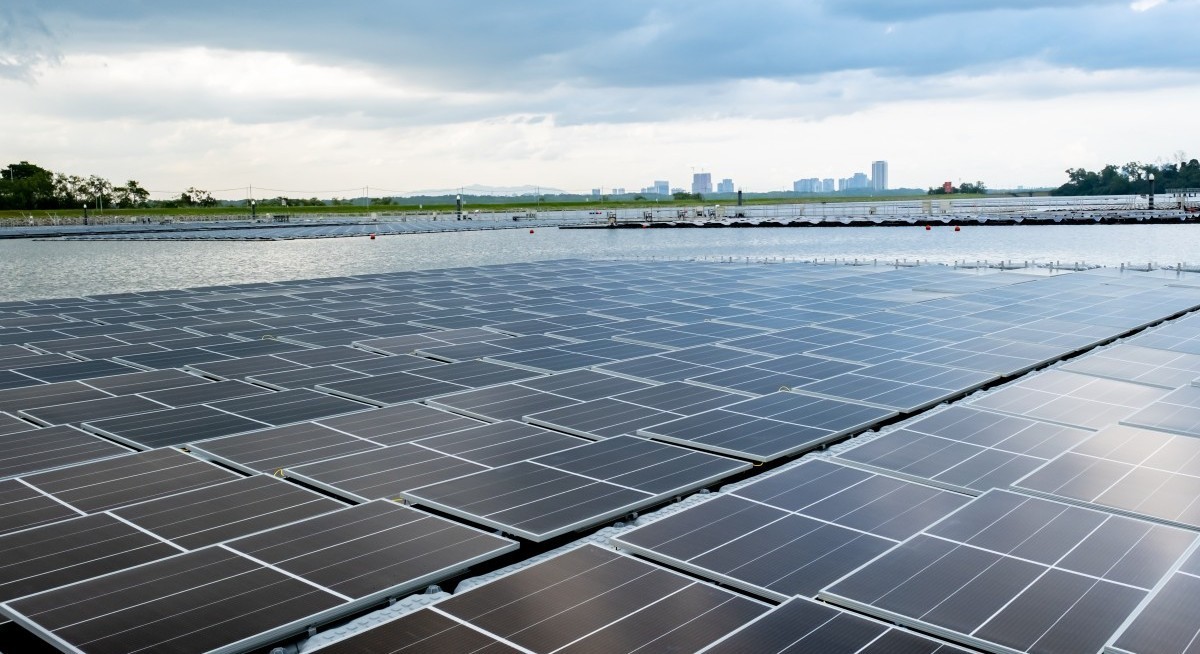


For reasons of sustainability and energy security, the government has been greening its electricity supply and investing in the energy transition to safeguard the nation’s energy needs. Initiatives include the $5 billion in the Future Energy Fund for Singapore and US$500 million ($644 million) in concessional funding to support the Financing Asia’s Transition Partnership (FAST-P), which aims to mobilise a total of US$5 billion to address climate change in Asia. On a global basis, more than US$2.08 trillion was poured into the energy transition in 2024, notes BloombergNEF.
Broadly speaking, the city-state has implemented several strategies to achieve its green energy ambition. The most prominent strategy addressing the supply side is the “Four Switches” strategy — solar, electricity imports, natural gas and low-carbon alternatives (such as hydrogen, ammonia, nuclear and geothermal). For the demand side, the government is pursuing electrification, fuel switching and energy efficiency.
Other complementary capabilities being developed include battery energy storage systems (BESS) and carbon capture, utilisation and storage (CCUS).
According to RHB, Singapore has catalysed investment across utilities, REITS, data centres, aviation and banks to decarbonise and become more energy efficient. The city-state, a major port along the extremely busy Malacca Strait shipping route, is also exploring options such as ammonia for marine industry use and considering the use of nuclear energy as well.
See also: We are not at the peak of the AI cycle: Eastspring
While the government is a key player in the country’s energy transition, it requires a whole-of-nation approach, including commercial entities, to decarbonise energy. Some of these private-sector players include Sembcorp Industries, Keppel, Seatrium, Capitaland Ascendas REIT (CLAR), Suntec REIT, Singtel, DBS Group and ComfortDelGro.
Sembcorp Industries
Sembcorp Industries is the largest renewable energy player here: It has more than 1 GWp of solar assets in operation and under development, complemented by a 326 MWh energy storage system (ESS). Presumably, the company is positioned to help the nation achieve 2 GWp of local solar and participate in other ESS projects.
See also: World Cup: Not just a major sporting spectacle, but also a growing investing theme
Besides solar, Sembcorp is an importer of natural gas and operates several gas-fired power plants with a capacity of around 4.5 GW. Most of the nation’s electricity is generated from natural gas, which has been identified as the least polluting fossil fuel and is suitable for use as the nation scales up non-fossil fuel use. With the company’s heavy involvement in natural gas, it may be safe to say that Sembcorp would be a potential candidate to participate in any new natural gas projects.
Additionally, the company operates a hydrogen-ready power plant and has signed agreements with other partners to develop hydrogen as a clean energy source. With hydrogen identified as potentially supplying more than half of domestic energy needs by 2050, Sembcorp will be expected to play a part in this aspect of the energy transition.
The company will also play a part in supporting the nation to achieve its targeted 6 GW of renewable power imports by 2035. It has earned a licence to import 50 MW of renewable energy from Malaysia and has received conditional approval to import 1.2 GW of low-carbon electricity from Vietnam to Singapore.
In addition to supplying local power needs, Sembcorp is also a global player in the renewables scene with gross renewable energy capacity of 20.2GW across Southeast Asia, China, India, the UK and the Middle East.
Sembcorp has ambitions to scale up its renewables portfolio and started to pivot from “brown to green” energy in 2021 as part of its business strategy.
In order to achieve a 25 GW of renewables target in its portfolio by 2028, Sembcorp announced an earnings-accretive acquisition of Australian energy supplier Alinta Energy from Chow Tai Fook Enterprise for an agreed enterprise value of $5.6 billion on Dec 11. The deal would be funded by cash on hand and borrowings, and the purchase price would exclude Alinta’s debt.
According to Sembcorp’s statement to the Singapore Exchange, for FY2025 ended June 30, Alinta has a book value of $2.2 billion; the net tangible assets are $653 million; and net profits before income tax and before non-controlling interests of $457 million.
For more stories about where money flows, click here for Capital Section
On a pro forma basis, Sembcorp’s net tangible assets fell to 44 cents from $2.40 as a result of the substantial goodwill (which equates to the amount Sembcorp pays over and above Alinta’s valuation).
In addition to NTA decreasing as a result of the acquisition, Sembcorp’s net debt will rise to around $13.6 billion, with net debt to ebitda rising from 3.6 times to 4.6 times.
Besides a hit to its balance sheet, the acquisition also increased Sembcorp’s exposure to fossil fuels, with the coal-fired Loy Yang B Power Station in Victoria being Alinta’s main operating asset.
When asked why Sembcorp was acquiring more “brown” assets since most of Alinta’s cash flow is from a coal-fired plant, Sembcorp CEO Wong Kim Yin says that the platform is cash-generating with the underlying cash flow generating ability allowing Sembcorp to deliver and generate cash to fund future growth of “green” assets and the energy transition going forward.
The acquisition of Alinta will also increase Sembcorp’s emissions. Sembcorp’s emissions intensity on a pro forma basis will increase to around 0.36 tCO2e/MWh and absolute emissions to 18.1 million tCO2e in 2025. As such, Sembcorp will not meet its 2028 emissions-intensity and 2030 absolute-emissions targets. As this proposed acquisition will expand Sembcorp’s portfolio, it will aim to achieve an emissions intensity of 0.26 tCO2e/MWh by 2035.
Reception to the deal has been mixed. Some analyses, such as CGS International’s, have lowered their target price to $7.77 from $8.02, while maintaining their respective “add” call. Others, such as JP Morgan’s, have downgraded Sembcorp’s outlook from “overweight” to “neutral” and cut TP to $5.90 from $7.50. In contrast, Macquarie has upgraded Sembcorp’s target price to $7.04 from $6.64 and rerated the counter to “outperform” from “neutral”.
Sembcorp, it should be noted, is confident in the acquisition. It has said that it would be able to manage the additional leveraging as well as maintain its dividend and dividend profile. “We are very comfortable with 23 cents [dividend per share],” says Sembcorp CEO Wong Kim Yin.
Sembcorp shares increased by 50 cents or 9.1% to $6.02 in 2025. The shares closed at $6.09, up two cents or 0.3%, on Jan 7.
Keppel and Keppel Infrastructure Trust
Keppel and its related companies, such as Keppel Infrastructure Trust, are also key players in the nation’s energy transition.
Firstly, Keppel currently has a license to import 200 MW of renewable electricity from Laos under the Laos-Thailand-Malaysia-Singapore power integration project (LTMS-PIP). Additionally, it has the conditional approval from EMA to import up to 1 GW of low-carbon electricity from Laos and Cambodia and 300 MW from Indonesia.
Keppel also operates one of the youngest and most efficient fleets of combined-cycle gas turbine (CCGT) power plants here, with a capacity to generate 1.3 GW of power. Its Keppel Merlimau Cogen plant has also been upgraded to become hydrogen-ready. Keppel is also developing the 600 MW Keppel Sakra Cogen Plant, which it claims will be the nation’s “most advanced, high-efficiency” CCGT power plant.
Besides having a 51% stake in Keppel Merlimau Cogen plant, Keppel Infrastructure Trust (KIT) completely owns City Energy, the nation’s sole producer and retailer of piped town gas. City Energy is rapidly expanding its business into areas such as electric vehicle charging, solar and smart energy devices.
According to RHB, City Energy’s growth includes securing exclusive rights to deploy 4,800 EV charging lots in private residential and mixed-use developments, exploring the feasibility of importing low-carbon hydrogen from Malaysia via pipeline and expanding solar capacity from 0.7 MW to a potential 3.0 MW through PPAs signed in 2024.
RHB suggests that KIT provides investors with “diversified, infrastructure-like participation” in Singapore’s energy transition, built on stable cash flows that are supported by regulations and contracts. In November 2025, RHB analyst Shekhar Jaiswal initiated a “buy” call on KIT with a target price of 55 cents, deeming the trust to be a high-yield essential infrastructure play.
Meanwhile, in the same month, various analysts from UOB Kay Hian, JP Morgan and CGS International increased their target prices for Keppel to between $11.70 to $12.71. There was also a suggestion that Keppel is interested in exploring nuclear energy.
In 2025, Keppel jumped $3.51 or 51.3% to $10.35 and KIT appreciated by 4 cents or 8.9% to 49 cents. On Jan 7, Keppel shares closed at 18 cents or 1.7% lower at $10.48, while KIT closed at 50.5 cents, up 0.5 cents or 1%.
Seatrium
Seatrium, born from the merger of the world’s two largest rig builders, Sembcorp Marine and Keppel Offshore and Marine, has skin in the game when it comes to the national energy transition. Seatrium’s Floating Living Lab is the nation’s first floating energy storage system. It also serves as a maritime power plant, offering LNG refuelling and electric vessel charging. The project is part of a $10 million partnership between the EMA and Seatrium to develop innovative energy solutions for the marine sector. Presumably, the company could potentially be involved in such projects in the future.
In addition, Seatrium’s repairs and upgrades business segment is also a market leader in sustainable retrofits. For instance, in 2025, it completed the world’s first turnkey carbon capture and storage system (CCSS) retrofit aboard the Clipper Eris, reducing the vessel’s carbon emissions by up to 70%.
Another segment Seatrium is keeping a close eye on is ammonia, which is perceived as a promising solution for the maritime industry to decarbonise. In 2024, the locally-based Global Centre for Maritime Decarbonisation led a consortium to perform the world’s first ship-to-ship liquid ammonia transfer successfully. Meanwhile, Seatrium and its subsidiaries are involved in the design of ammonia-ready ships. Seatrium also converted the Fortescue Green Pioneer to become the world’s first ammonia dual-fuel ship.
On a more global scale, Seatrium is also making waves on the renewable energy front. Recently, it won a contract to build an offshore converter platform for a German wind farm and has nearly completed projects for wind farms in the US. As Seatrium seeks to gain inroads into the renewable energy market, it would not come as a surprise if it plays a part in the energy transition in Singapore, the world’s largest bunkering hub and busiest transhipment port.
Moving into 2026, a number of analysts are bullish on the firm’s prospects. These include CGS International, Citi and DBS Group Research, who reiterate their “add”/”buy” calls in December 2025 with TP ranging from $2.65 to $2.96.
Seatrium’s shares ended the day at $2.21, up one cent or 0.5% on Jan 7. In 2025, Seatrium shares experienced a slight increase of nine cents, or 4.3%, to $2.16.
Capitaland Ascendas REIT and Suntec REIT
RHB analysts believe that sustainable assets indicated by the Building and Construction Authority (BCA) Green Mark support economic savings for owners. They note that current “best-in-class” buildings are around 71% more energy efficient than 2005 levels. Pointing out that energy disclosures indicate annual energy savings of around $100 million per year across 172 Green Mark-certified commercial buildings, they estimate that super low energy (SLE) buildings can achieve payback within 4.5 to 6.5 years, supporting NAV resilience over the asset life cycle.
One company they believe will benefit from the nation’s energy transition is Capitaland Ascendas REIT (CLAR), as it has one of the largest numbers of BCA Green Mark properties among the industrial S-REITs, with 49% of portfolio assets by gross floor area green-certified as of December 2024.
They also point out that the number of its local assets that have been fitted with solar panels has increased by four to 26 in 2024, as well as noting that its green lease coverage by net lettable area stands at 54%, a y-o-y increase of eight percentage points. With the REIT targeting to achieve a minimum green rating for all assets by 2030 and net-zero for Scope 1 and 2 emissions by 2050, RHB analysts have a “buy’ call for the counter at a TP of $3.20.
For the 3QFY2025 ended Sept 30, CLAR reported a portfolio occupancy rate of 91.3%, a q-o-q drop of 0.5 percentage points. Weighted average lease expiry stood at 3.6 years.
CLAR shares ended at 2 cents or 0.7% higher at $2.86 on Jan 7. The counter rose by 26 cents, or 10.1%, to $2.83 in 2025.
Another company RHB analysts are optimistic about is Suntec REIT. They note that all of the REIT’s buildings are “rated highly” by green mark standards in their respective countries. With about 70% of debt in green or sustainability-linked loans, the REIT aims to achieve net zero for all its assets by 2050.
For 3QFY2025 ended Sept 30, the REIT reported 1.778 cents in distributable income, a y-o-y increase of 12.5%. RHB has a “buy” call with a TP of $1.60 for the REIT.
Suntec REIT closed flat at $1.41 on Jan 7. The counter rose 27 cents, or 23.1%, to $1.44 in 2025.
Singtel
The rise of AI has led to a data centre (DC) boom, with telcos such as Singtel benefiting from DC-led growth, according to RHB. The Green Data Centre Roadmap (GDCR), launched in May 2024, would shape future development of this sector. RHB notes that Singtel’s Nxera, committed to developing sustainable DCs, is scaling “aggressively”.
In addition, Singtel is seeking to expand its DC portfolio as it has been seeking a bank loan with partner KKR to fund a purchase of ST Telemedia Global Data Centres (STT GDC). The addition of STT GDC could add a new “high-growth” associate to Singtel, points out DBS Research Group.
With Singtel bringing forward its net-zero target to 2045, aiming to cut Scope 1 and 2 emissions by 55% and Scope 3 by 40% by 2030, coupled with return on invested capital trajectory and earnings resilience, RHB writes that Singtel “stands out” among local telcos. Analysts from Citi, CGS International, DBS, OCBC Research and PhillipCapital have also articulated their bullishness of the company with “buy”/”add” calls and TPs ranging from $5.08 to $5.75.
For the six months ended September 2025, Singtel’s underlying net profit is up 14% y-o-y to $1.35 billion, with operational improvements from across its various associates and subsidiaries, including regional enterprise services arm NCS. The company also gave out an interim dividend of 8.2 cents per share.
On Jan 7, Singtel’s shares closed at 15 cents or 3.3% less at $4.39. For 2025, the counter jumped $1.47, or 47.7%, to $4.55.
DBS Group
Banks are important players in the energy transition as they play the role of financier, offering green and sustainability-related loans to businesses striving to decarbonise. RHB notes that the three local banks have done their homework, identifying high-emission sectors to which they are exposed and committing to net zero for these sectors by 2050. The affected sectors include power, oil and gas, automotive, aviation, steel, real estate and shipping.
As at end-2024, amongst the three local banks, DBS has provided the highest amount of sustainability-related financing at around $89 billion, a 27% increase from 2023. RHB notes that homegrown banks have earned a “strong regional reputation” for sustainable financing. DBS also possibly remains in a prime position to increase its slice of the sustainable financing pie amongst banks here.
With dividend yields exceeding more than 5% and growth prospects, analysts from CGS International, Citi, Maybank and RHB continue to view DBS’s share price positively with “add”/”buy” calls and TPs ranging from $59 to $62.79. However, some analysts were more cautious with OCBC Investment Research and Morningstar having TPs of $55 and $48, respectively.
For 3QFY2024, DBS reported revenue of $2.95 billion, a slight dip of 2% y-o-y, but up 5% q-o-q. It announced a dividend of 75 cents per share for the quarter, with CEO Tan Su Shan describing the results as “strong” with “record” pre-tax profit and ROE above 17%.
DBS shares closed at 47 cents or 0.8% higher at $58.40 on Jan 7. The counter leaped $12.64 or 28.9% to $56.36 in 2025.
ComfortDelGro
Under the Singapore Green Plan, land transport operators are being driven to decarbonise through regulation. With electrification one of the main strategies to reduce carbon footprint, ComfortDelGro, as the nation’s largest land transport operator, stands to be a beneficiary of the push to electrify the automotive sector and decarbonise public transport.
With the government pushing a 100% cleaner-energy public bus fleet by 2040 and full electrification of new vehicle registrations by 2030, this creates a requirement for fleet renewal and charging infrastructure.
RHB notes that ComfortDelGro is a “core beneficiary” and “enabler” of the domestic land transport decarbonisation agenda, with targets of 100% for its global car fleet to be cleaner-energy by 2040 and 100% of its bus fleet to be cleaner-energy by 2050. Locally, around 60% of its vehicle fleet comprises cleaner-energy vehicles, while its subsidiary Mainboard-listed SBS Transit has 110 cleaner-energy buses as of 2024. For the taxi segment, close to 90% of the fleet is fuelled by cleaner energy.
In addition to fleet renewal, ComfortDelGro is also expanding upstream by partnering with ENGIE South East Asia to establish a foothold in electric vehicle charging infrastructure. RHB believes that this development provides ComfortDelGro with more opportunities as the nation pursues electrification.
Analysts, including Maybank Securities and RHB, are bullish on the counter, with both having the same “buy” call and TP of $1.70.
For 3QFY2025 ended Sept 30, ComfortDelGro reported a y-o-y increase in patmi of 22.4% to $70.4 million, with revenue rising 12.9% y-o-y to $1.3 billion.
ComfortDelGro shares ended the day flat at $1.46 on Jan 7. Shares in the counter closed at $1.48 in 2025, the same as the previous year.




