


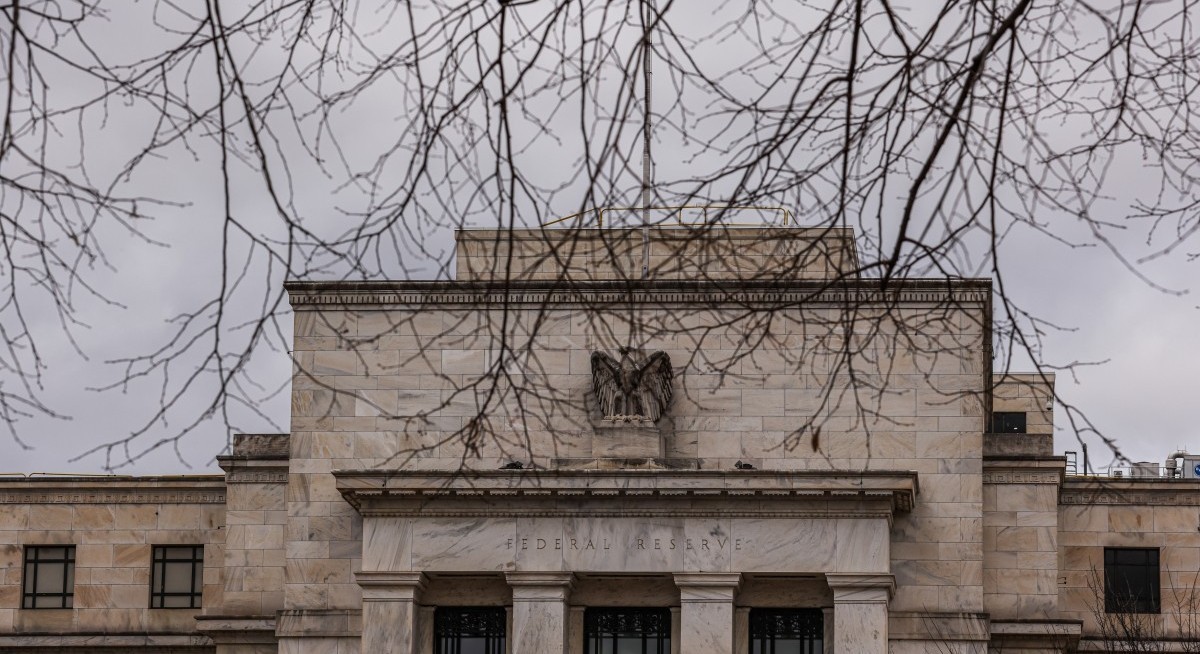


Congress designed the Fed to make expert judgments in the public interest, free from political influence and pressure. But President Donald Trump’s second administration has something else in mind. Some may say there is “no need to worry,” that the Supreme Court will protect Fed independence by finding a way to distinguish it from other agencies over which the president has asserted a right to remove “principal” officers at will. Regardless of the outcome of litigation over the attempt to remove Fed Governor Lisa Cook, though, the central bank’s independence already has been significantly impaired.
For example, Trump has asserted that all interpretations of law and review of agency expenditures, including by the Fed, fall within the purview of the White House and Justice Department. The administration has also taken control of all Fed regulatory policy, including its oversight of bank capital and leverage. The White House may claim that its control does not apply to the institution’s conduct of monetary policy, but this is a distinction without much difference.
Banks, by their very design, are in the business of creating and pricing money and credit. In a sense, they are to the Fed what franchisees are to McDonald’s. Bank regulations — leverage ratios, capital requirements, reserve requirements — are all related to the availability of money and credit in the economy. Key tools at the core of monetary policy — interest on reserves, the discount window primary credit rate, and so forth — generally are produced through legal rules voted on by the Fed’s board. How will the White House treat other tools, such as international swap lines, overnight reverse repo agreements, primary dealer arrangements, and the availability of master accounts?
Moreover, in an extraordinary turn, the chair of the White House Council of Economic Advisers, Stephen Miran, has been confirmed to the Fed board while merely on leave from the president’s team. Trump and his senior aides already regularly call publicly for lower rates, and when the next chair takes office in May, a majority of the board will have been appointed by Trump. At the same time, the Justice Department has taken the position that regional reserve bank presidents, who participate alongside the seven Fed governors on the Federal Open Market Committee, serve at the pleasure of the Fed board and can therefore be removed at any time.
See also: US new-home sales unexpectedly fall amid high mortgage rates
Thin ice
This erosion of the Fed’s autonomy is colliding with sticky inflation, higher import tariffs, and a worsening fiscal outlook. Annual inflation, as measured by core personal consumption expenditures (excluding food and energy), remained at 2.9% through August 2025, and Trump’s tariffs on goods — which increased the overall effective tariff rate this year from an average of 2.4% to 18% — have exerted additional upward pressure on prices.
Compounding matters, despite the administration’s cuts to the federal workforce, government spending was up 4% in fiscal year 2025, and the deficit was 5.9% of GDP. Treasury debt held by the public was US$30.3 trillion ($39 trillion) as of Sept 30 — about 99% of GDP. Then, the Republicans’ One Big Beautiful Bill Act sped up the deficit puck, with the Committee for a Responsible Federal Budget predicting that US deficits will average 6.1% of GDP through 2035, pushing debt to 120% of GDP. This will add substantially to US interest payments, which were already over US$1 trillion in the last fiscal year, having surpassed annual defence spending.
See also: US Treasury secretary signals confidence in new Fed chair, sees inflation coming down
When it comes to assessing inflation and economic growth, policymakers have been skating in fog. The government shutdown and earlier turmoil at statistical agencies have delayed or complicated key releases, leaving market participants and Fed officials to infer what they can from private sources and partial data. A growing concern is that sticky inflation, tariff-induced uncertainty, and a weakening fiscal position, coupled with a perception that the president will influence Fed decision-making, could unanchor inflation expectations and steepen yield curves.
Meanwhile, there is growing attention to where the AI-enthused market puck is heading. Are we witnessing a valuation bubble? As of Oct 20, US equity markets had reached record highs of about US$69 trillion, representing 225% of GDP, or 30 times trailing 12-month earnings. The ten largest companies in the US markets, the top eight of which are tech companies, represented 40% of the overall S&P 500, far exceeding concentration levels recorded in the last 40 years. The top four US companies — Nvidia, Microsoft, Apple, and Alphabet — were valued at roughly US$15 trillion, comparable to the aggregate market capitalisation of all publicly traded companies in the European Union.
We have also seen a wave of financing and vendor arrangements among the largest chip, cloud, and generative AI model providers. This web of arrangements is unprecedented in its sheer scale, interconnectedness, and dependence on expectations of dramatic, yet uncertain, revenue growth.
For now, the capital markets — spurred on by AI enthusiasm or possible Fomo (fear of missing out), alongside Big Tech’s substantial free cash flows — have sustained AI funding well in excess of realised revenues. JPMorgan estimates that growth in AI-related capital expenditures contributed 1.1 percentage points to US GDP growth in the first half of 2025, far surpassing what US consumers contributed. Bank of America expects AI capital expenditures to exceed US$400 billion this year. Yet with current AI revenues remaining modest relative to investment, this mismatch will need to be adjusted over time.
Geopolitical or other exogenous shocks, though, could temper the capital-market enthusiasm underpinning current AI investment levels, interconnected financial arrangements, and valuations. That might trigger corrections or reversals, particularly if AI revenue growth falls short of expectations. Such interconnectedness and fragility pose risks not only within the AI ecosystem but potentially more broadly across the US economy and financial markets. Undermining central-bank independence and easing financial regulations adds to these risks.
Own goals
There is no shortage of geopolitical pucks to watch. The US is stepping back from eight decades of supplying essential global public goods through the postwar international order. While the second Trump administration did not introduce the fractures in this system, it is accelerating the process of disintegration by casting doubts on traditional economic alliances and relationships.
Sink your teeth into in-depth insights from our contributors, and dive into financial and economic trends
America remains the biggest player in the economic ring, but its role in the global system is changing fast. In this context, the combination of tariff wars, unsustainable US fiscal deficits, challenges to international alliances, and diminishing Fed independence poses long-term risks to the US dollar and financial system. The dollar’s global dominance depends on trust, deep and liquid capital markets, and a safe asset (US Treasury securities), not on treaties. That trust stems from US institutions, the rule of law, and well-regulated capital markets, as well as the Fed’s reliability in promoting price and market stability. Stability, in turn, depends on the confidence of a wide variety of participants.
Trust in the global dollar system also rests on the Fed’s willingness to supply liquidity on technocratic, non-political terms. International dollar swap lines and related facilities, first established in 1962, have been essential to mitigating instability during times of global stress. The Trump administration’s approach to global alliances and tariffs, though, has created uncertainty about its willingness, when needed, to backstop global dollar liquidity.
Market participants and central bankers outside the US have begun to wonder whether swap lines will be as reliable or apolitical as in the past. When the White House issued statements tying dollar support from the US Treasury to Argentina to the outcome of that country’s presidential election, investors and central bankers paid attention. The more markets perceive that the availability or scope of dollar backstops depends on political alignment rather than macro-financial need, the more they will price a risk premium into the dollar itself.
The Fed’s independence is not a binary variable. The Supreme Court may yet craft a rationale to distinguish the Fed from other agencies, thus preserving a legal definition of monetary-policy independence. Substantively, though, the Fed’s independence has already been eroded by White House oversight and Trump’s politicisation of interest-rate decisions. Recall the 1970s, when Richard Nixon pressured the Fed chair to keep rates low. The consequences for inflation and the economy were not exactly ideal.
In the year ahead, with the Fed’s ability to skate independently already compromised, the question is whether the Fed will be allowed to manoeuvre when the game calls for it. For the sake of the global economy, we should all hope that its next chair still has enough space — and resolve — to head to where the puck is going. — © Project Syndicate, 2025
Gary Gensler, a former chair of the US Securities and Exchange Commission, is Professor of the Practice in Global Economics and Management and in Finance at the MIT Sloan School of Management




