


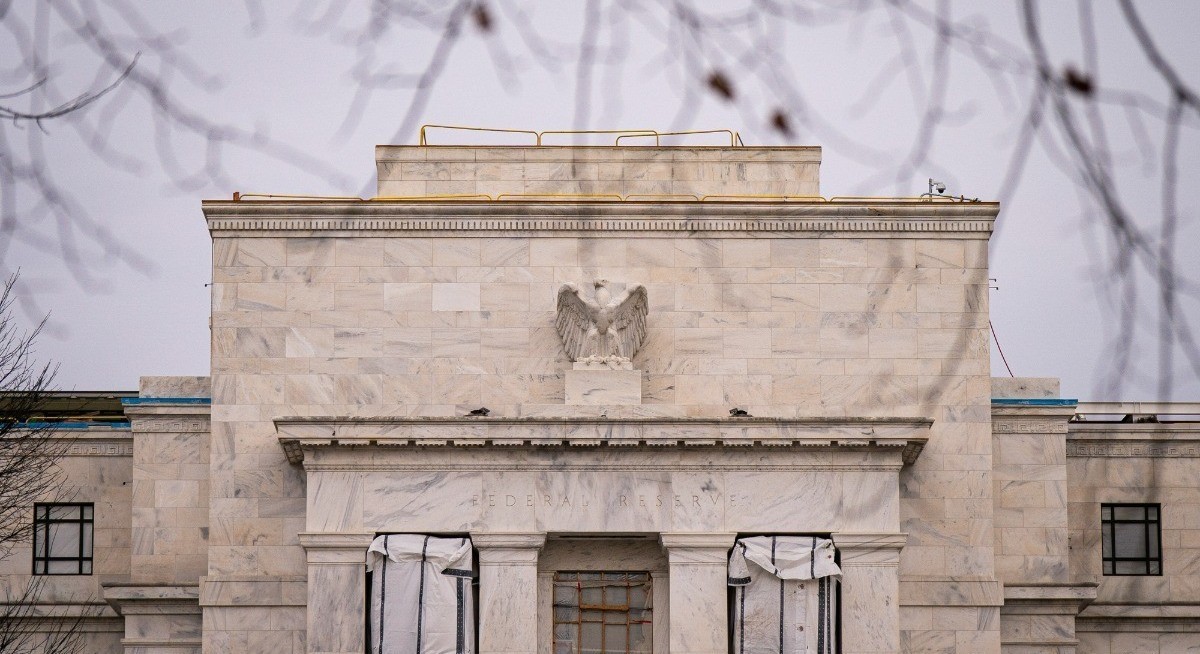


Independence
Markets are right to worry. If Trump manages to undermine faith in the Fed’s commitment to containing inflation, the repercussions could be disastrous. That said, even if the next Fed chair wants to lower interest rates further in line with Trump’s preferences, that outcome is far from guaranteed. The chair must also convince the policy-making Federal Open Market Committee (FOMC), and risks losing credibility in the event of failure. Simultaneously retaining the confidence of the FOMC, the Fed staff, investors and the president will be a difficult task.
The unsettled case of Fed Governor Lisa Cook, whom Trump has sought to fire “for cause”, still matters a lot. If the Supreme Court effectively expands the president’s power to remove Fed officials, including FOMC members, it will significantly enhance his ability to influence monetary-policy decisions — and potentially to stack the committee.
Interest rates
See also: US new-home sales unexpectedly fall amid high mortgage rates
Politics aside, the Fed has ample reason to hold steady, with monetary policy now judged by Chair Jerome Powell as “within a range of plausible estimates of neutral” following last year’s three 25-basis-point rate cuts. There should be less tension between the goals of maintaining a stable labour market and reaching the 2% inflation target. It will take quite some time for enough evidence to accumulate to justify further interest-rate adjustments.
The economy’s momentum looks sustainable, with AI investment, tax cuts and very easy financial conditions all providing tailwinds. The inflationary effect of tariffs should subside by mid-year — and should be smaller than feared thanks to various carve-outs and renegotiations. Housing inflation has also moderated, in part because the Trump administration’s immigration crackdown has contributed to a collapse in household formation.
The Fed’s US$6.6 trillion ($8.5 trillion) balance sheet
See also: US Treasury secretary signals confidence in new Fed chair, sees inflation coming down
The central bank is expected to keep buying Treasury securities, maintaining a portfolio large enough to ensure that banks have ample cash reserves and that short-term lending markets operate smoothly. Some Fed chair candidates, however, have argued for reducing the balance sheet sharply. If attempted, this would complicate the conduct of monetary policy, increasing both interest-rate volatility and contagion risk within the banking system.
Bank supervision
The 2023 regional banking crisis revealed severe shortcomings in supervisory process and culture. Vice-Chair Michelle Bowman has argued for focusing on issues material to bank safety and soundness, and for streamlining overly complex and duplicative regulations. The goals are sensible, but how they’ll be translated into practice remains to be seen. Mere loosening could put taxpayers and the broader economy at undue risk.
Stablecoins
Governor Christopher Waller has proposed that the Fed offer “skinny accounts” to fintech firms that have obtained limited bank charters — allowing issuers of stablecoins, for example, to park their reserves at the central bank. As opposed to traditional Fed accounts, though, these would pay no interest and offer no daylight overdrafts or access to loans from the Fed’s discount window — thus limiting their usefulness, particularly in times of stress. How this gets resolved will help determine the future of the US payments system.
The Fed’s monetary policy framework
The central bank’s communications need reforming. Its quarterly summary of economic projections, for example, emphasizes the modal forecast and obscures what’s driving disagreements about the appropriate interest rate path — differences in economic outlook, or in how monetary policy should respond. A better approach would be to publish a staff forecast accompanied by alternative scenarios, similar to what the European Central Bank does. This would help market participants understand how the Fed would react if the economy deviated from the baseline forecast and thus make monetary policy more effective. Yet despite Chair Powell’s suggestion last May that changes could be forthcoming, nothing has happened so far.
The challenges facing the Fed run both deep — in the case of monetary policy — and wide, extending to areas such as supervision and payments. It’ll be fascinating to see what unfinished business the new Chair takes on. —Bloomberg Opinions




