




This scheme, which will start on April 1, could raise operating costs for beverage producers. To give producers and retailers time to clear existing inventory that does not need to be recycled, there will be a transition period between April 1 and Sept 30.
The National Environment Agency (NEA), which is driving this scheme, says that a refundable deposit of 10 cents will apply to all pre-packaged beverages in plastic and metal containers ranging from 150 millilitres to 3 litres.
To ease financial burden, NEA announced in a Jan 20 circular to all beverage producers that they will receive a one-time grant of up to $2,500 to defray the cost of complying with the scheme.
This announcement follows feedback from smaller businesses over the cost of compliance, with some producers reportedly saying it could increase retail prices of bottled and canned drinks in Singapore by 25 cents to 60 cents.
See also: European banks could cut 20% of jobs on AI, Morgan Stanley says
F&N
Founded in 1883, Fraser and Neave (SGX:F99 ) (F&N) was one of Singapore’s original conglomerates, owning multiple business lines. In recent years, amid shifting market dynamics and a change of ownership, it has remained more focused, maintaining its position as a leading Southeast Asian consumer group through its multi-brand food and beverage portfolio and its publishing and printing business, which it has run for decades.
F&N’s business operations span Asia, including Singapore, Malaysia, and Thailand, as well as the Americas. In particular, the F&B business includes soft drinks, dairy, beer, and packaged food, with brands such as 100Plus, F&N, F&N Magnolia, F&N Nutriwell and Teapot.
See also: Ferrari CEO says first EV racking up orders despite criticism
As indicated in its latest annual report, F&N’s largest shareholder is chairman emeritus Charoen Sirivadhanabhakdi, who holds 87.31% through entities such as InterBev Investment (IBIL) and TCC Assets, which hold 69.7% and 17.6%, respectively. The Thai tycoon controls various listed entities, including ThaiBev (SGX:Y92) , Frasers Property (SGX:TQ5) and others.
In the latest FY2025 ended Sept 2025, F&N posted a 7% increase y-o-y in revenue to $2.3 billion. The higher revenue was driven by the F&B business segment, while partially offset by the decline in revenue from its P&P business segment. Despite higher revenue, earnings slipped 4% y-o-y to $210.4 million, mainly due to higher tax expenses rising from the expiry of a tax incentive at a subsidiary in Thailand.
Looking ahead, amidst the ongoing trade and geopolitical tensions, F&N will continue to focus on strengthening its brand, leveraging digital and sustainability initiatives and seeking out potential growth opportunities to create value for shareholders.
Meanwhile, apart from frequent share buybacks, F&N has seen numerous corporate development. In September 2025, the company appointed Rahul Colaco as the new CEO of F&N, who succeeded Hui Choon Kit, who stepped down on Sept 30. Hui remains with F&N until Jan 31 to ensure a smooth leadership transition.
Colaco has over 28 years of experience in the consumer goods sector and has served as chief of spirits, international at ThaiBev since 2024 and as CEO of Grand Royal Group in Myanmar from 2020 to 2024.
In December 2025, F&N announced the acquisition of 4.6% additional shares in Vinamilk from Jardine Cycle & Carriage (SGX:C07) for about $295 million. In the past couple of years, the Jardine group of companies have been actively divesting and streamlining its assets. Upon completion, F&N increased its effective interest in Vinamilk to 24.99%.
F&N says that Vinamilk is one of Asia’s leading dairy companies, recognised for its strong brand portfolio, extensive distribution network, and resilient financial performance. This will allow F&N to deepen its exposure to Vietnam’s dynamic dairy market.
Sink your teeth into in-depth insights from our contributors, and dive into financial and economic trends
Thai Beverage
Listed in 2006, Thai Beverage (SGX:Y92) (ThaiBev) is a leading beverage company in Southeast Asia and the largest in Thailand. In 2012, after a bidding war against OUE’s Raidy family, ThaiBev took control of F&N and further expanded ThaiBev’s position as the leading beverage producer and distributor in Southeast Asia.
Just like F&N, the largest shareholder in ThaiBev is Charoen Sirivadhanabhakdi, who owns a 65.8% stake in the company. He currently serves as executive chairman of ThaiBev and as chairman emeritus of F&N, as mentioned above.
In its most recent FY2025, ended Sept 30, ThaiBev reported sales revenue down 2.1% y-o-y to THB333.3 billion ($13.6 billion) due to macroeconomic challenges that led to softening consumer sentiment across key markets.
Net profit dropped 11.7% y-o-y to THB31.2 billion, due to the spirits business increasing investments in brand building and new product launches. In July 2024, ThaiBev announced, through its indirect wholly owned subsidiary, IBIL, that it had entered into a share-swap agreement with TCC Assets.
Under the agreement, ThaiBev will see its indirect majority shareholding in F&N increase from its original 28.3% to around 69.7%, and will fully divest its interest in Frasers Property’s shares to TCC Assets.
ThaiBev explains that through this share swap agreement, the company will be able to directly pursue value-creation opportunities by fully integrating F&N into the company and keeping its position as the leading regional pure-play beverage and food business in Southeast Asia.
Meanwhile, the long-awaited potential spinning off of ThaiBev’s spirit business could be very well on the horizon. According to The Bangkok Post, citing Kitipong Urapeepatanapon, chairman of the Stock Exchange of Thailand, ThaiBev may list its Thai spirits business later this year.
Listings of alcohol businesses were previously frowned upon in Thailand — that was why ThaiBev was listed in Singapore instead. However, with the Thai stock market in need of a boost, perceptions and attitudes have apparently changed. Permitting alcohol beverage producers to list would help make the domestic market more attractive, said Urapeepatanapon.
Even so, the timing of the spin-off listing, assuming it goes ahead, will depend on market conditions. In response to The Bangkok Post report, DBS Group Research, in its Jan 20 note, suggests that valuation will be the key determinant of whether ThaiBev proceeds with a Thailand listing of its spirits business.
“With global alcohol beverage peers trading at around 13 times forward P/E, we believe ThaiBev would likely seek a premium valuation closer to 16–20 times forward P/E,” says DBS, which has a “buy” call and 62 cents target price on this stock.
What is more likely is the revival of the beer business, which has been widely reported to be listed on the Singapore Exchange (SGX) for years, says DBS. With ThaiBev trading at around 10 times forward P/E, a BeerCo listing at a premium to the current valuation could unlock value and serve as a meaningful re-rating catalyst, says DBS.
Yeo Hiap Seng
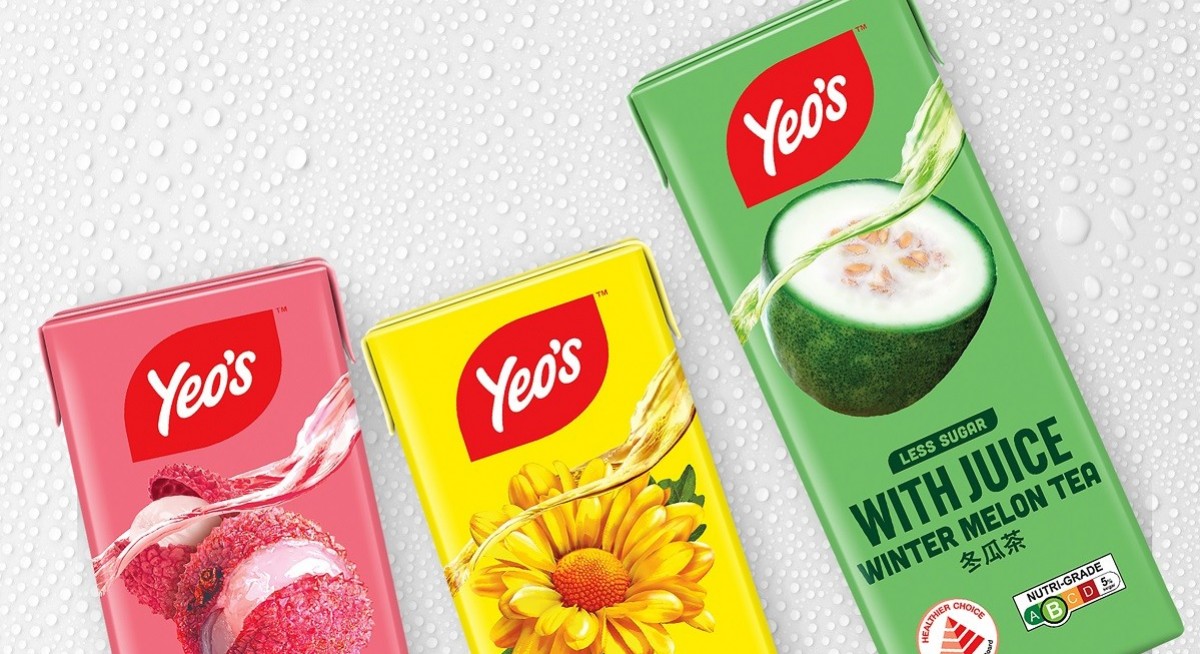
Yeo Hiap Seng (SGX:Y03) is a Singapore-based household brand in food and beverage and other foodstuffs. Founded in 1900, the company sells Asian drinks, sauces, and canned food, many under the “Yeo’s” brand. Listed on the SGX since 1969, the company serves more than 30 markets worldwide and has a global distribution network across Asia, Europe and the US.
In the recent annual report, Yeo Hiap Seng’s largest shareholder is Ng Chee Tat Philip, who owns a 76.3% stake. He is currently the CEO of property giant Far East Organisation (FEO), whose family also controls other listed entities, including Far East Orchard (SGX:O10) , Far East Hospitality Trust (SGX:Q5T) , and Sino Group, a Hong Kong-listed company. The Ngs, via FEO or other vehicles, are known to hold substantial stakes in other listed companies such as Banyan Tree Holdings (SGX:B58) and Jumbo Group (SGX:42R) .
For the recent 1HFY2025 results ended June 30, 2025, Yeo Hiap Seng’s revenue was down by 10.1% y-o-y to $148.6 million. The topline decline was due to the absence of Oatly co-packing revenue as well as earlier Chinese New Year shipments recognised in the prior calendar year.
In late 2024, Yeo Hiap Seng announced it would receive a $32 million “exit compensation” after Oatly terminated a 2019 “co-packing” agreement to produce products under the Swedish brand.
While production was terminated, Yeo Hiap Seng continued to distribute Oatly in Singapore and Malaysia. The compensation will be paid in full by January 2027 and will consist of an asset buyout, compensation for order obligations, repayment of loans, and future lease payables.
Meanwhile, net profit after tax declined by 51% y-o-y to just $1.5 million on the back of lower gross profit, higher administrative expenses and lower other income. Gross profit margin decreased by 1.3 percentage points y-o-y from 32.7% to 31.4% while net profit margin suffered a y-o-y decline from 1.9% to just 1.1% in 1HYF2025.
Looking ahead, Yeo Hiap Seng notes that consumer sentiment remains cautious in its key market amid economic uncertainties. The company will continue to monitor the macroeconomic environment and focus on higher-margin products and channels, driving improvements in operational efficiency, innovation and cost-effectiveness.




