




The Ellisons are close to US President Donald Trump, whose campaigns and causes they have funded for a decade. The family now owns a big chunk of TikTok America. Larry’s software firm, Oracle, has the sole rights to host all of TikTok America’s data on its cloud servers, on top of its 15% stake in the company that controls TikTok’s American assets, including its local algorithm.
The way I see it, the billionaires, Hollywood studio owners and streaming giants are fighting yesterday’s wars. They don’t yet see the forest for the trees. Cinema attendance in North America and Europe has been declining since 2002. While cinema revenues did not peak until 2016, that was only because movie theatres continued to jack up ticket prices to compensate for plummeting audiences. Eventually, the movie industry couldn’t raise ticket prices faster than the falling number of cinemagoers.
The real story isn’t the consolidation of the moviemaking industry, layoffs and migration of viewers from cinemas to streaming platforms, but about the remaking and transformation of Hollywood and, indeed, the entire ecosystem of filmed entertainment. The 1960s saw a secular shift in consumer spending from goods towards services, with US cinemas making up 70% of total live entertainment spending. By 1975, cinema spending had fallen to just 50% of total US household entertainment budgets. Last year, the average American household spent US$3,700 on entertainment — everything from Netflix and Spotify subscriptions to sporting events and, for some lucky ones, even attending one of Taylor Swift’s The Eras Tour concerts. Of that amount, the average American household spent merely US$90 on movie tickets.
The last time I was physically inside a cinema was in July, when I watched the racing movie F1 in an IMAX theatre. I do, however, subscribe to an array of streaming platforms. I watch at least one, sometimes more, movie every week on Netflix, Apple TV or Amazon’s Prime Video. While Netflix and Paramount’s battle to grab control of WBD was fodder for media headlines, Hollywood insiders were more worried about Tilly Norwood, an AI-generated “actress” created by a British start-up called Particle6. For some months now, the buzz in Hollywood was that talent agencies were scouting the large language model output as if she were auditioning for a role alongside Julia Roberts or Jennifer Lawrence or a “chemistry read” with Timothée Chalamet or Glenn Powell.
See also: Epic Fury vs True Promise
Here’s a brief primer on the economics of moviemaking. Making films is an expensive business. Big studio blockbusters these days can cost anything from US$65 million to over US$300 million. And hit TV series such as Wandavision, Game of Thrones, The Rings of Power and Stranger Things cost over US$25 million per episode.
The biggest item in a movie’s budget is the stars’ salaries. Top actors such as Tom Cruise or Brad Pitt command US$25 million to US$30 million per movie, while popular actresses like Reese Witherspoon and Margot Robbie regularly take home US$15 million to US$20 million when they play a major role in a Hollywood movie.
Add the cost of promoting and marketing a movie (advertising, commercials, posters and so on) to the basic production costs. A movie that costs US$100 million to make probably budgets another US$100 million on marketing and promotion. AppleTV spent US$250 million making F1, starring Brad Pitt, this year. It reportedly spent another US$250 million on marketing and promotion. The movie has grossed about U$650 million so far. If you invest US$500 million, you get US$650 million back, only if you are lucky and your film was a hit. Hollywood has produced between 500 and 600 movies for theatrical release every year over the past three years. Only a third can be described as “commercial success”. The rest either barely break even or flop. Clearly, the economics of moviemaking sucks even when you look at some of the biggest hit movies of the year.
See also: The time has come to shutter the World Economic Forum
Yet, a lot of money continues to pour into Hollywood as well as other movie centres around the world because the payday can be huge when you get it right. This year’s top-grossing movie, Ne Zha 2, a Chinese animated film, will end the year with gross receipts of US$2.2 billion or so. It cost about US$100 million to make. The bulk, or nearly 96%, of its box-office sales were from within China. Disney’s animated film Zootopia 2, which raked in US$1.2 billion, was a distant No 2 this year, with 23% of box-office receipts from its home market, the US. It reportedly cost Disney US$250 million to make and another US$100 million-plus in marketing spend.
Production crews are another big cost centre. An average Hollywood movie requires about 250 to 300 people, not just actors but people involved in all facets of film production, including sound, lights and cameras as well as screenwriters, costume designers and location scouts. Disney’s Black Panther employed over 3,000 people, including illustrators and fabric dyers. Sci-fi action film Avengers: Infinity War, released in 2018, had crew credits that ran over 5,100, while another sci-fi movie, Iron Man 3 (2013), had over 3,300 crew credits.
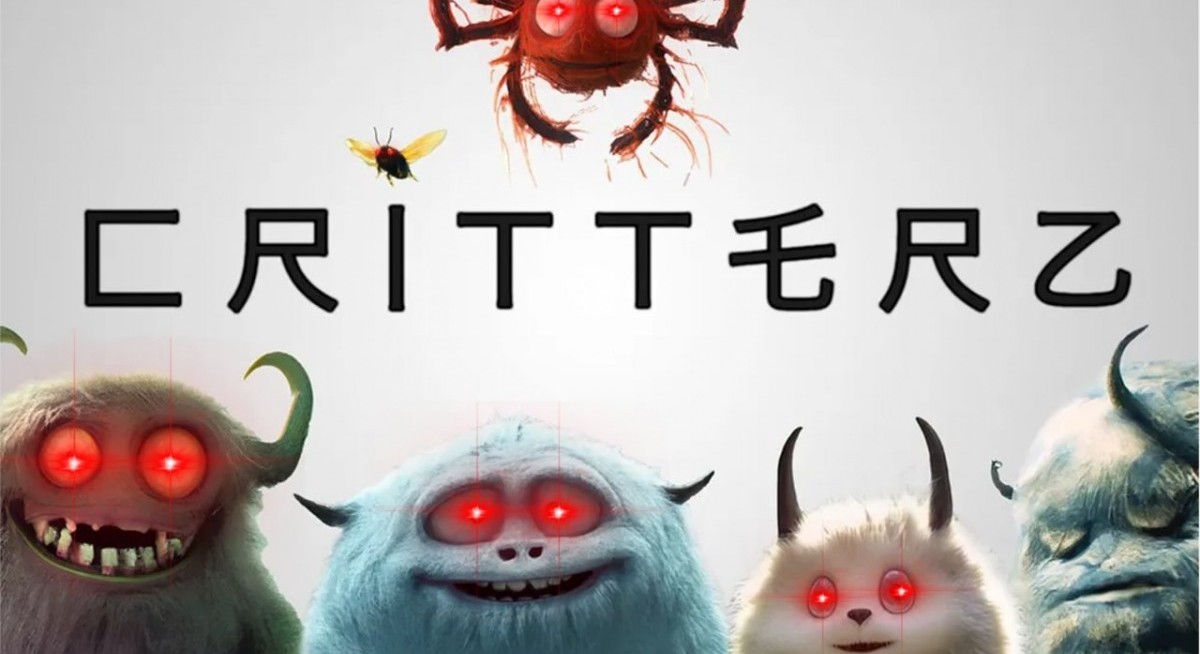
With artificial intelligence (AI), you can cut costs and make cheaper movies with far smaller crews. Instead of 300 crew members, you might need a crew of just 30. ChatGPT creator OpenAI has a new animated science documentary turned comedy, Critterz, under production with a budget of US$30 million. It will debut at the Cannes Film Festival in May. In contrast, these days, Disney animation movies cost US$150 million to US$250 million each.
Consultancy Bain & Co noted in a 2024 report that a shift towards more virtual production could reduce production times and costs by up to 10% for films that cost more than US$50 million to produce and more for family movies, sci-fi sequels and animation. Potential savings include post-production colourisation, markerless motion capture, automating repetitive tasks like rotoscoping and background removal, and generating complex effects like fire and crowds.
Powerful tool
Talking about using AI to make movies, Ne Zha 2 features over 1,900 special effects shots. Bringing those effects to life meant processing huge amounts of data, AI training and massive computing resources. So, essentially, you can say Ne Zha 2 was an AI movie. Clearly, it extensively used AI tools in production. On the other hand, Disney’s Zootopia 2 was produced entirely by hundreds of human artists and animators, who used primarily traditional methods, with some new animation software but no AI.
In April, Netflix released a six-episode live-action adaptation of the classic graphic novel El Eternauta (The Astronaut), an Argentinian sci-fi comedy. The streaming giant is showing a second season of the space comedy now. It used generative AI for the first time ever to help craft visual effects, speeding up production and creating scenes that would otherwise have been difficult to do on a limited budget. “This is real people doing real work with better tools,” Netflix co-CEO Ted Sarandos told analysts in an earnings call earlier this year. “Our creators are already seeing the benefits in production through pre-visualisation and shot planning work, and certainly visual effects,” he said. “I think these tools are helping creators expand the possibilities of storytelling on screen, and that is endlessly exciting,” he noted.
Sink your teeth into in-depth insights from our contributors, and dive into financial and economic trends
Netflix isn’t the only streaming service using AI to create movies and TV serials. Amazon has been throwing money at AI moviemaking as well. Earlier this year, Amazon’s venture capital Alexa Fund invested in
Fable Studios, a San Francisco-based start-up that produces an AI-generated TV show called Showrunner, which enables viewers to do more than just watch. Fable has been described as the “Netflix of AI” — a service that lets viewers type in a few words to create scenes, or even entire episodes, of a TV show, either from scratch or based on an existing story world created by someone else. You can easily change some aspects of the outcome of your favourite TV series, interact with the storylines and even shape entire episodes to your liking. Fable wants to challenge the whole idea of passive viewing.
Fable’s co-founder and CEO Edward Saatchi, whose father and uncle ran Saatchi & Saatchi, once the world’s biggest advertising firm, believes that AI — instead of simply being a tool for cheaper special effects — will eventually represent a new entertainment medium, one that more closely resembles video games. “The ‘Toy Story of AI’ isn’t just going to be a cheap Toy Story,” Saatchi was recently quoted in the Hollywood press as saying. “Our idea is that ‘Toy Story of AI’ would be playable, with millions of new scenes, all owned by Disney,” he said. “Hollywood streaming services are about to become two-way entertainment: Audiences watching a season of a show [and] loving it will now be able to make new episodes with a few words and become characters with a photo. Our relationship to entertainment will be totally different in the next five years.”
Generative AI can be used to create text, images, audio or video, based on patterns it learns from massive amounts of existing data. AI can produce videos that appear highly realistic by using existing footage, and it can also predict the next element in a sequence, such as a word, pixel or sound. Thanks to YouTube and TikTok, AI’s large language models have billions of online videos to help create scenes that show anything in a matter of seconds. AI text-to-video tools such as Pika, Runway, Stable Diffusion and Sora are making it easier for new entrants to create high-quality content for both digital and TV platforms. In 2024, AI models first matched human capabilities on Visual Commonsense Reasoning tasks, and new, more powerful text-to-video models are building on that. Video content disruption is likely to unfold rapidly.
To be sure, Hollywood studios and producers have been using machine learning tools for years now. Since the advent of ChatGPT and generative AI, Hollywood has started using AI for scriptwriting, storyboarding and film editing as well as special visual effects, which involves digitally creating or altering imagery outside live shooting, using complex software such as Nuke and Blender for tasks from modelling and animation to compositing and simulations. Studios are increasingly using post-production AI tools to enhance video quality, stabilise film footage, and create complex effects.
Lowering costs
While AI won’t yet ensure that Hollywood will produce more blockbusters or Oscar-worthy films, the increased use of AI will help lower overall costs, which, in turn, will empower more independent moviemakers. Right now, a lot of movies don’t get made because studios and producers do their maths only to conclude they might not be able to generate enough returns to justify their investments. AI will be a boon for indie filmmakers. AI tools will make the process of filmmaking more accessible to independent creators, allowing them to produce detailed storyboards, visual effects and even full short films with limited budgets. Already, tools such as Google’s Flow and Adobe’s Firefly enable users to create and edit video content with simple text prompts. AI will also help open up an array of new creative possibilities. For example, it can enable impossible shots, generating entire worlds or transforming actors with a click, potentially rivalling sound or colour as a key film innovation.
Silicon Valley is more involved in Hollywood today than ever across film, TV, music and live entertainment. Netflix started as a distribution platform peddling DVD-by-mail in red envelopes, then branched out to streaming movies and TV serials made by Hollywood studios and eventually expanded into making TV serials and movies in-house. Amazon and Apple are now both distributors and movie producers. Google’s YouTube is a big movie distributor, and I will bet it’s a matter of time before it starts making movies that it can then show on its own platform. In 2023, Hollywood put out over 15,000 hours of TV and film, while there were 300 million hours of content uploaded to YouTube. If viewers consider just 0.01% of that YouTube content to be just as interesting as Hollywood fare, that’s twice Hollywood’s annual content output. Disney recently invested US$1 billion in OpenAI and licensed its content to the world’s biggest tech start-up.
YouTubeTV is already a formidable business that aggregates cable TV and streaming offerings. It already has over 12% of total TV viewership, the largest in the US, according to Nielsen’s Gauge. Netflix is a distant second at just under 9%. YouTubeTV recently won the rights to broadcast the Academy Awards, one of America’s most-watched TV shows, every year. Google is also a huge player in AI and with AI playing a bigger role in moviemaking, it will make sense for Google or YouTube to make their own movies. In the media business, vertical integration is the key and no one can do better than the tech giants that have a huge user base, technology and gushing streams of cash flow.
Unfortunately, technology is often used to enhance productivity and slash costs. In Hollywood, there is genuine concern that AI will replace a lot of human talent — actors, screenwriters, artists and other technicians. There is also concern about copyright and intellectual property violations. Who owns AI-generated work? Right now, only humans can hold copyright. But extensive use of AI threatens to change that. For their part, studio executives have argued that increased use of AI could help change moviemaking from a massive industry into a creator-driven medium.
In 2023, the Writers Guild of America, which represents 11,500 screenwriters, went on a strike that lasted five months over a labour dispute with the Alliance of Motion Picture and Television Producers. It was the second-longest strike in Hollywood’s history. And it wasn’t just about money. A key issue was the existential threat posed by AI. Writers were worried that Hollywood producers would use generative AI to do a lot of the work they were doing.
Eventually, the Writers Guild and movie and TV producers hammered out a deal that included guardrails on the use of generative AI. While the writers’ new contract is not an outright ban on the use of generative AI, it does regulate its use in ways that could benefit writers and studios and reduce harm. The contract explicitly spells out that AI is not itself a writer competing with humans, but rather a tool for writers’ beneficial use. When AI is used in movies and TV productions, the contract specifies that it would complement the work of writers instead of replacing them. The contract only permits studios and writers to use generative AI under specific circumstances, but with guardrails that protect writers’ employment, credit and creative control, while also protecting the studios’ copyright. Under certain terms, studios may provide writers with an AI-generated draft, but it will not count as “source material”, meaning writers will get full credit and compensation for originating the idea.
The intellectual property (IP) battle in Hollywood has had some interesting twists and turns over the past two years. Some in the film industry have urged regulators to “delete all IP laws’” and grant generative AI unfettered access to high-quality training material, while creatives are rallying behind legislation, such as the proposed No Fakes Act or the Nurture Originals, Foster Art and Keep Entertainment Safe Act, which aims to protect IP. The US federal legislation, which is still crawling its way through Congress, seeks to establish a national standard to protect individuals’ voices and visual likenesses from unauthorised AI replicas, also known as deepfakes.
Made-for-you movies
So, what’s next? The future is “made-for-you” movies. Movies no longer attract viewers’ attention the way they used to 30 years ago. Customised AI movies are seen as a way to increase user engagement and provide unique content, and lure some users away from video games and social media, but it also raises ethical debates regarding IP and the nature of human storytelling. The goal is to use AI to create highly personalised or, in some cases, co-created films for individual viewers. A new generation of tech-savvy moviemakers wants to generate unique cinematic experiences tailored to specific user preferences, including generating scripts, characters and entire story lines on demand. AI will also enable people like you and me to insert our own likeness, or indeed the likeness of another character, into pre-defined “variable character slots” within professionally produced films, creating a unique viewing experience. Another approach might be to use AI to tailor specific elements of a story, such as plot twists or pacing, to different audience segments to help enhance overall engagement.
Whatever happens, Hollywood or moviemaking around the world won’t die even as AI embeds itself into our daily lives. Storytelling will still matter and, for now, humans are far better storytellers. The way I see it, in the foreseeable future, AI will mainly be a powerful tool to help human creativity rather than completely replace it.
Assif Shameen is a technology and business writer based in North America




