


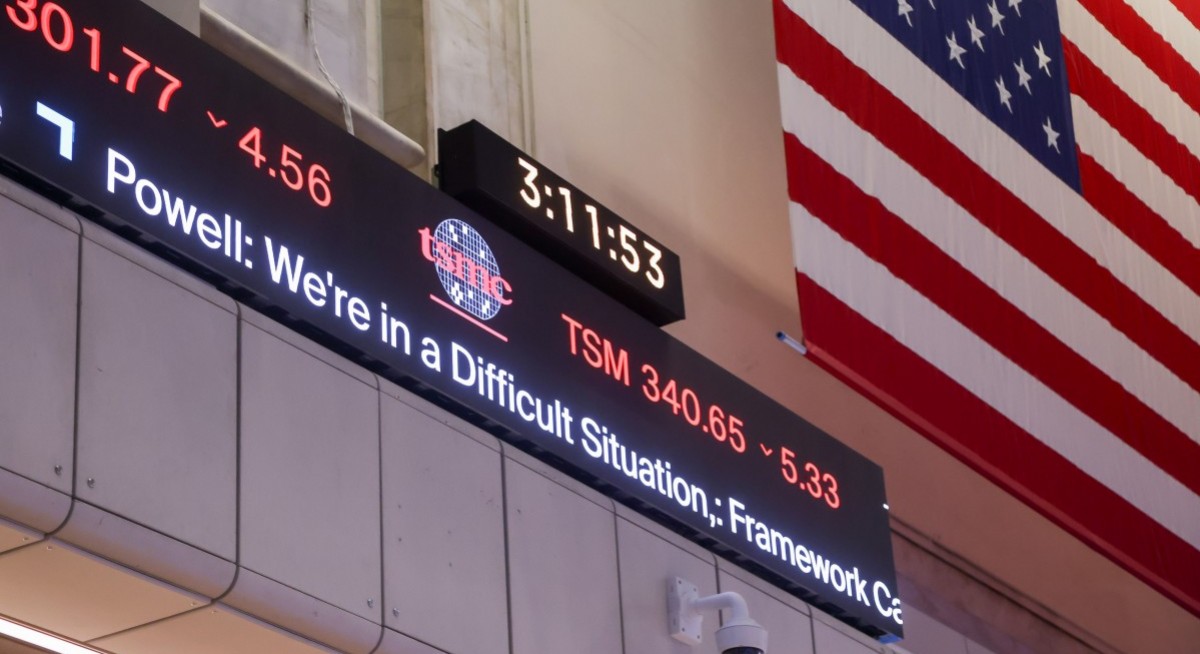


(March 19): Wall Street remained on edge as an oil surge drove stocks and bonds lower, while US Federal Reserve (Fed) chair Jerome Powell said uncertainty about the war’s impact on inflation made future rate policy harder to forecast.
While the central bank kept its projections for a rate reduction in 2026 and another one in 2027, traders trimmed their bets on a cut this year. Treasury yields climbed as Powell said it’s important to keep rates mildly restrictive while noting the Fed is in a tough position. The S&P 500 dropped 1.4% in its worst Fed day since 2024. Brent hovered near US$110 in late hours.
Markets were rattled as Iran and Israel traded strikes on key energy facilities in the Middle East, complicating efforts to curb a surge in energy prices. The complex that houses the largest liquefied natural gas export plant has suffered “extensive damage” as the conflict spreads to encompass major Gulf energy infrastructure.
“The implications of developments in the Middle East for the US economy are uncertain,” Fed officials said after holding rates steady. “The committee is attentive to the risks to both sides of its dual mandate.”
The spike in energy costs risks adding to price pressures while restraining growth. The bigger issue for the economy is that inflation is proving sticky while energy costs are rising, which compresses the Fed’s room to manoeuvre, according to Christian Hoffmann at Thornburg Investment Management.
One point that has not received enough attention is the disinflationary impact of high oil prices through weaker demand, Hoffmann noted. Energy is clearly an inflation risk, but also an economic headwind, he added.
See also: US stocks fall on escalating Iran war tensions, higher PPI
Powell emphasized that to resume lowering rates, officials would have to see progress in reducing inflation.
“If we don’t see that progress, then we won’t see the rate cut,” Powell told reporters after the Fed released its decision.
About 420 shares in the S&P 500 retreated. The yield on two-year Treasuries advanced 10 basis points to 3.77%. Traders are pricing in only about 15 basis points worth of Fed easing this year, less than one full quarter-point cut. The dollar rose.
See also: Stocks stage cautious advance as oil tops US$96
“The economic cost of surging energy prices is not yet known, so it’s understandable that chair Powell struck a cautious tone about future rate cuts,” said Ellen Zentner at Morgan Stanley Wealth Management. “Because oil-supply shocks typically lead to a significant slowing in growth, there will likely be more room for policy easing than many people now expect.”
The Federal Open Market Committee voted 11-1 to hold the benchmark federal funds rate in a range of 3.5% to 3.75%. Governor Stephen Miran dissented, calling for a quarter-point reduction.
In economic forecasts released with their decision, officials raised their outlook for inflation in 2026 to 2.7% from 2.4%. Notably, they saw the core measure — which excludes volatile food and energy categories — also rising to 2.7%.
“The Fed didn’t move today — but it didn’t need to,” said Gina Bolvin, the president of Bolvin Wealth Management Group. “This is a central bank that’s comfortable waiting, watching, and staying flexible. One projected cut tells you everything: the Fed is not in a rush, and neither should investors be.”
Uploaded by Isabelle Francis




