


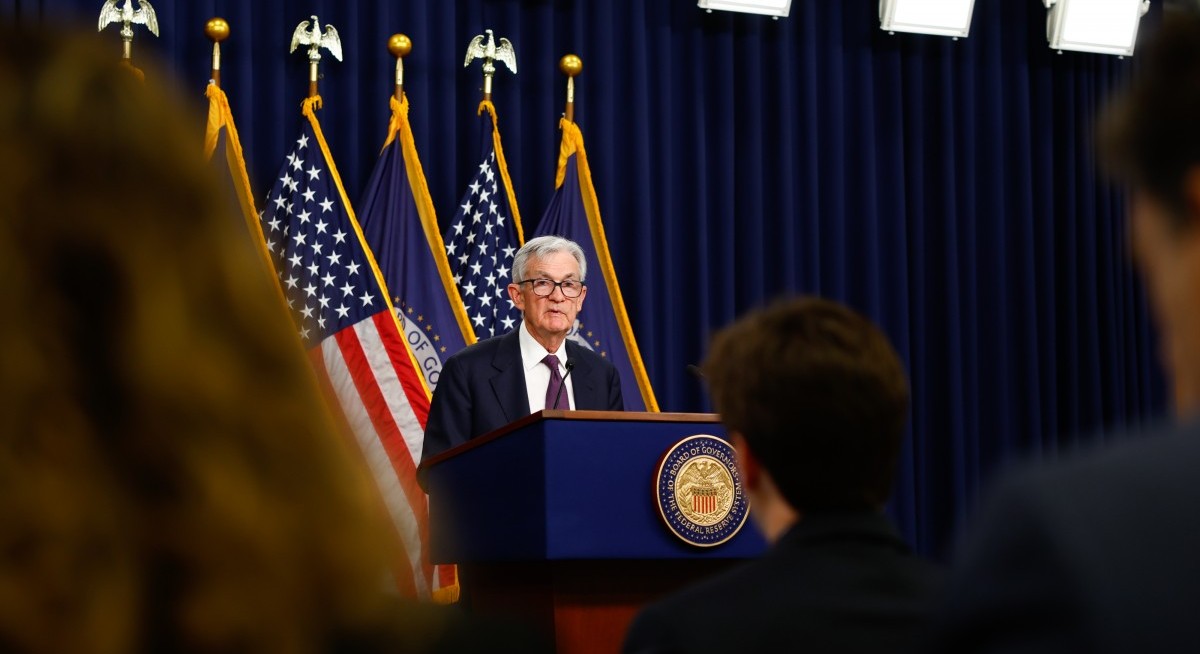


(March 19): Federal Reserve (Fed) chair Jerome Powell made it clear the US central bank won’t cut interest rates again until inflation resumes cooling. And that’s before it even starts considering the possible impact of the war in the Middle East.
Powell, in a press conference on Wednesday, underscored that it was still too soon to gauge the effects of a surge in oil prices on the US economy, even as financial markets have raced to price in higher expected inflation over the year ahead. Instead, he dwelled on signs, even prior to the outbreak of war, that price pressures were lingering longer than policymakers had hoped.
“The thing that’s really important that we see this year is progress on inflation,” Powell said. “If we don’t see that progress, then you won’t see the rate cut.”
The Fed chair’s comments, delivered after a decision to leave rates unchanged for a second straight meeting, reinforced the notion that the central bank is still a long way from resuming a string of rate reductions it undertook at the end of 2025 as data on consumer prices refuse to cooperate.
That trend also raises the spectre that the Fed’s next move may ultimately be a hike, a possibility Powell acknowledged came up again in discussions this week — though that’s not the base case for the majority of policymakers, he added.
In fresh projections released on Wednesday, officials maintained their call for one rate cut this year, according to the median estimate. But they also unexpectedly revised up their projections for economic growth, suggesting they are not yet concerned about the possible dampening effect of higher energy costs.
See also: US mortgage rates reach highest this year, slowing refinancing
Inflation estimates up
Meanwhile their inflation estimates moved up, which Powell mainly attributed to the lingering impact of tariffs. He noted price pressures have been particularly stubborn in the goods categories most impacted by the levies.
“The question of whether we look through the energy inflation doesn’t really arise until we have checked that box,” Powell said.
See also: US Charities face projected US$5.7 bil yearly hit from tax change
The Fed chief also expressed optimism about the outlook for the labour market, even as low hiring has raised concerns that it could be on the brink of more significant pain. He pointed to the unemployment rate, which has been little changed since September.
Worries over employment drove the Fed to cut rates by three-quarters of a percentage point at the end of 2025. Most policymakers now see rates as near the level where they’re neither weighing on nor stimulating growth, which Powell said was “the right place to be” now.
“The market has been concerned about the growth risk as well as the inflation risk from the oil price shock,” said Priya Misra, a portfolio manager at JPMorgan Asset Management. “It seems that the Fed might be more concerned about the inflation risk, and that just could be a function of the fact that the inflation numbers are further away from their target than the unemployment rate.”
Legal battle
The Fed’s position will likely provoke more ire from President Donald Trump, who as recently as Wednesday morning again prodded it to cut rates.
Powell, who is embroiled in a legal battle with the Department of Justice, said on Wednesday that he plans to stay at the Fed while the government’s investigation remains open. Recent court filings revealed Powell feels compelled to stay at the central bank to defend its independence.
While his term as the chair ends in May, he can choose to stay on the Fed’s board of governors in a term that extends until 2028. Speculation over whether he will do so has risen in recent weeks amid the ongoing DOJ probe.
To stay ahead of Singapore and the region’s corporate and economic trends, click here for Latest Section
“Not leaving the board until the Department of Justice investigation is over, I think, makes logical sense,” said Kathy Bostjancic, the chief economist of Nationwide. Even if it does wrap up by May, “he still hasn’t decided whether he’ll stay on or not, and I think that maybe is the most critical part that you don’t quite know yet.”
The DOJ in January issued subpoenas to the Fed as part of an investigation into cost overruns in a building renovation project. In a statement at the time, Powell called the stated reasons for the investigation pretexts, and said the probe was really triggered by the Fed’s refusal to set interest rates based on Trump’s demands.
Uploaded by Isabelle Francis




