


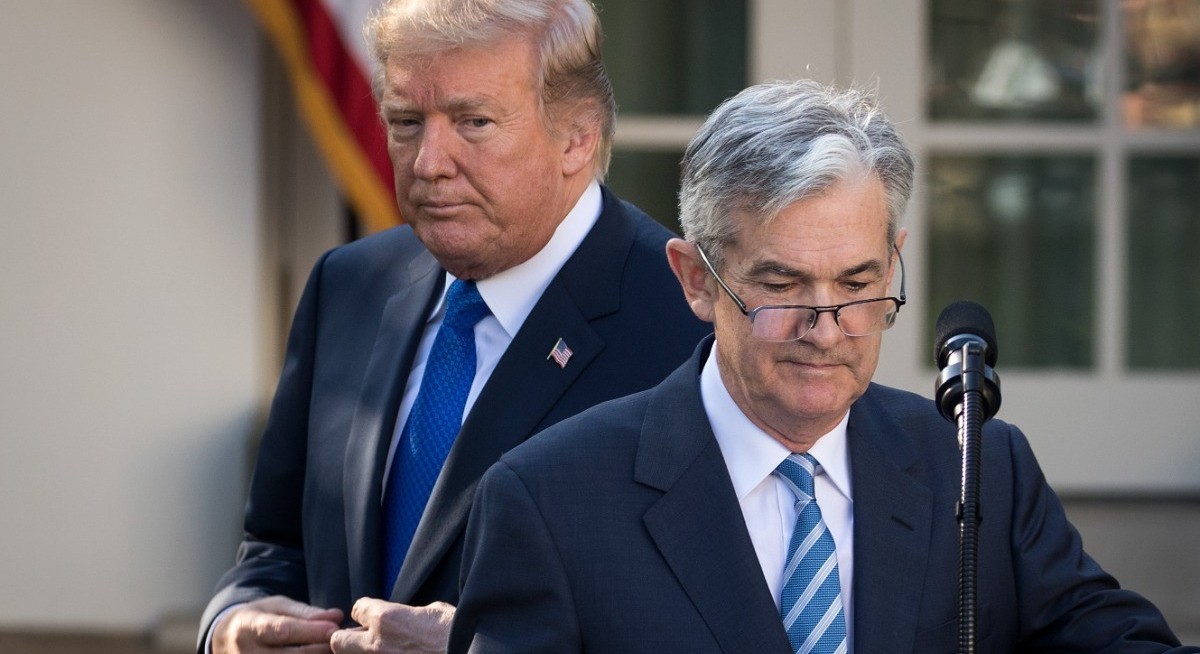


(March 16): US Federal Reserve (Fed) officials are widely expected to hold interest rates steady at their meeting this week, as attention shifts to how they may respond if fallout from war in the Middle East pulls their policy goals in opposite directions.
The US-Israeli assault on Iran has injected significant uncertainty into the economic outlook, with a sharp rise in oil prices threatening to put pressure on inflation and dampen economic growth. At the same time, lacklustre employment data are forcing policymakers to reconsider their assessment of the labour market’s stability.
The combination means chair Jerome Powell and his colleagues on the Federal Open Market Committee could soon find that their aims call for diverging policy responses — lower rates to support the labour market or keep rates elevated to contain inflation.
For now, officials are likely to signal they remain in a wait-and-see mode as they take the rapidly evolving conflict in the Middle East on board, said Aditya Bhave, a senior US economist at BofA Securities.
“They don’t want to jump to conclusions. This is a supply shock,” Bhave said of the jump in oil prices. “Supply shocks increase the risk to both sides of their mandate.”
Alongside the economic complexities, a tense and consequential political drama hangs over this week’s Fed gathering.
See also: US data centre boom slows due to power grid limits — WoodMac
A federal judge’s move last week to quash Department of Justice subpoenas targeted at Powell represented a win for the central bank. But US attorney Jeanine Pirro vowed to press on with efforts to investigate the Fed and its chief. That could disrupt a leadership transition at the central bank expected in May.
War and oil
After cutting interest rates three times in late 2025, Fed officials left their policy rate unchanged in a range of 3.5% to 3.75% in January. With the labour market at the time showing signs of steadying, policymakers broadly indicated they were comfortable keeping rates on hold, possibly for an extended time, to keep downward pressure on inflation that’s been above their goal for five years.
See also: US Treasuries erase 2026 gains as inflationary angst rises
That was all before the war. Since the attacks on Iran began, Brent crude — the global oil benchmark — has surged, topping US$100 ($127.86) per barrel. A handful of policymakers who weighed in during the earliest days of the conflict highlighted the “textbook” approach that says an energy price shock has only a temporary impact on inflation and requires no response.

But the ability to employ that strategy depends on several factors, including how long the conflict lasts, whether the public’s expectations for inflation remain in check and whether price jumps in energy filter through to other parts of the economy.
Complicating the picture, inflation isn’t the only potential fallout. Should oil prices remain elevated, consumption, growth and employment could all suffer, a combination that calls for lower, not higher, rates.
The most recent data, released last Friday, showed consumer spending barely rose in January, suggesting the economy was losing momentum even before the war.
What’s more, officials weren’t all on the same page about the inflation outlook heading into the conflict. Some, such as Fed governor Christopher Waller, have argued that inflation, stripping out the temporary effects of tariffs, is tracking towards the Fed’s objective. Others have said inflation has been too high for too long, undermining the central bank’s credibility.
Those varying views could shape how much tolerance different policymakers have for fresh inflationary pressures, said Laura Rosner-Warburton, a senior economist at MacroPolicy Perspectives.
To stay ahead of Singapore and the region’s corporate and economic trends, click here for Latest Section
“If you thought that you had more of a problem before the shock even hit that required mildly restrictive policy for longer, then another shock could imply even more risk,” she said. “And so you may be less willing to respond to any negative growth implications or labour implications because of the ongoing and persistent risk on the inflation side.”
‘Do no harm’
Policymakers will need to grapple with all that when crafting their post-meeting statement, set for release at 2pm on Wednesday in Washington, as will Powell in his 2.30pm press conference. Officials will also release a fresh set of economic forecasts and rate projections.
The statement, and Powell in his remarks, will likely acknowledge heightened uncertainty, while emphasising the need to remain flexible in responding to volatile political and economic conditions, said Michael Pugliese, a senior economist at Wells Fargo & Co.
“What markets want is more certainty on the geopolitical outlook,” he said. The Fed is likely to take a “first, do no harm” approach, he added. “You don’t want to have a knee-jerk reaction either way and then have it age poorly.”
Powell will also likely be pressed on the state of the labour market after a surprisingly weak February jobs report. The data may prompt him and other policymakers to temper their view that the labour market is stabilising.
Other officials — such as Waller, vice-chair for supervision Michelle Bowman and governor Stephen Miran — have continued to signal an openness to rate cuts, pointing to signs of fragility in the labour market. At least one official has dissented against the majority’s decision at each of the Fed’s last five meetings, and that’s likely to continue.
“You have things that could affect the employment side of the mandate being a downward risk, and the upward risk for the inflation part,” said Loretta Mester, a former president of the Cleveland Fed. “Different people on that committee will have different views, and I don’t think it’s obvious what the right view is.”
DOJ probe
A government investigation into the Fed and Powell could also feature in his press conference. In an opinion made public last Friday, US district chief judge James Boasberg blocked subpoenas the DOJ served the central bank in January related to renovations of the Fed’s headquarters.
Boasberg said the government had advanced no evidence to justify the subpoenas and that evidence suggested the DOJ issued them to pressure Powell into voting for lower interest rates or resigning.
Pirro vowed to appeal, a step that may disrupt the expected handover of the Fed’s leadership to Kevin Warsh, US President Donald Trump’s pick to succeed Powell when his term as the Fed chair ends in May.
For one, the appeal could delay Warsh’s confirmation in the Senate, where it’s being blocked by Republican Thom Tillis of North Carolina. Tillis is a member of the banking committee that vets Fed nominees, and he’s pledged not to vote to advance Warsh until the DOJ probe is fully resolved.
Such a delay may also serve to extend Powell’s influence over monetary policy. While his leadership of the board of governors expires in May, his separate term as a governor continues until 2028. In that role, he is eligible to continue as the head of the Federal Open Market Committee, the central bank’s rate-setting panel.
Powell has not said publicly whether he will stay on. But in filings made public after Boasberg’s ruling, the Fed’s attorneys said Powell had made clear that to defend the central bank’s independence, “he could not resign while the criminal investigation is pending”.
Uploaded by Tham Yek Lee




