


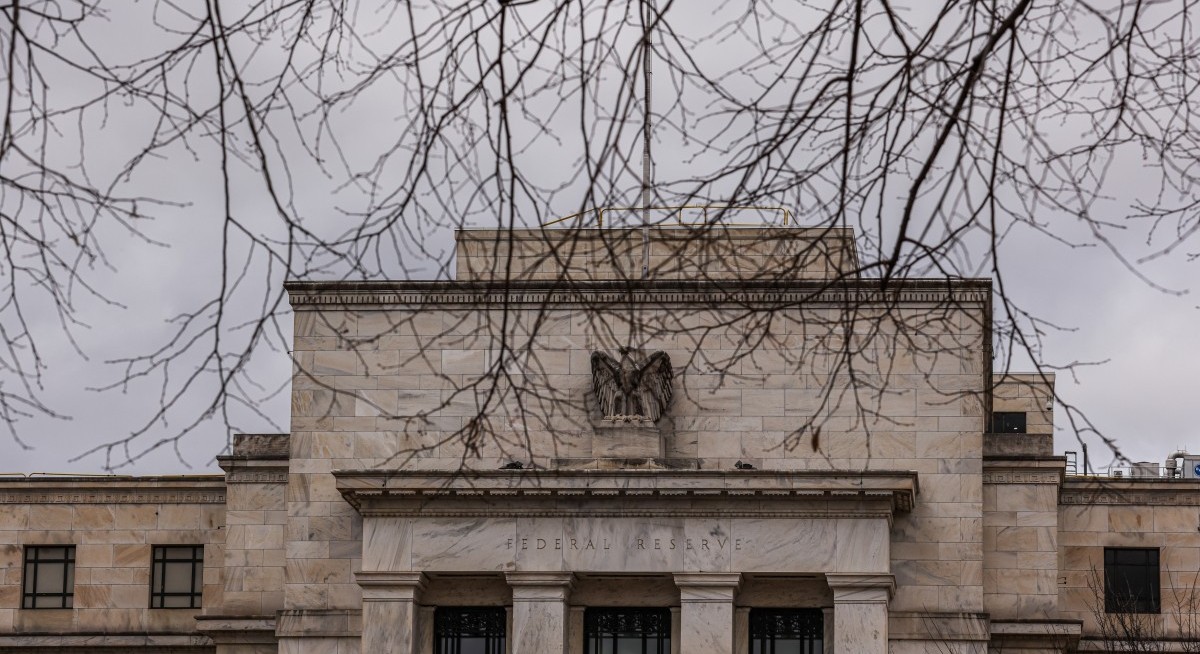


(Feb 11): Short-term interest-rate traders are coalescing around a bet that would pay off if the Federal Reserve cuts interest rates just two or three times this year.
Since earlier this month when President Donald Trump nominated Kevin Warsh to chair the central bank, traders have been piling into wagers on a dovish Fed. But now their bets are slightly more conservative ahead of a widely anticipated read on the jobs market set to be released on Wednesday.
Flows in options tied to the secured overnight financing rate (SOFR), which closely tracks the expected path of the central bank’s policy rate, show demand for so-called condor options that target one of two scenarios: the Fed makes quarter-point reductions two or three times in 2026.
Meanwhile, similar hedges on futures interest-rate volatility have emerged over the past couple of weeks in the options market on interest-rate swaps. Strategists at Barclays have highlighted an increase in rates volatility following Warsh’s nomination, with investors favouring long bond positions.
“Investors seek bullish duration exposure for a more dovish Fed, but not sharp cuts,” strategists Amrut Nashikkar, Eveline Dong and Charley Chau said in a report, noting that they are “targeting not more than two to three additional cuts”.
The recent options activity comes ahead of a critical January jobs report. The data is expected to reveal a US labour market that is weakening or stalling, which could shift policy expectations.
See also: US retail sales unexpectedly stalled in December
The swaps market is now pricing in about 30% odds of a third quarter-point rate cut this year, with two almost priced in by the September meeting. That’s a boost from a week ago when less than 50 basis points worth of easing was priced in by December. Tuesday’s weaker-than-expected retail sales data added to the dovish momentum shift.
Treasuries climbed on Tuesday, sending yields to their lowest levels of the past month following the retail data.
The market has speculated that Warsh, when he presumably succeeds chair Jerome Powell, would adhere to Trump’s repeated calls for the central bank to lower rates. But as inflation continues to be stubbornly high and some Fed policymakers remain hawkish, Warsh may not aggressively slash rates. If the Senate confirms Warsh, he would take the helm in time for the June policy meeting.
See also: US small-business optimism eases on economic expectations
Here’s a rundown of the latest positioning indicators across the rates market:
JPMorgan survey
In the week to Feb 9, clients added to net long positions by four percentage points and reduced shorts by five percentage points. The net result was the largest long position since December last year.
SOFR options
In SOFR options out to the September 2026 tenor, the past week has seen decent demand for upside based around March 2026 options via call flies such as SFRH6 96.4375/96.50/96.5625 and SFRH6 96.375/96.4375/96.50 strikes.
The 96.375 strike has also been involved in June 2026 put structures over the past week such as SFRM6 96.4375/96.375 2x3 put spreads.
One of the flow highlights over the past week has also been structures targeting up to three rate cuts, with the 96.75 strike active via large buyer of SFRU6 96.75/97.00/97.25/97.50 call condors and SFRU6 96.75/96.875/97.125/97.375 broken call condors.
To stay ahead of Singapore and the region’s corporate and economic trends, click here for Latest Section
Broadly, the most populated strike across March 2026, June 2026 and September 2026 options remains the 96.50 level, where a large amount of open interest sits in March 2026 calls and June 2026 calls.
There has been a recent jump in demand for 96.375 strike over recent weeks also, where now a large amount of both March 2026 calls and puts open interest sits, along with June 2026 puts.
Treasury options premium
The premium paid to hedge risk across the Treasury curve has edged toward calls, following a move that reflected elevated put premium around three weeks ago. The moves however since the start of the month have been extremely narrow, reflecting the continued low rates volatility backdrop.
Uploaded by Isabelle Francis




