


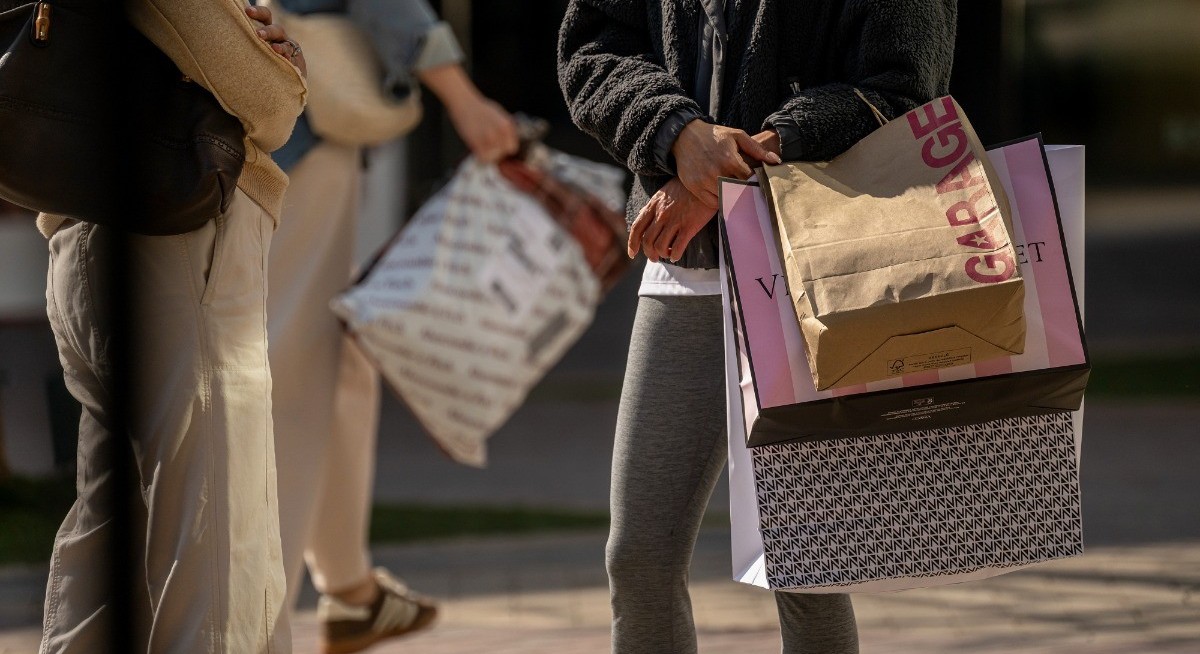


(Feb 10): US retail sales unexpectedly stalled in December, suggesting more tempered consumer spending as the year drew to a close.
The value of retail purchases, unadjusted for inflation, was little changed after a 0.6% gain in November, Commerce Department data showed on Tuesday. Excluding auto dealers and gasoline stations, sales were also flat.
| Metric | Actual | Estimate |
|---|---|---|
| Retail sales (MoM) | 0.0% | +0.4% |
| Sales ex. autos, gas (MoM) | 0.0% | +0.4% |
| ‘Control group’ sales (MoM) | -0.1% | +0.4% |
Eight out of 13 categories posted decreases, including declines at clothing stores and furniture outlets. Sales at auto dealers also fell. Meantime, outlays rose at building materials stores and sporting goods retailers.
The figures suggest a loss of consumer spending momentum at the end of the holiday-shopping season. While many economists expect tax refunds to underpin demand early this year, households remain frustrated about a high cost of living as worries persist about the job market.
The breadth of consumer spending is also a concern. Demand may be getting a boost from the wealth generated by stock-market gains, but there are signs discretionary spending is less robust for lower-income Americans relying primarily on more moderate wage growth.
See also: US small-business optimism eases on economic expectations
Meanwhile, severe winter weather late last month that restrained activity across much of US will make it difficult for economists and policymakers to gauge underlying household demand at the start of this year. Industry figures show auto sales sagged in January to the slowest annualised pace in nearly three years, while air travel suffered extensive disruptions.
Core sales
The December retail sales report showed so-called control-group sales — which feed into the government’s calculation of goods spending for gross domestic product — unexpectedly fell 0.1% after a downwardly revised gain in the prior month. The measure excludes food services, auto dealers, building materials stores and gasoline stations.
See also: Trump says Fed pick Warsh can get US economy to hit 15% growth
Recently, companies have indicated that consumer spending has remained uneven across demographic groups. Levi Strauss & Co said that despite raising some prices, the company hasn’t seen a pullback in spending. PepsiCo Inc said budgets remain strained for lower- and middle-income consumers, while Lululemon Athletica Inc noted that Americans were “trading down.”
Before the latest retail sales data, the Federal Reserve Bank of Atlanta’s GDPNow model suggested household spending would add more than two percentage points to fourth-quarter (4Q) growth, slightly less than the contribution in the previous period.
Since the retail figures aren’t adjusted for inflation, weaker figures could be impacted by steep holiday discounts. The data largely reflect purchases of goods, which comprise roughly a third of overall household spending.
Spending at restaurants and bars, the only service-sector category in the retail report, eased 0.1% after jumping the previous month.
Inflation-adjusted spending data on goods and services for December will be released on Feb 20.
Separate data out on Tuesday showed growth in labour costs eased in 4Q. The employment cost index, a broad gauge of wages and benefits, increased 0.7% in the three months ended in December, the smallest advance since 2021, according to the Bureau of Labor Statistics.
Uploaded by Felyx Teoh




