


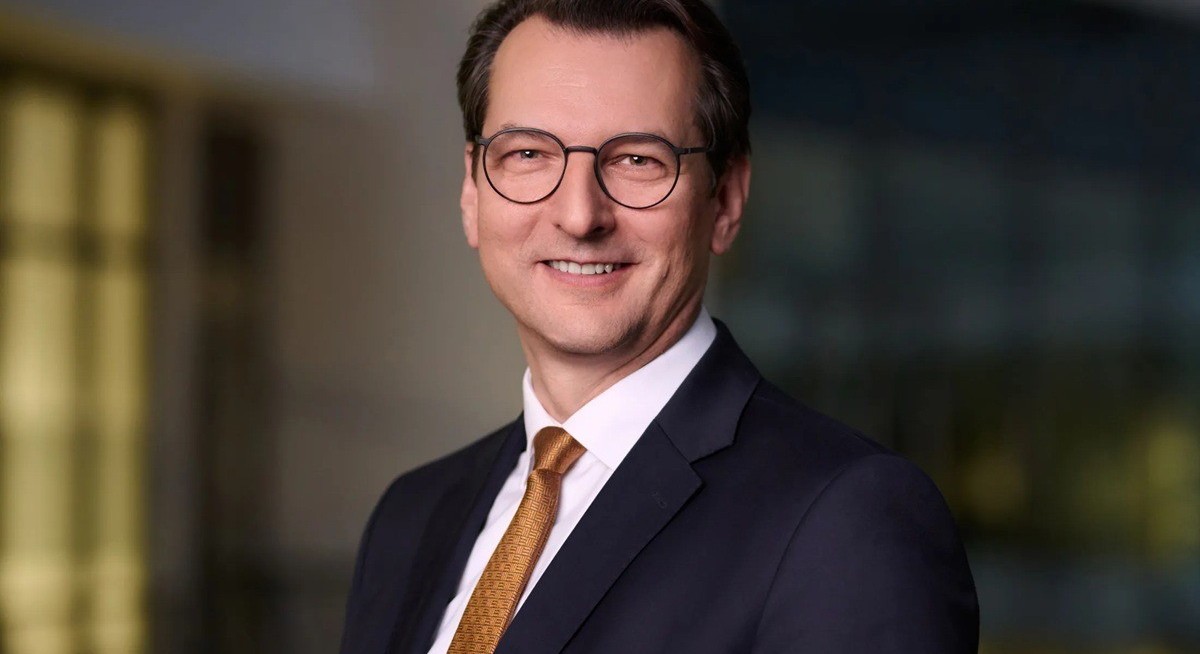


On Tuesday (Dec 9), the carmaker named Nedeljkovic its next CEO, with the 56-year-old set to take over from Oliver Zipse, 61, in May. The move will make him the fourth consecutive production head to be appointed to the group’s top job and effectively rewards him for overseeing the luxury automaker’s challenging shift to EVs that involved retooling factories to build multiple drivetrains on the same line.
“Neue Klasse represents the largest leap BMW has ever taken in investment and in technology,” Bernstein analyst Stephen Reitman said in a note. “It is good that one of its principal architects will lead the company as this gets progressively deployed.”
Still, Nedeljkovic, an engineer by training, has his job cut out for him. He will be taking over at a time of deep upheaval in the car industry, with seismic technological and market shifts prompting leadership changes at a number of automakers. Rivals such as Stellantis NV, Renault SA, Volvo Car and Porsche have all named new CEOs in recent months.
While BMW is reaping some benefits from defying critics to stick to a flexible approach on EVs, Nedeljkovic is still stepping into the role at a moment of acute geopolitical strain for the global auto industry. China’s prolonged consumer slump and a domestic price war together with US tariffs under US President Donald Trump are weighing on boardrooms from Detroit to Tokyo to Stuttgart.
See also: Traders pile into tech hedges as rout in software stocks deepens
At home, Germany’s manufacturing base is wrestling with high energy costs, burdensome bureaucracy and deteriorating demographics — all structural headwinds for BMW, a company with deep domestic roots.
BMW shares were little changed in early trading in Frankfurt. They have gained about 23% this year.
With Nedeljkovic’s appointment, BMW has once again picked an executive from deep inside its own ranks to ensure a smooth and orderly succession. That is in contrast with the wrenching management shuffles at some of its peers that have provoked tumultuous transition periods.
See also: Nvidia partner Foxconn’s sales soar in sign of strong AI demand
Carlos Tavares was ousted from Stellantis, leaving chairman John Elkann in charge for months while searching for a successor. Volvo last year went back to former CEO Hakan Samuelsson, 74, to help fix model delays and drive cost savings. Volkswagen AG has ousted several leaders over the years, not just in the wake of the diesel-emissions cheating scandal, but also following internal ructions over strategy that prompted abrupt departures, like that of former CEO Herbert Diess.
Technical background
In many ways, Nedeljkovic’s technical background has been preparing him for the CEO role during a time of intense technological changes in the industry. BMW fits the trend of carmakers appointing experienced company insiders with a knack for technology as the industry goes through the bumpy transition toward electric vehicles, said Matthias Schmidt, an auto analyst based near Hamburg.
“Automakers these days are all about scaling efficiently and trying to lower the costs of making EVs, and a production expert like Nedeljkovic fits that very well,” Schmidt said. “We used to get car CEOs chasing TV cameras and being very active on social media — maybe now it’s time for the ‘boring’ ones to focus on the nitty-gritty.”
Born in Krusevac in the former Yugoslavia, Nedeljkovic studied mechanical engineering at Germany’s top engineering university RWTH Aachen and MIT before earning a doctorate at Munich’s Technical University.
He joined BMW as a trainee in 1993, as the company was integrating production across a newly opened Central and Eastern Europe, preparing for its ultimately ill-fated Rover acquisition, and repositioning itself for a more globalised auto industry.
He rose steadily through BMW’s manufacturing ranks, taking on roles in body shop planning, press operations and later paint and assembly management in Oxford, Regensburg and Leipzig. His reputation as a production specialist grew as he ran increasingly complex plants, culminating in his appointment as head of BMW’s flagship Munich factory — the company’s historic home — where he oversaw one of the sector’s most intricate mixed-drivetrain operations.
To stay ahead of Singapore and the region’s corporate and economic trends, click here for Latest Section
And now, the sector is undergoing even more profound shifts — from the rise of electric drivetrains and software-defined vehicles to rapid advances in automation and AI. Manufacturing is being reshaped, with BMW testing humanoid robots at its sprawling plant in Spartanburg, South Carolina, its largest worldwide, joining Tesla Inc. in exploring how AI-driven machines could take on more complex factory tasks.
For Nedeljkovic, the stakes couldn’t be higher as BMW prepares its next-generation Neue Klasse lineup — a sweeping overhaul of its EV architecture, software stack and manufacturing systems. The project demands flawless execution, and any stumble could quickly erode profitability just as rivals flood global markets with cheaper, tech-heavy models.
While the first model to be built in the Neue Klasse, the iX3, has seen strong early orders in Europe, its real test will come in China when it launches there in spring 2026. It will enter a competitive market packed with cut-price, tech-laden EVs from the likes of BYD Co and Xiaomi Corp. A stumble would leave BMW saddled with an unloved technology platform for years.
“With the imminent launch of its Neue Klasse technology and normalisation of capital intensity, we believe BMW will pull ahead of its peers in terms of technological advancements and free cash flow performance in 2026,” according to Morningstar analyst Rella Suskin.
Uploaded by Arion Yeow




