


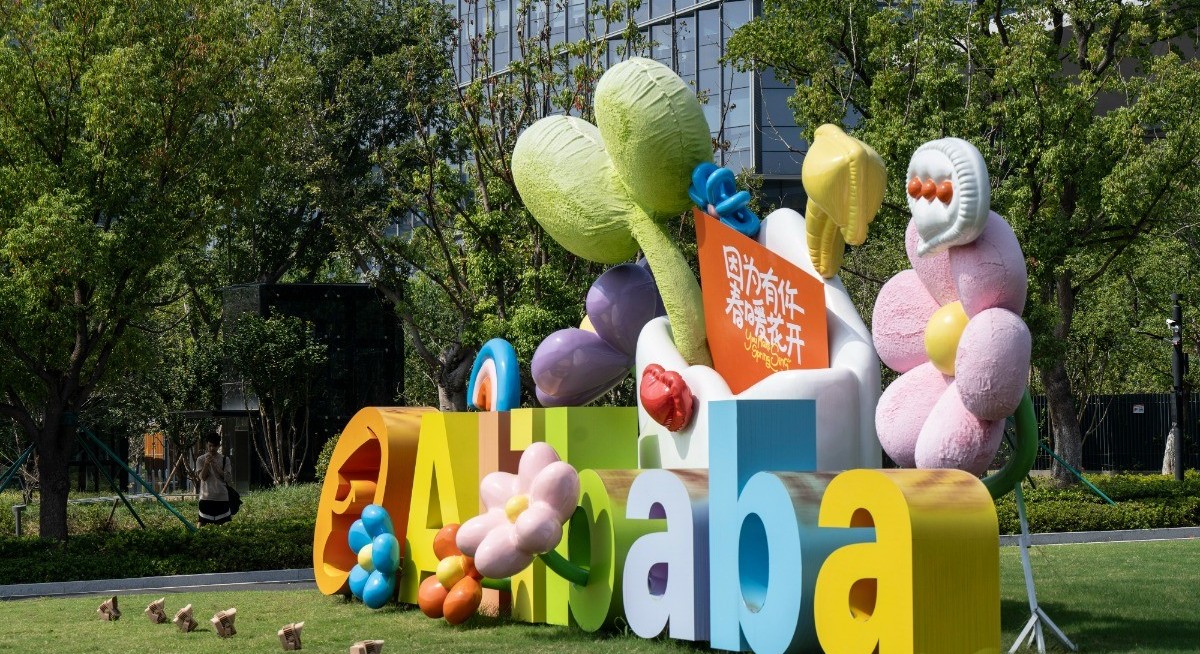


(May 13): Chinese investors are heading into the earnings season demanding proof that billions in AI spending by tech giants is paying off.
That spotlight will fall on Alibaba Group Holding Ltd and Tencent Holdings Ltd when they report results on Wednesday. Investors will be looking for evidence that their heavy investments in artificial intelligence are translating into real returns, and whether they can secure enough chips to support those ambitions.
Those concerns are underscored by their weak share performance amid a blistering global AI rally. Alibaba’s stock in Hong Kong is down 6.7% this year, while Tencent has slumped 24%, lagging US peers such as Alphabet Inc and Amazon.com Inc, whose shares have climbed at least 15% on signs their AI spending is boosting cloud growth and revenues.
“Alibaba and Tencent are increasingly facing a ‘show me the profits’ moment, where investors are no longer rewarding AI ambition alone but demanding clear monetization, especially as both lag US hyperscalers that benefit from full stack cloud and AI integration,” said Gary Tan, portfolio manager at Allspring Global Investments LLC.
The duo have also been left out of the Chinese tech stock rally, which has seen a sharp divergence in fortunes across subsectors. Investors have favoured hardware makers and infrastructure suppliers that are seen as immediate beneficiaries of AI demand, rather than consumer internet giants facing longer and more uncertain monetization cycles.

See also: Delivery Hero CEO to resign after activist investor raises stake
Hefty spending
Alibaba and Tencent have taken different paths to develop their AI. The former adopted a more expansive strategy, investing across the entire stack from chips to large language models. Tencent opted for a more targeted approach, focusing on embedding AI features into its existing WeChat ecosystem rather than building a fully integrated platform from scratch.
Both are pouring huge amounts of money into their ambitions. In March, Alibaba pledged to invest US$53 billion (67.42 billion) over several years, aiming to quintuple its cloud and AI revenue to US$100 billion annually in five years. Tencent plans to at least double its capital expenditure to more than US$5.2 billion this year as it expands AI agents and services within WeChat.
See also: Sea fends off e-commerce rivals to beat profit estimates
The spending plans have fuelled concerns that earnings may come under strain before new revenues materialise. Tencent now trades at 12.5 times forward earnings, its lowest valuation since 2022, while Alibaba trades at about 18 times, well below Amazon’s 25 times.
“Linear extrapolations of AI spend produce return-on-investment anxiety that the market is translating into multiple compression rather than multiple expansion,” JPMorgan Chase & Co analysts led by Alex Yao wrote in a recent note.

The challenge for Alibaba is especially acute. Goldman Sachs Group Inc said the group’s AI capex target now exceeds its annual Ebitda.
Citigroup Inc estimates the company may need cloud revenue to grow at least 40% annually to sustain its investment plans. “We believe market remains sceptical whether the 40% revenue CAGR is achievable,” analysts including Alicia Yap wrote in a note, referring to compound annual growth rate.
While token demand in China should stay strong enough to support cloud growth, Yap is more concerned about pricing. Once supply constraints ease and demand slows, “we are cautious if it could trigger massive pricing cut” in the years ahead as companies compete for market share, she added.
Tencent’s road to monetizing AI may be even bumpier. Its shares have tumbled since it unveiled plans to curtail buybacks and gave little clarity on investment plans or products to tap demand for agentic AI. Without its own chip unit, its ability to secure a stable domestic supply of AI hardware is also under scrutiny.
To stay ahead of Singapore and the region’s corporate and economic trends, click here for Latest Section
“People are buying stocks that are clearly benefiting from AI — the picks and shovels in the semiconductor industry whose revenues are surging,” said Morningstar Inc senior equity analyst Ivan Su. That makes it harder for Chinese hyperscalers to attract investors, especially with margins under strain.
“Investors are trading near-term revenue growth and not really thinking about longer-term economics,” Su added.
Uploaded by Chng Shear Lane




