


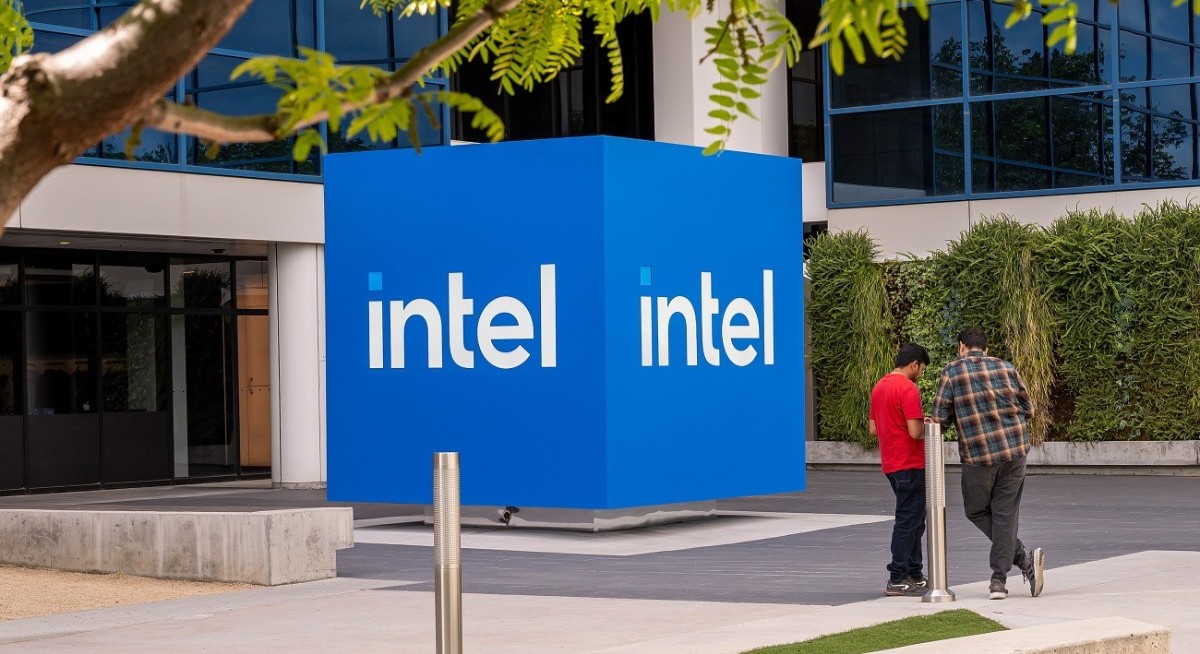


(May 12): A scorching rally in Intel Corp shares is threatening huge losses for traders wagering that they are due to fall. But that is not stopping them from placing those bets.
Since hitting a low on March 30, the chipmaker’s stock price has soared 214% through Monday’s close, adding more than US$440 billion ($559.86 billion) to its market capitalisation and pushing short-sellers’ paper losses above US$12 billion, according to data from S3 Partners. At the same time, short interest in Intel shares as a percentage of the company’s float, a measure of how many shares have been borrowed to bet against the stock, is near a 52-week high.
“Intel’s almost like a poster child for the momentum trade right now,” said Matthew Unterman, the managing director of S3 Partners. “At some point, the momentum’s going to stall.”
Betting against Intel right now comes with considerable risk, however. The stock soared 25% last week, its best showing since January 2000, and kept climbing on Monday to reach yet another record high. Shares fell as much as 5% on Tuesday.
Recent gains were powered by a report that the company reached a preliminary chip-making agreement with Apple Inc. But since the start of April, Intel is the top performer in the S&P 500 Index, beating out even high-flying Sandisk Corp.
“It just isn’t realistic to try and pick a top in a momentum stock. There’s no ability to control your risk,” said Brad Lamensdorf, a co-manager of the AdvisorShares Ranger Equity Bear exchange-traded fund, which shorts stocks. “The short sellers who fight price action give up a lot of alpha, and it doesn’t make for a smooth portfolio in the interim.”
See also: Sea tops profit estimates after fending off e-commerce rivals

Shorts are looking at other chip stocks as well, as the group continues to power higher in 2026. Micron Technology Inc and Advanced Micro Devices Inc, the second and third best performers in the Philadelphia Stock Exchange Semiconductor Index since late March, have also seen upticks in short interest, S3 data showed. The chipmaker index is up 55% since the start of April, and its 14-day relative strength index recently hit its highest since 2011, a sign the group as a whole is heavily overbought.
But even though the rally looks stretched, the unpredictability of momentum has some investors hesitant to test it.
See also: Australia watchdog says money launderers ramping up AI for scams
“I would not short any of these stocks,” said Thomas George, a portfolio manager at Grizzle Investment Management, which owns Intel shares. “This is not a sector where glory can be found for a short seller.”
Of course, there is an argument that Intel’s gains aren’t just about momentum. The US government took an ownership stake in the company last summer, and artificial intelligence (AI) chip giant Nvidia Corp followed that with a US$5 billion investment in September. The shares popped in March when the company announced that its new Xeon chip is being used in one of Nvidia’s systems. And just a few weeks ago, management gave a sales forecast that blew away Wall Street’s expectations.
All of which is leading Wall Street to raise its earnings projections. Analyst estimates for Intel’s 2026 adjusted earnings per share have more than doubled in just the last month, according to data compiled by Bloomberg.
But that hasn’t dented Intel’s sky high market valuation. It is among the 10 most expensive stocks in the S&P 500 and the priciest chip stock in the market. The shares trade around 100 times earnings expected over the next 12 months, their highest multiple ever and roughly five times their 10-year average. By comparison, Nvidia trades at about 24 times forward earnings.
“That expensive multiple could get cheap quickly if we see growth pick up,” George said. “If AI leads to more efficiency, more people will use it, which means more demand.”
Even with the growing optimism about Intel’s outlook, Wall Street is hardly bullish on the stock. The average analyst price target of about US$85 implies a 34% decline from Monday’s closing price. That’s the weakest implied return among all members of the semiconductor index. Of the 53 analysts tracked by Bloomberg who cover the stock, just 17 have 'buy' ratings and three have 'sell'.
In the coming 12 months, there’s a decent chance that some high-momentum stocks like Intel will experience significant sell-offs, potentially as severe as 30%, George said. However, the momentum in the stock and the improvement in the company’s fundamentals make trying to time any reverse perilous.
“Companies view AI as existential, so they are not going to stop investing in it, building it out,” he said. “You can’t stand in front of that as a short seller.”
Uploaded by Tham Yek Lee




