




In 1HFY2026, DPU fell by 1.2% y-o-y to 4.02 cents, which MPACT’s manager attributed to overseas headwinds.
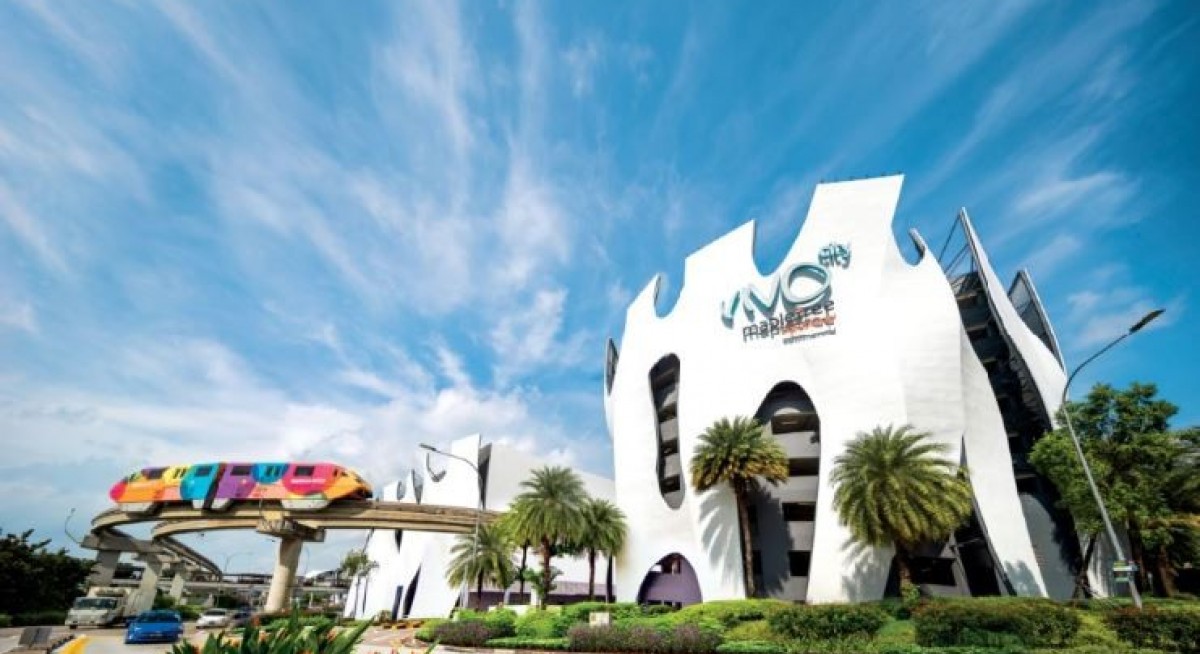
VivoCity’s future NPI growth is likely to be driven by continued positive rental reversion of 14.1% in 2QFY2026. Tenant sales grew 4.8% y-o-y in the quarter due to the positive impact from Phase 1 of AEI, disbursement of government consumption vouchers and a recovery in tourist arrivals.
VivoCity’s strength was offset by weakness in MPACT’s North Asian assets. Sharon Lim, CEO of MPACT’s manager, says the strong Singapore dollar (SGD) remains a headwind, although other headwinds facing the REIT after Covid have abated.
“The interest rate environment is definitely very encouraging. We suffered a lot when interest rates were higher. It’s a little bit of a catch-up right now, similar to utility costs. We suffered $10 million in higher utility costs, and we are seeing a reduction over time. What we’re not seeing that we have suffered from previously is forex,” Lim says.
See also: Elite UK REIT maps out growth path via diversification into living sector
The stronger SGD versus other currencies — mainly because of its safe haven status — hurts MPACT. “The SGD continues to be stronger like before. Foreign exchange is not 100% on our side,” Lim adds.
She indicates that interest costs will probably remain at 3.23% in the current quarter. “3.23% is more or less about the level that we will be looking at for this financial year,” Lim indicates.
Hibor, the Hong Kong interbank borrowing rate, has been very volatile since the start of the year. In 1H2025, it had collapsed but recovered subsequently. “We do not have the savings from Hong Kong dollar borrowings anymore. Next quarter, we will no longer benefit from the low interest rate on Hong Kong dollar borrowing. Last quarter [2Q2025], everybody was very encouraged seeing Hong Kong dollar’s interest costs falling sharply,” Lim explains.
See also: Should we be worried about the high LTVs of Japanese assets?
The Singapore assets accounted for around 64% of NPI in 1HFY2026 and 2QFY2026. Singapore will continue to be core, Lim says. “Singapore will be our core market and unlikely to change in the near future, and we are unlikely to expand into new markets.”
The China properties experienced double-digit negative rental reversions of 21.6% during 2Q2025, yet maintained stable occupancy at 86.3%. Koh Wee Leong, head of investments and asset management at MPACT’s manager, says the REIT is focused on preserving occupancies amid fierce competition. At Sandhill Plaza in Shanghai, signing rent has dropped to RMB3.50 (64 cents) per sqm per month, compared with RMB5.00 per sqm per month previously, Koh indicates.
“As our rentals start to drop, NPI margins will worsen. If you see where China is now, a lot of costs are fixed and there is little ability for us to reduce the costs.” Koh explains.
Occupancy for Japan properties slipped 2.9 percentage points (ppts) q-o-q to 73.9% due to non-renewal at mBAY POINT Makuhari. Fujitsu, the sole tenant at Fujitsu Makuhari Building, has notified MPACT of its intention not to renew its lease upon expiry in March 2026.
UOB Kay Hian, in an update following the results announcement, says: “We expect occupancy for Japan properties to further decline to 57.2% in 1QFY2027. NPI from China and Japan declined 11.2% and 22.3% y-o-y, respectively, in 2QFY2026.”
MPACT completed the divestment of two office buildings in Japan at Kohoku-ku, Yokohama City, and Toshima-ku, Tokyo, for $78.7 million in August. Proceeds were used to pare down debt. After the divestment, the portfolio comprises 15 properties in five Asian markets with a total asset size of $15.9 billion.
Festival Walk’s committed occupancy stood at 98.4% as at 2QFY2026, although its negative rent reversion trajectory deepened to –10.1%, with a 2% fall in tenant sales for 2QFY2026.
To stay ahead of Singapore and the region’s corporate and economic trends, click here for Latest Section
“At Festival Walk, NPI margins are not falling that much. We have the same benefit as Singapore, where utility rates have fallen and the team has been cutting costs on utilities, cleaning and security, so that the margin impact won’t be as bad as China’s,” Koh says.
What the analysts say
CGS International (CGSI) has raised its FY2026 DPU by 0.35% to factor in a slightly lower interest cost assumption with a somewhat higher target of $1.52 based on a cost of equity of 7.08%. MPACT is trading at around a 5.5% FY2026–FY2027 DPU yield.
JP Morgan, which upgraded MPACT in early September, maintains its overweight rating with a December 2026 price target of $1.55 on a discount rate of 7.3% reflecting the lower rate environment offset by challenges in China and Japan. However, JP Morgan has trimmed its FY2026, FY2027 and FY2028 DPU by 1.5%, 2% and 0.1%, respectively, “on a slower recovery in occupancy for China and Japan, and for Mapletree Business City in Singapore, offset by lower Sora and higher NPI margins for VivoCity.”
Citigroup notes that MPACT has outperformed the S-REITs in terms of unit price, with a 21% year-to-date rise, compared to an average 12% increase for the S-REITs. “We attribute this to MPACT’s strong domestic portfolio and believe key price catalysts include DPU-accretive acquisitions and share buybacks, given its ample debt headroom of $645 million before hitting 40% gearing.”
In a results briefing on Oct 22, Lim indicated she has a preference for Singapore retail and selective pockets of Seoul office for acquisitions. MPACT is trading at an annualised DPU yield of 5.47% based on its price as at Oct 23.




