


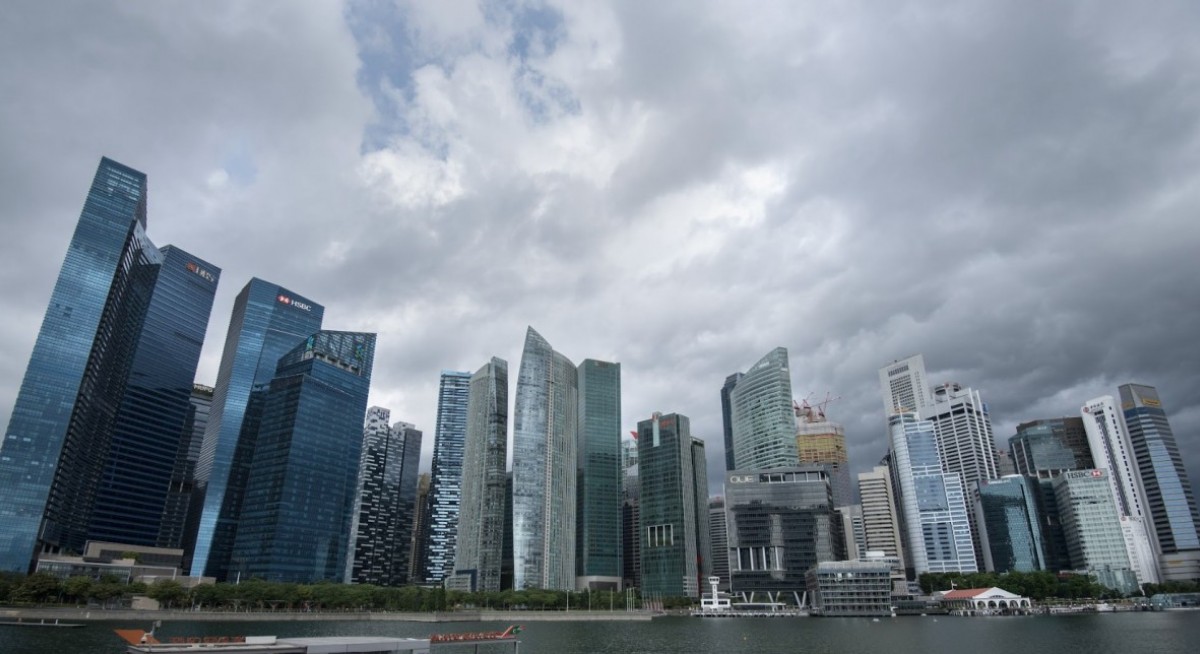


The CEOs of a couple of developers, Hongkong Land and City Developments (CDL), have articulated capital recycling strategies. The result is a narrowing of the discounts between their share price and their net asset values (NAV).
Hongkong Land has chosen to divest its stake in Marina Bay Financial Centre (MBFC) Tower 3 to Keppel REIT, which had a right of first refusal to the asset, for $1.45 billion. On Dec 12, Hongkong Land announced plans to launch a private real estate fund, the Singapore Central Private Real Estate Fund (SCPREF). The fund’s seed properties are a one-third stake in Marina Bay Financial Centre Towers 1 and 2 and One Raffles Quay, and 100% of One Raffles Link.
SCPREF is expected to be the largest Singapore private real estate fund with more than $8 billion of assets under management (AUM) at inception, Hongkong Land said in an SGX announcement. The seed assets are valued at $3.9 billion.
The establishment of SCPREF is in line with the company’s strategy to grow its AUM to US$100 billion ($129 billion) by 2035, with meaningful participation from third-party capital investors, the announcement says. Singapore remains a core market for Hongkong Land, with the company planning to use the capital recycled from the sale of MBFC T3 and SCPREF to further invest in ultrapremium integrated commercial properties in Singapore as it continues to execute on its strategy, the announcement added.
See also: CDL-Woh Hup JV places top bid for Tanjong Rhu GLS site, beating out four others
During a briefing in September following the announcement of Hongkong Land’s sale of MCL Land to Sunway Properties, its group CEO, Michael Smith, had said that his strategy is to divest non-core assets at NAV, and execute a share buyback at discounts to NAV of as high as 50%.
In 2024, Smith announced a US$10 billion recycling programme, of which US$4 billion would be from investment properties, and US$6 billion would be from its build-to-sell segment. His capital recycling/monetisation programme has indeed improved Hongkong Land’s share price. Following the proposed divestment of MBFC Tower 3, Hongkong Land’s share price is the highest in five years.
Smith’s strategy to narrow the discount between share price and NAV is working. As of Dec 12, Hongkong Land’s $7.17 share price is trading at 0.52 times the NAV of $13.62. This is in sharp contrast to the end-2024 discount of just 0.2 times NAV (see Table 2).
See also: Hillhouse-backed EZA Hill defends ‘contrarian’ investment focus on industrial, logistics assets


CDL narrows discount to NAV
Elsewhere, City Developments (CDL) announced a $1 billion monetisation programme in 2024. This year, the developer has announced $1.9 billion of divestments. The largest was a 50.1% stake in South Beach for $834.2 million. Other divestments are a US multifamily residential asset at 1250 Lakeside, Sunnyvale, for US$143.5 million, Piccadilly Galleria for $65.46 million and the proposed sale of Quayside Isle in Sentosa for $97.3 million, or 47% above book value. As a result of these proposed and completed divestments, CDL’s share price is up almost 42%, but still trading at a 27% discount to book value (of $10.10) and a 58% discount to the $17.48 revalued NAV assuming the investment properties are at market value.
“Based on press reports, we see prospects of continued sales momentum with Shoreditch House in London on the market for GBP110 million and the potential sale of its UK land bank, such as the former Stag Brewery site in Mortlake, South West London, which received planning approval earlier this year and which CDL had acquired for GBP158 million in 2015. While CDL may still make selective acquisitions ahead, we believe investors will react positively to this sustained sales momentum with divestments outpacing investments and a progressive reduction in gearing,” say Terence Khi and Mervin Song, analysts at JP Morgan, in their Nov 19 report.
Like Hongkong Land, CDL’s share price was trading at 0.50 times its FY2024 NAV, falling to 0.49 times NAV after a boardroom disagreement, which was announced on Feb 26, before narrowing the discount in the last two months of the year, when CDL’s management announced investment property sales.
A REIT with UOL-SingLand as sponsor?
A recent JP Morgan report points to the possibility that UOL Group could unlock value by listing a REIT. City Developments had planned the IPO of an S-REIT with UK properties, but along came Covid and the interest rate cycle, which disincentivised such a listing.
In a Dec 3 note, JP Morgan’s Khi and Song maintained an “overweight” rating on Singapore Land Group’s parent, with an even higher $10.15 target price. The next day, the duo issued a follow-up noting that UOL is the only major Singapore developer yet to list a REIT, musing that UOL’s management “may pursue a REIT strategy” to close UOL’s 36% discount to book value.
At UOL’s annual general meeting on April 28, group CEO Liam Wee Sin replied to a shareholder saying that UOL may consider establishing a REIT “under the right market conditions” and that it has a “good pipeline and mature real estate assets” with key considerations such as interest rates, property yields and market sentiment.
Some $14.3 billion in assets could be injected into a UOL REIT, says JPMorgan. To offer a dividend yield above 5%, UOL may have to “preclude” pure-play Singapore office or hospitality portfolios, which would yield only around 3.5% or 4% net property income (NPI), respectively, according to JP Morgan’s calculations.
SingLand owns 100% of UIC Building (valued at $740 million), Singapore Land Tower ($1.93 billion), The Gateway ($1.24 billion), SGX Centre 2 ($582 million) and West Mall ($434 million). UOL owns many properties, including Odeon 331 and 333 ($680.8 million), 70% of Novena Square ($1.47 billion) and United Square ($1.14 billion). Clifford Centre could be a pipeline property in the new REIT.
Interestingly, JP Morgan points out that UOL “has been building commercial and hospitality REIT management expertise”. UOL CFO Eric Ng, who joined in 2024, was formerly the CFO of Keppel Infrastructure Trust. UOL chief investment and asset officer Shirley Ng, who joined in 2023, was deputy CEO and head of investment for Keppel REIT.
Outside the C-suite, SingLand’s head of investment and portfolio management, Joseph Lim, who joined in 2021, was formerly the deputy head of investment and portfolio management at CapitaLand Integrated Commercial Trust (CICT). Finally, the CEO of UOL’s wholly owned Pan Pacific Hotels Group, Choe Peng Sum, who joined in 2019, was previously CEO of Frasers Hospitality, where he launched Frasers Hospitality Trust.
Is Ho Bee Land interested in narrowing discount to NAV?
“We believe that the lower interest rate environment and buoyant capital market conditions set the stage for developers to reconsider structurally boosting returns and capital efficiency. Some developers, especially those with mature assets on their balance sheets, could consider (a) unlocking value either by spinning off their stabilised assets into a REIT, or (b) a restructuring into a stapled security (of both developer plus REIT), driving higher valuations, as we have previously envisioned,” notes the DBS report.
Ho Bee Land, which is trading at just 0.38 times its June 30 NAV of $5.60 or a discount of more than 61% is in stark contrast with the 0.62 times NAV of $13.59 that UOL Group is trading at, and CDL’s narrowing discount to NAV. What could Ho Bee Land do to narrow the discount?
Ho Bee has a significant portfolio of investment properties it could securitise —either in private funds, a private REIT or a listed REIT. As of end-June, the valuation of Ho Bee’s leasehold property, The Metropolis, at $2.32 billion compares favourably with $2.213 billion as of end-December. The group’s freehold investment properties, which are mainly in London, are being held at $2.84 billion in the balance sheet.
Recycling these properties may not be so simple. Developers — especially family-owned developers — are reluctant to take a realised loss on their assets. Ho Bee Land acquired 1 Ropemaker Place for GBP650 million in 2018. It was valued at GBP645 million ($1.1 billion) as of Dec 31, 2024. The property is currently multi-let with a weighted average lease term of 10.5 years to expiry and 8.5 years to break option (2026). It offers a running yield of approximately 4.68% at the acquisition price. The annual rental income is about GBP30.57 million (approximately $55 million at 2018 prices), with the office accommodation accounting for 97.4% of the income.
In 2014, Ho Bee acquired 1 St Martin’s Le Grand for GBP171 million, which was valued at GBP170 million as of end-December. UK media have reported that Ho Bee plans a major renovation of the property.
The largest investment property Ho Bee acquired in London was The Shard in 2022 for GBP718 million or $1.3 billion. It was valued at GBP565 million as at end-Dec 2024.
Ho Bee had said the acquisitions were in line with the group’s strategy to diversify overseas and grow its recurrent income base. But would its shares trade at a narrower discount to NAV if it recycled or monetised its investment properties? Ho Bee Land doesn’t have analyst coverage.
Securitisation gathers momentum
Other developers may follow the strategy of recycling capital, given better total shareholder returns for developers who are making the effort to. Other than Hongkong Land and CDL, securitisation has made a comeback in Singapore. Witness the IPO of Centurion Accommodation REIT and the potential IPO of Boustead Industrial REIT — the opportunity for developers to unlock value exists. Another developer that has articulated an intention to list a REIT is IOI Properties, listed on the Bursa.
Centurion Corporation is up 33% this year, and up by more than 200% since the start of 2024. Boustead is up almost 68% this year. Other developers that could potentially unlock value via securitisation could include the likes of Guocoland and possibly Hotel Properties (HPL) for the redevelopment of Orchard Road.




