




(Jan 28): India is set to order a third fleet of locally designed reactors as part of an ambitious effort to expand nuclear power capacity at a manageable cost, according to people familiar with the plan.
The government is considering seeking bids to build as many as 10 pressurised heavy water reactors with a capacity of 700MW each — a third such bulk order, the people said, asking not to be named as the discussions are still private. The bulk format is intended to improve the government’s negotiating capacity and bring down prices, they said.
India has opened up its nuclear sector to private companies, thanks to a new law passed in December — a significant boost to its ambition to build 100GW of nuclear capacity by 2047, the year India aims to attain developed-nation status. It’s an ambitious goal that would mark an eleven-fold rise from current levels and could require US$211 billion of investment, according to government estimates.
Among other measures, the December change eases the liability conditions that had previously exposed equipment suppliers to potentially unlimited damage claims. It will also allow private companies to generate atomic power in the country, something that was previously the exclusive remit of the government.

Global nuclear firms are still seeking clarity on parts of the law, such as site locations and partnership structures, but many are keen to work with the Indian government, according to Sama Bilbao y Leon, director general of the World Nuclear Association.
See also: Central bank governor says India not selling US Treasury holdings
“India is open for business when it comes to nuclear,” she said in a Bloomberg Television interview. “We are seeing on a global level a lot of interest from private players to come to India.”
JSW Energy Ltd, one of India’s biggest private utilities, has already begun looking for sites and expects to start construction of its first nuclear power project in three to four years, Neeraj Agrawal, its president for nuclear power, said Wednesday (Jan 28) at the India Energy Week conference in Goa. The firm is looking at both local and foreign reactor designs, he said.
New Delhi’s nuclear push comes at a time when atomic power is seeing a global revival as nations rush to decarbonise their economies while attempting to meet growing electricity demand, including from artificial intelligence and data centres. Japan, battered by one of the world’s worst meltdowns in 2011, has just begun to restart its reactors.
See also: India holds rate, signals longer pause after US trade deal
With countries such as China, South Korea, Bangladesh and France expanding installations, global nuclear power capacity could more than double to 860GW by 2050, pumping nearly US$2.2 trillion into the value chain, Morgan Stanley Research wrote in a note in August 2025.
A sizeable part of that could come from India.
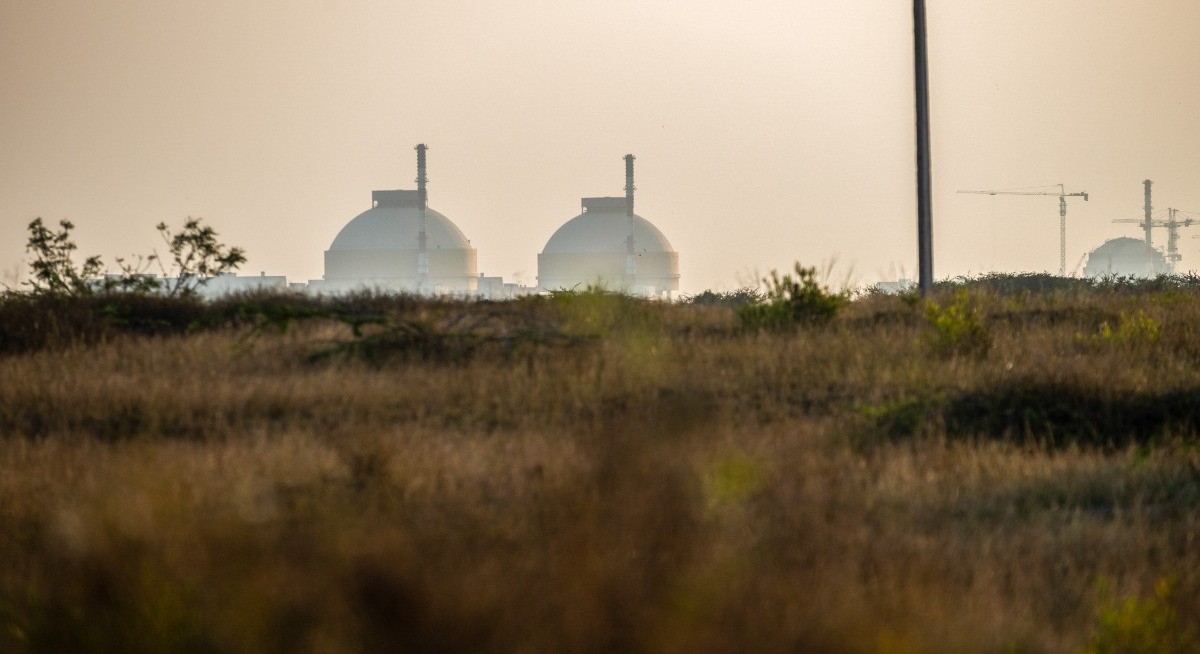
So far, the only foreign-built reactors in India are in Kudankulam, a sleepy fishing town in the country’s south. An agreement with Russia’s Rosatom that predates the 2010 liability law enabled the construction of two 1GW VVERs (water-water energetic reactors), with four more expected to come up.
“With the main hurdles behind us, active discussions have started between suppliers and plant developers, both private and public,” said Anil V Parab, a director and chief of heavy engineering and equipment manufacturing operations at Larsen & Toubro Ltd, one of India’s top suppliers of nuclear equipment.
The manufacturer’s facility at Hazira in Gujarat has been operating at a fifth of its capacity for years due to limited sales but orders are set to revive, potentially tripling production in the next two years, Parab said in an interview.
Opening the nuclear sector to private participation “can significantly enhance efficiency and mobilise much-needed capital,” said Arunendra K Tiwari, a fellow at the New Delhi-based The Energy and Resources Institute, warning that “strengthening public awareness and confidence in nuclear energy will be equally critical”.
With the enabling legislation in place, the next challenge is to mainstream nuclear power in India’s price-sensitive market, something critics say would saddle users with high electricity bills.
To stay ahead of Singapore and the region’s corporate and economic trends, click here for Latest Section
High costs of construction and likely delays in the completion of projects make nuclear plants a risky investment, viable only if associated costs are passed on to consumers, said M V Ramana, professor in Disarmament, Global and Human Security at the University of British Columbia, in an opinion piece.
A government report estimates that reaching the 100GW target would require a 19.3 trillion rupee investment. That’s about US$10 billion every year from now until 2047.
Uploaded by Arion Yeow




