


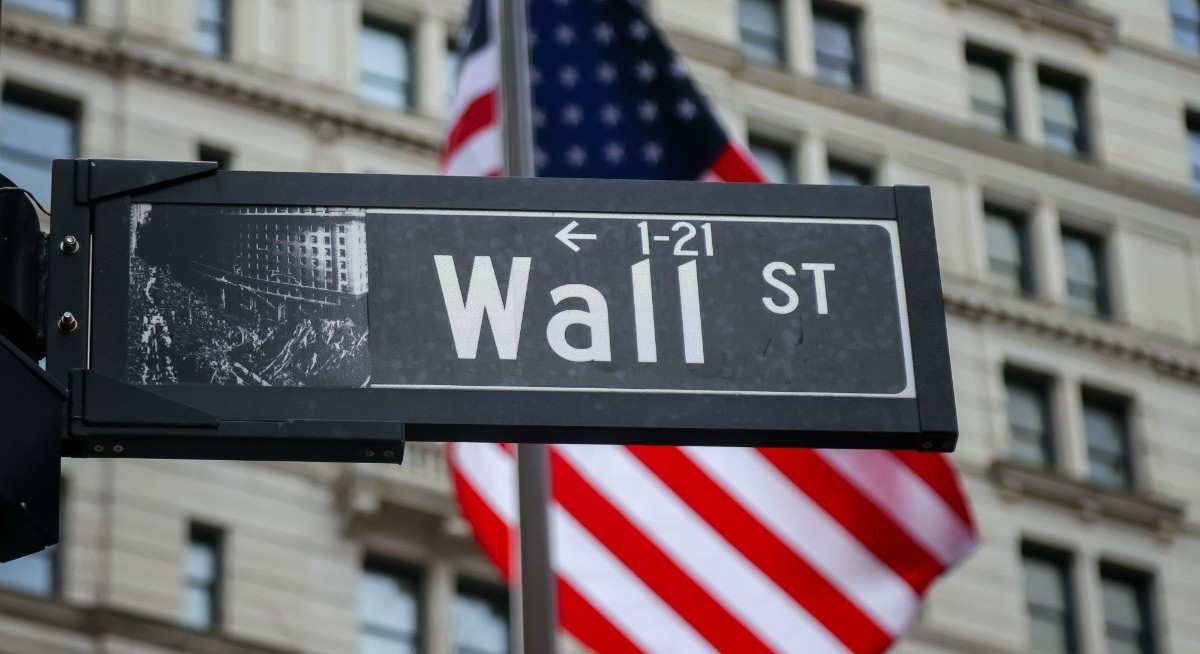


(Feb 6): Stocks notched their best day since May in the wake of a technology rout fuelled by worries over the billions of dollars being thrown at artificial-intelligence development. Bitcoin jumped after a 50% tumble from its peak. Silver and gold also bounced.
Following a plunge in some of Wall Street’s most-crowded trades, the S&P 500 rose 2%. The Dow Jones Industrial Average hit 50,000. An ETF tracking software firms added 3.5%. A gauge of chipmakers soared 5.7%, with Nvidia Corp’s Jensen Huang telling CNBC demand for AI is “incredibly high”. Amazon.com Inc sank 5.6% on plans to spend US$200 billion ($254.58 billion) on the technology.
In an episode reminiscent of the response to DeepSeek’s AI model at the start of 2025, a new automation tool from Anthropic PBC sparked a selloff in shares across the software, financial services and asset management sectors that spread to the broader market earlier this week.
“My view: this is overdone,” said Kenny Polcari at SlateStone Wealth. “This is the moment to keep your head on straight. It is not the time to panic. For long-term investors, this is the time to go shopping. A lot is on sale.”
Emotional deleveraging selloffs such as the one that took place earlier this week can be “unnerving”, but are “normal and healthy calibration” events, reminding us of the old proverb: “Trees don’t grow to the sky”, according to Mark Hackett at Nationwide.
“At this point, the macro and earnings environment remain encouraging, suggesting this is more a positioning shift and technical pause rather than a fundamental crack,” he said.
See also: How China uses a ‘national team’ to influence trading
After a few reports this week underscored the fragility of the jobs market, data showed consumer sentiment improved to the highest in six months.
Over 400 shares in the S&P 500 gained. Its equal-weighted version — which strips out market-value biases — hit an all-time high. The Russell 2000 climbed 3.6%. The Nasdaq 100 rose 2.15%. After closing above 40,000 in May 2024, it took the Dow Average 630 days to top 50,000 for the first time, noted Jeffrey Yale Rubin at Birinyi Associates Inc.
Bitcoin reclaimed almost all of the losses registered during Thursday’s crypto meltdown. It surged to around US$70,000.
See also: Stock sell-off extends in Asia as tech, silver rout worsens
The yield on 10-year Treasuries rose three basis points to 4.21%. The dollar fell 0.4%. Oil edged up higher despite an apparent easing in geopolitical risks. Iran said it agreed with the US to continue indirect talks to de-escalate tensions and avert a military confrontation, with Tehran describing the first day as positive.
“Investors are rising to the occasion and aggressively buying the dip in stocks,” said Jose Torres at Interactive Brokers. “Basement ‘animal spirits’ are offering value hunters opportunities to accumulate shares amid a general sense on Wall Street that the selling has gone too far.”
The recent rout in technology stocks is a reason to buy the dip in the broader market as the US economic outlook remains robust, according to Anwiti Bahuguna at Northern Trust Asset Management.
“It’s clearing off some of the froth in the markets,” she said. “We are actually seeing the use case for AI become clearer. From a macro sense, this is not the time to panic.”
Meantime, Gina Bolvin says the new Dow Average milestone is “less about celebration” and “more about confirmation”.
What does that mean?
Markets have adjusted to higher rates, slower growth, and global uncertainty — and still moved higher, noted the president of Bolvin Wealth Management Group.
To stay ahead of Singapore and the region’s corporate and economic trends, click here for Latest Section
“That tells us confidence is real, and 2026 will be less about the Fed and more about fundamentals,” she said. “With double-digit earnings growth expected for the S&P 500, equity investors are likely to be rewarded — but the path won’t be smooth. Volatility should be expected.”
For investors, she added, this is a reminder to stay intentional: Lean into quality businesses with strong earnings power and be prepared for more rotation, not straight-line gains.
“At 50,000, the Dow Jones Industrial Average grabs headlines, but it’s a reminder that milestones get louder even when less meaningful,” said Mark Hamrick at Bankrate. “The more meaningful S&P 500 is broader. It better reflects the performance of large US companies and is more relevant to many investors’ returns.”
No matter what happens today, the issues surrounding the software companies — and the profitability of the AI industry — are not going away, noted Matt Maley at Miller Tabak. If tech stocks roll back over in a material way at some point over the next week or two, there will still be some meaningful risks to the sector, he added.
“For the broader market to make sustainable progress, renewed tech participation will likely be essential,” said Adam Turnquist at LPL Financial. “We expect the S&P 500 may have difficulty clearing the 7,000-point milestone without stronger contributions from the tech sector — especially from software.”
Four of the biggest US tech companies together have forecast capital expenditures that will reach about US$650 billion in 2026 — a mind-boggling tide of cash earmarked for new data centres and all the gear housed within them. The spending planned by Alphabet Inc, Amazon, Meta Platforms Inc and Microsoft Corp is a boom without a parallel this century.
While many investors are worrying that such massive spending might not pay off, all that investment just this year will certainly provide lots of revenues and earnings to the companies that are vendors to the “hyperscalers”, said Ed Yardeni, founder of his eponymous research firm.
The economy will also get a boost from so much capex, Yardeni said, adding he “doubts” the selloff in technology stocks this week is the beginning of a “tech wreck”.
“We doubt it because this time, the industry has many more profitable companies benefiting from the enormous capital spending on AI infrastructure by hyperscalers,” the veteran Wall Street strategist concluded.
Meantime, Nvidia’s Huang told CNBC that the build-out of AI infrastructure will continue for seven to eight years.
“AI has become useful and very capable,” he said. “The adoption of it has become incredibly high.”
Fourth-quarter earnings growth for Nasdaq companies is on track to reach 20%, six percentage points higher than initial projections, noted Ulrike Hoffmann-Burchardi at UBS Global Wealth Management. While investors have repriced valuations for software companies, most firms in the segment delivered earnings that exceeded expectations by about 6%-7%, with consensus for 2026 and 2027 trending higher.
“We acknowledge the risks reshaping software economics and believe investors should maintain roughly a 10% allocation to software within their broader tech exposure,” she said. “We continue to advocate a balanced positioning across the enabling, intelligence, and application layers of the AI value chain, and see particular value in companies and sectors that can use and apply AI to improve business outcomes.”
Still, Hoffmann-Burchardi maintains her view that opportunities in equities this year should expand across geographies, sectors, and structural themes, and investors with concentrated positions should diversify their exposure.
AI will remain a structural growth driver, but investor focus is shifting from broad-based enthusiasm towards differentiated business models, capital efficiency, and defensible revenue streams, said Bob Savage at BNY.
The issue here isn’t if AI will be profitable, but whether those profits are imminent, according to Florian Ielpo at Lombard Odier Asset Management.
“This temporal dimension constitutes a predominant market theme, and this week’s slight increase in risk aversion actually conceals a profound sector rotation, with investors moving away from the best-performing stocks of recent quarters,” he said.
Bank of America Corp strategists led by Michael Hartnett said US small- and mid-cap stocks are the best bets ahead of midterm elections as tech giants lose their appeal.
They noted that President Donald Trump’s “aggressive intervention” to reduce the price of energy, health care, credit, housing and electricity is weighing on sectors including energy giants, drugmakers, banks and big tech. That makes smaller stocks the main beneficiary from a “boom” in the run-up to US midterms.
“The theme of a ‘rotational bull market’ continues to hold true,” said Craig Johnson at Piper Sandler. “We continue to favour relative strength in sectors such as energy, materials (non-precious metals), industrials, transportation, healthcare, banks, and select areas of technology and discretionary.”
The more this market rotates, the more it truly becomes a “stock picker’s market”, he added.
“After a meaningful pullback this week, we’re ending on a high note,” said Louis Navellier at Navellier & Associates. “There is no doubt that AI is boosting productivity and also reducing jobs in corporate America.”
To Navellier, that will translate into Federal Reserve rate cuts that hopefully will boost consumer confidence in the upcoming months.
Traders are gearing up for a week that will bring data on retail sales, a delayed government reading of the US employment picture in January and inflation figures — offering crucial information on the Fed’s dual mandate of stable inflation and employment expansion.
While markets may have to work through more jitters, the Fed will cut rates later this year — which will grease the skids for more market appreciation, according to Jeffrey Roach at LPL Financial.
The February volatility is understandable since January was such a strong month, and corrections and pullbacks are relatively common during the month of February, according to Clark Bellin at Bellwether Wealth.
“The bull market is not dead, but it is ageing, and we are not surprised to see investors paying more attention to corporate earnings and profitability,” he said. “Our message to investors is to remain opportunistic when stocks dip, but not necessarily during every dip. 2026 should still be a positive year, with plenty of opportunities to buy stocks on sale.”
Corporate highlights:
- Apple Inc is preparing to allow voice-controlled artificial intelligence apps from other companies in CarPlay, according to people familiar with the matter, a move that will let users query AI chatbots through its vehicle interface for the first time.
- Tesla Inc isn’t waiting around to see if Elon Musk’s 100-gigawatt solar ambition is feasible — it’s already acting on it. The company is evaluating multiple sites across the US to begin manufacturing solar cells, according to people familiar with the matter.
- JPMorgan Chase & Co, Goldman Sachs Group Inc and Bank of America Corp boosted their bonus pools for bankers and traders by at least 10%, as the businesses benefited from a banner year in dealmaking and market activity.
- Exchange operator Cboe Global Markets Inc plans to roll out options contracts that will enable binary bets on event outcomes, in a bid to enter the fast-growing prediction markets.
- Exxon Mobil Corp and Chevron Corp are setting their sights on expanding production in nations tied to Opec, including some of the world’s riskiest geopolitical hotspots, as President Donald Trump’s assertive foreign policy helps them strike deals.
- ConocoPhillips chief executive officer Ryan Lance’s priority in Venezuela is recouping billions his company is owed almost two decades after its oil projects were nationalised, rather than drilling new wells.
- Biogen Inc forecast 2026 profit above Wall Street’s expectations, signalling that steep cost-cutting measures are cushioning the impact of shrinking sales from its multiple sclerosis franchise.
- Philip Morris International Inc reported higher profit in the fourth quarter, helped by strong sales of smoke-free products such as Zyn nicotine pouches.
- Molina Healthcare Inc forecast 2026 profit that was less than half of Wall Street’s expectations, on higher medical costs and insufficient government repayments.
- Roblox Corp reported fourth-quarter users and bookings that beat analysts’ expectations thanks to a slate of hit games.
- Carlyle Group Inc exceeded its goals for fee-related earnings and asset growth in 2025, while posting fourth-quarter results that surpassed Wall Street estimates.
- Compass Inc lost a bid to temporarily block a Zillow Group Inc ban on listings that have been advertised elsewhere first, after a judge ruled in favour of the home-search site in its legal battle with the largest US real estate brokerage.
- Stellantis NV is taking more than €22 billion (US$26 billion or $33.11 billion) in charges mainly linked to reversing course on its electric vehicle strategy, prompting a plunge in the Jeep and Fiat owner’s shares.
- BNP Paribas SA is considering raising bonuses for its global markets division by close to 10%, giving traders some of the biggest increases across the bank after a record year for the division, according to people familiar with the matter.
- Orsted A/S plans to reinstate dividends and ramp up spending this year, even after a string of expensive setbacks in the US clouded the company’s turnaround efforts.
- Tata Steel Ltd’s profit grew eightfold in the third quarter led by robust demand and output at its Indian operations that helped the steelmaker overcome rising costs.
- ByteDance Ltd’s TikTok has been warned by the European Union that it needs to overhaul the design of its platform over fears addictive features could “harm the physical and mental wellbeing of its users”.
Some of the main moves in markets:
Stocks
- The S&P 500 rose 2% as of 4pm New York time
- The Nasdaq 100 rose 2.15%
- The Dow Jones Industrial Average rose 2.5%
- The MSCI World Index rose 1.7%
- Bloomberg Magnificent 7 Total Return Index rose 0.4%
- IShares Expanded Tech-Software Sector ETF rose 3.5%
- Philadelphia Stock Exchange Semiconductor Index rose 5.7%
- The Russell 2000 Index rose 3.6%
- S&P 500 Equal Weighted Index rose 1.9%
Currencies
- The Bloomberg Dollar Spot Index fell 0.4%
- The euro rose 0.4% to US$1.1823
- The British pound rose 0.7% to US$1.3619
- The Japanese yen was little changed at 157.11 per dollar
Cryptocurrencies
- Bitcoin rose 11% to US$70,109.74
- Ether rose 11% to US$2,057.76
Bonds
- The yield on 10-year Treasuries advanced three basis points to 4.21%
- Germany’s 10-year yield was little changed at 2.84%
- Britain’s 10-year yield declined four basis points to 4.51%
Commodities
- West Texas Intermediate crude rose 0.3% to US$63.47 a barrel
- Spot gold rose 3.6% to US$4,950.72 an ounce
Uploaded by Chng Shear Lane




