


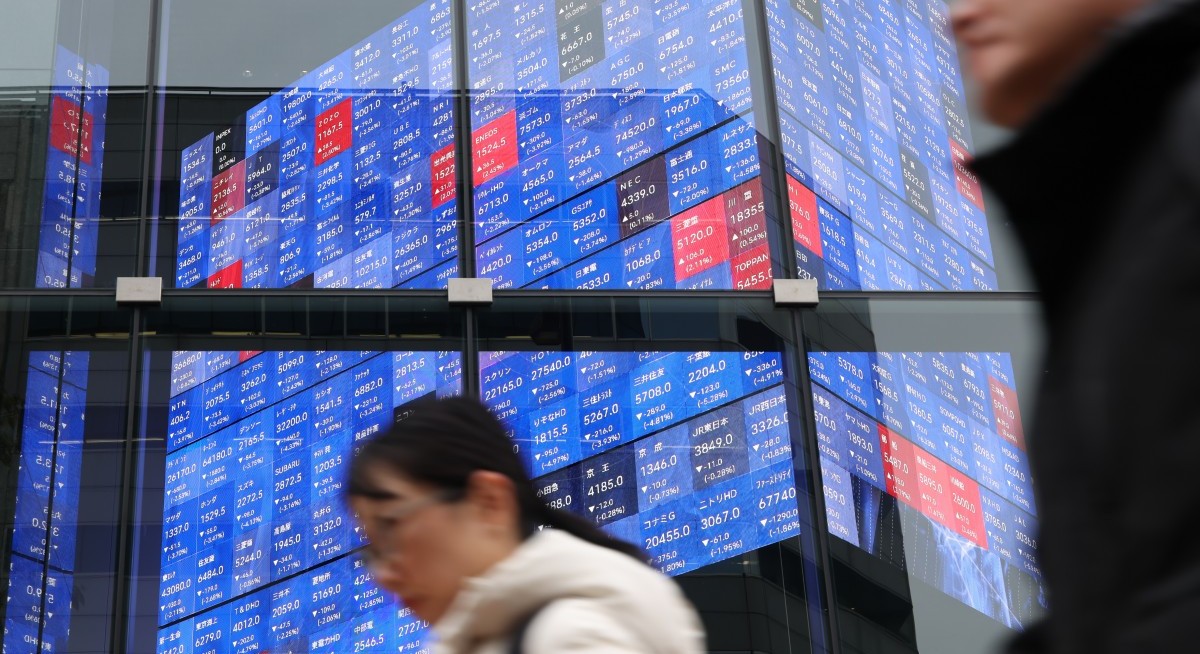


(March 24): Asian stocks pared early gains and equity-index futures reversed course, signalling that the fragile optimism around a potential de-escalation in Middle East tensions may be fading. Gold extended its slump, on track for its longest losing streak on record.
Asian shares pared their earlier jump of as much as 1.7% to a gain of 0.9%, while contracts for the S&P 500 dropped 0.6% after the Wall Street Journal reported that US allies in the Persian Gulf are inching toward joining the fight against Iran. Sentiment further weakened after an Iranian lawmaker ruled out negotiations with the US.
The Bloomberg Dollar Spot Index rose 0.2% and gold reversed earlier gains to decline for a 10th consecutive day. The yellow metal fell 1.4% to trade around US$4,340 an ounce. Silver tumbled 2.5%, while yields on the 10-year Treasury reversed earlier losses to rise three basis points to 4.37%.
Brent crude rose 2% to almost US$102 a barrel. The Strait of Hormuz remained effectively shut with only a trickle of vessels making their way through the key waterway. The commodity had plunged 11% on Monday following Trump’s comments.
Wall Street gauges rose on Monday after President Donald Trump had signalled a delay in planned strikes on Iranian energy infrastructure, citing talks with Tehran and boosting hopes for de-escalation in the Middle East.
Tuesday’s whipsawing moves show how quickly geopolitics can sway global markets, with the Strait — a chokepoint for about a fifth of global oil and LNG flows — at the centre. Since the conflict began, disruptions to traffic through the narrow waterway have driven sharp price swings and heightened inflation risks, leaving progress in US-Iran talks pivotal to stabilising energy markets and broader financial conditions.
See also: Stocks rise, oil sinks as Trump eases Iran threats
“The situation is still very fluid,” Suresh Tantia, head CIO of Asia equity strategy at UBS Global Wealth Management, said on Bloomberg TV. “It’s quite possible that a week later we get further escalation because there are asks from both sides and it might be very difficult to reach a final conclusion with a very short period of time. So I think markets could still remain volatile in the short term.”
Trump had told reporters on Monday that he was holding off on striking Iranian energy infrastructure for five days, citing “major points of agreement” with Iran.
The abrupt shift caught traders off guard. There had been little sign of diplomatic progress before the US president’s post.
See also: Can companies buy their way into the S&P 500?
Even so, tensions remained in the Middle East. A gas pressure-regulation station and an associated administrative building were targeted in Iran’s central Isfahan province in recent US–Israeli attacks, the semi-official Fars news agency reported.
The key to de-escalation is not rhetoric, but financial conditions, said Noureldeen AlHammoury, chief market strategist at Equiti Group in Dubai.
If oil sustains above US$120, US 10-year yields approach 4.75%, and equities see a sharp drawdown, the situation quickly becomes an economic problem rather than a geopolitical one, he said.
“That is the point where policy shifts and de-escalation become more likely,” he added. “We have seen a similar pattern before — when financial conditions tightened sharply during prior tariff escalations, policy tone shifted quickly to stabilise markets.”
Corporate news:
- Apollo Global Management Inc fell 2.6% in extended trading after curbing redemptions from one of its largest non-traded private credit funds for retail investors.
- Netgear Inc shares jumped 13% in extended trading after the Federal Communications Commission ordered a ban on the import of new models of foreign-produced consumer wireless routers after an interagency panel determined they threaten national security.
- Sony Group Corp is nearing a binding agreement to sell a majority stake in its home entertainment business to Chinese rival TCL Electronics Holdings Ltd in a deal that may be valued at about US$1 billion ($1.28 billion).
- Toyota Motor Corp outlined plans to invest US$1 billion to increase vehicle output at its plants in two states, the latest tranche of a broader spending commitment of as much as US$10 billion in the US over the next five years.
- Grab Holdings Ltd agreed to buy Delivery Hero SE’s Foodpanda operations in Taiwan for US$600 million.
Some of the main moves in markets:
To stay ahead of Singapore and the region’s corporate and economic trends, click here for Latest Section
Stocks
- S&P 500 futures fell 0.6% as of 10.17am Tokyo time
- Japan’s Topix rose 1.4%
- Australia’s S&P/ASX 200 rose 0.2%
- Hong Kong’s Hang Seng fell 3.5%
- The Shanghai Composite fell 3.6%
- Euro Stoxx 50 futures fell 0.4%
Currencies
- The Bloomberg Dollar Spot Index rose 0.2%
- The euro fell 0.2% to US$1.1587
- The Japanese yen was little changed at 158.54 per dollar
- The offshore yuan fell 0.1% to 6.8922 per dollar
Cryptocurrencies
- Bitcoin fell 0.6% to US$70,496.95
- Ether fell 1.1% to US$2,137.55
Bonds
- The yield on 10-year Treasuries advanced four basis points to 4.38%
- Japan’s 10-year yield declined three basis points to 2.275%
- Australia’s 10-year yield declined six basis points to 5.06%
Commodities
- West Texas Intermediate crude rose 3.4% to US$91.17 a barrel
- Spot gold fell 1.6% to US$4,336.78 an ounce
Uploaded by Chng Shear Lane




