


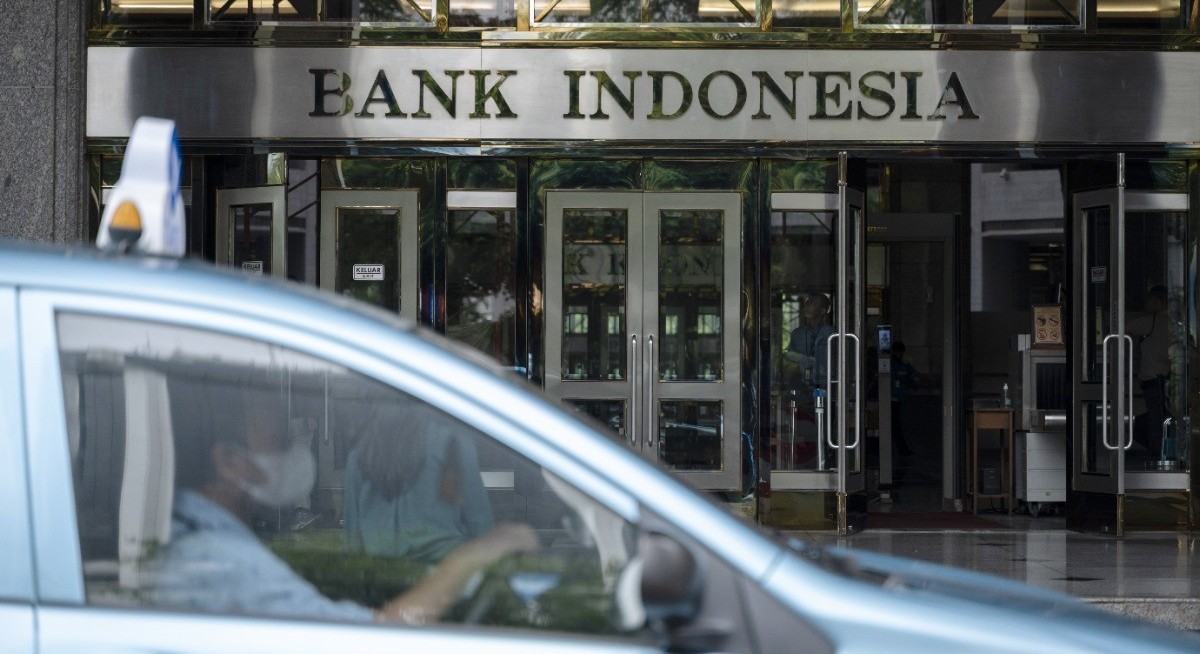


(Feb 19): Bank Indonesia (BI) kept its benchmark interest rate unchanged, maintaining a cautious stance as the rupiah continues to reel from recent market turbulence while policymakers weigh growth and stability risks.
The central bank held its BI rate at 4.75% on Thursday, extending its pause for a fifth consecutive month amid heightened market volatility. The decision was widely anticipated, with nearly all 32 economists surveyed by Bloomberg News predicting no change.
“We will monitor the situation going forward to see if interest rates can be reduced,” governor Perry Warjiyo said in a briefing on Thursday. “However, given the continuing high level of global uncertainty, we will be data dependent.”
The decision underscores policymakers’ focus on safeguarding the currency, while sustaining domestic demand and growth momentum. It also comes as BI appointed new leaders, including Thomas Djiwandono, President Prabowo Subianto’s nephew, a development that may keep investors watchful of the central bank’s independence.

The rupiah ended the day hardly changed after earlier losing as much as 0.3% against the dollar. The Jakarta Composite Index was down 0.6%. The currency remains near a record low as investors fret over potential downgrades by MSCI Inc and Moody’s Ratings to the country’s equity and sovereign credit outlooks. The rupiah has lost 1.1% against the dollar this year, the worst performer among major Asian currencies.
See also: Philippines cuts rate as graft fallout hampers growth
Warjiyo said the currency is undervalued. Despite strong fundamentals, the rupiah is being weighed down by domestic dollar demand and global market instability. He added that BI will continue to increase the intensity of its currency stabilisation measures.
According to Lloyd Chan, a currency strategist at MUFG Bank Ltd, the rupiah could remain under pressure and drift towards the 17,000 level against the dollar by the end of the second quarter.
While BI could remain cautious in the near term, it retains a dovish bias, Chan said. “We continue to forecast two 25 basis points in BI rate cuts in 2026, which would bring policy closer to neutral.”
See also: IMF warns China’s economic policies are 'causing damage to others'
Warjiyo again called for banks to lower borrowing costs further, noting that their rates have only fallen about 40 basis points since the start of last year, compared with 125 basis points in BI rate cuts over that period. He noted that loan growth accelerated to 9.96% in January, up slightly from December.
Indonesia’s economy expanded at a faster pace of 5.4% last quarter, bringing full-year growth to 5.1% in 2025. Prabowo’s administration is seeking to push activity higher this year, targeting expansion of 5.5%-6% in the first quarter of 2026 as it ramps up state spending to stimulate household consumption.
BI likewise sees faster growth this quarter, with household consumption getting a boost from the government’s stimulus measures and the religious holidays. It kept its 2026 gross domestic product forecast at 4.9%-5.7%.
Uploaded by Tham Yek Lee




