




“We will measure our success not only by the battles we win but also by the wars that we end — and perhaps most importantly, the wars we never get into,” Trump says in his second inaugural address. “My proudest legacy will be that of a peacemaker and unifier. That’s what I want to be: a peacemaker and a unifier.”
That declaration was in line with how Trump had pitched himself to voters in all three of his presidential campaigns in 2016, 2020 and 2024. Trump has long touted his anti-war credentials by lambasting his predecessors, Barack Obama and George W Bush, for prolonging America’s involvement in the “forever wars” in Afghanistan and Iraq.
Trump’s desire for adulation has even seen him mount an aggressive public campaign for the Nobel Peace Prize, an accolade that Obama won shortly after taking office in 2009. That prize has eluded Trump thus far, despite his repeated attempts to fashion himself as a bona fide “peacemaker in chief” by attempting to settle conflicts in at least six different regions.
These include disputes between Israel and Iran, the Democratic Republic of the Congo and Rwanda, Cambodia and Thailand, India and Pakistan, Serbia and Kosovo, as well as Egypt and Ethiopia.
See also: US protests China visa rules by snubbing Apec meet in Macau
“You know, I’ve solved six wars in the last six months, a little more than six months now, and I’m very proud of it,” Trump told reporters in the Oval Office on Aug 14. “If you look at Pakistan and India, planes were being knocked out of the air; six or seven planes came down. They were ready to go, maybe nuclear. We solved that.”
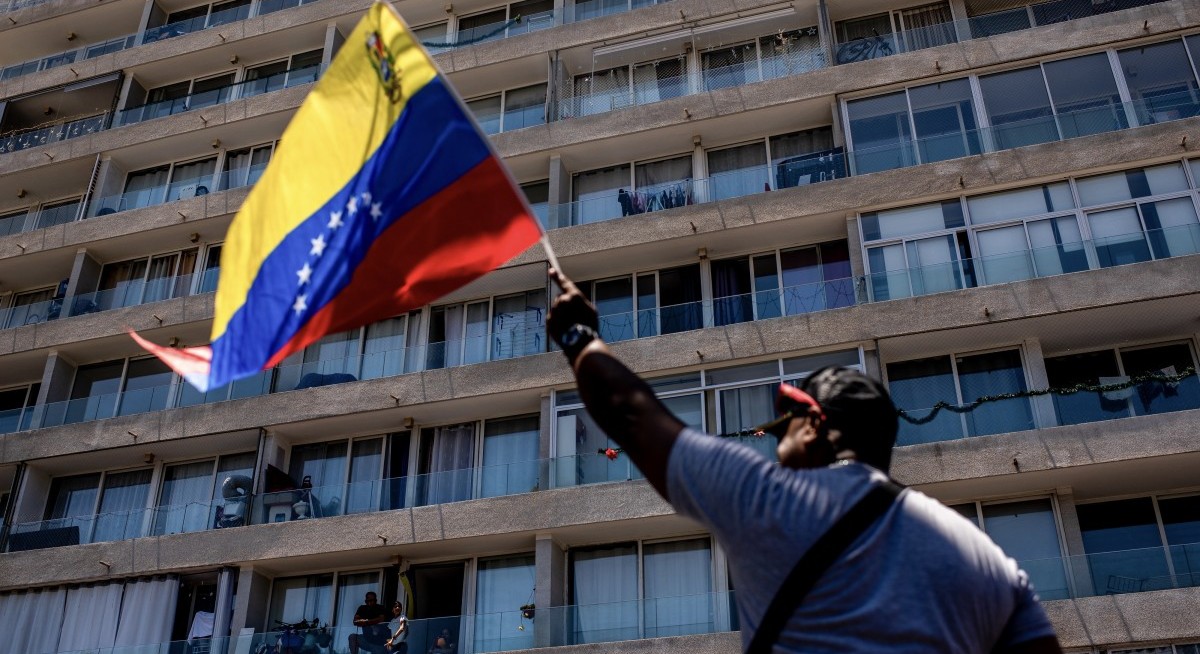
But in 2026, Trump decided to discard his peacemaker garb in favour of something else. On Jan 3, his administration launched a military strike on Venezuela. The swift and audacious attack ended with the capture of Venezuela’s President Nicolas Maduro and his wife, who are now facing charges over drug trafficking in the US.
While there has been much debate about the implications of the attack for oil prices, a much deeper question has arisen: what will the attack mean for the rules-based international order?
See also: Hormuz fees branded ‘unacceptable’ by Trump in warning to Iran
“The US has been more willing to act unilaterally when it sees its national interest requires,” says Senior Minister Lee Hsien Loong. “It has done this in the Middle East. It has intervened militarily in Nigeria, which it has never done before. Most recently in Venezuela and now seriously considering some action in Greenland.”
Lee was speaking at the ISEAS-Yusof Ishak Institute’s annual regional outlook forum held at the Sands Expo & Convention Centre on Jan 8 where he shared his outlook for the world in 2026.
“In the short term, these actions have sometimes had spectacular and even positive results in the Middle East,” Lee says. “But the longer term consequences of these actions at the target and the broader consequences of these actions for the rest of the world and for the global systems ... which is based on countries understanding that you have to coexist with one another peacefully and work with one another because going to war has grievous and very unpredictable consequences, I’m not sure that has been furthered by this environment.”

Senior Minister Lee Hsien Loong speaking at a special dialogue session with Singapore's Ambassador-at-Large, Chan Heng Chee at the ISEAS-Yusof Ishak Institute’s annual regional outlook forum on Jan 8. Photo: Ministry of Digital Development and Information
George Yeo, Singapore’s foreign minister from 2004 to 2011, says: “What is happening in Venezuela is an acceleration of trends that are already ongoing for some time, which is the world becoming multipolar.”
Yeo was speaking at the Oversea-Chinese Banking Corp’s (OCBC) annual premier private client investment seminar at the Ritz-Carlton Singapore on Jan 6 when he was asked about the implications of the attack on global markets.
To stay ahead of Singapore and the region’s corporate and economic trends, click here for Latest Section
According to Yeo, the US attack on Venezuela is an acknowledgement that it is no longer able to sustain the kind of global military deployment that it was capable of previously. This, in turn, stems from the poor fiscal situation America is in. As of early January, the US national debt stands at US$38.44 trillion ($49.23 trillion).
“It’s now saying, ‘Look, this is my hemisphere. You, China, Russia, don’t you dare interfere.’ What is the subtext to it? In your own sphere, I will not interfere,” Yeo says. “So, if I were Ukraine, I would think hard. If I were Taiwan, I would think very hard about what all this means for me.”
Analysts that The Edge Singapore spoke to say that while the US attack on Venezuela is unlikely to embolden China to do the same with Taiwan, it has most certainly rung the death knell for the liberal international order as we know it.

Former minister George Yeo speaking at a fireside chat with OCBC's chief economist Selena Ling at the bank’s annual premier private client investment seminar on Jan 6. Photo: OCBC
Mixed bag of wins and losses for China
On a perfunctory glance, the US attack on Venezuela appears to have given a free pass for China to retake Taiwan by force. After all, China has long viewed Taiwan as a renegade province. In a New Year message delivered on Dec 31, Chinese leader Xi Jinping says the return of Taiwan to China is a foregone conclusion.
“We Chinese on both sides of the Taiwan Strait share a bond of blood and kinship. The reunification of our motherland, a trend of the times, is unstoppable,” says Xi.
Analysts, however, say that China is unlikely to mount an attack on Taiwan just yet. Dylan Loh, an associate professor of public policy and global affairs at Singapore’s Nanyang Technological University (NTU), says China’s strategic calculus on Taiwan will probably remain unchanged as there are no significant “push” or “pull” factors that would necessitate a shift in its timeline.
“Domestically, President Lai has shown no inclination toward independence,” says Loh, referencing Lai Ching-te, a pro-Taiwan independence politician who became Taiwan’s president in 2024. Lai is also the leader of Taiwan’s nationalist Democratic Progressive Party.
“Simultaneously, the KMT is led by one of its most Beijing-friendly chairpersons to date, while legislative gridlock further limits radical policy shifts — and this includes blocking Lai’s special defence budget. Furthermore, the US still maintains a commitment to its ‘One China’ policy. Ultimately, these dynamics carry more weight than recent US tactical manoeuvres,” Loh adds.
Eurasia Group analyst Jeremy Chan says there is very little China can do in the near-term besides issuing “strongly worded rhetoric” condemning the US. On Jan 4, China’s foreign ministry called for the immediate release of Maduro and for the US to “stop toppling the government of Venezuela.”
“There is little appetite even among other countries that have been alarmed by US actions in Venezuela — Brazil, Colombia, Chile, Cuba — to form a united response with China,” Chan says.
While China will likely welcome the US violating international law and undermining its own moral standing globally, it still has to grapple with the fallout that comes with a Venezuela not led by the Beijing-aligned Maduro. China may potentially lose access to all the oil, infrastructure and IT investments it has made in Venezuela.
China, however, may still try to temper its condemnation lest it shatters the trade truce Xi struck with Trump when they met on the sidelines of the Apec Summit in South Korea in October.
“China will seek to portray itself as the defender of the international system, in contrast with the unilateral and neo-imperialist US. It will also rally international voices to condemn US actions, but Beijing won’t do anything that could upset the détente that the two countries reached at Busan in October,” Chan says.
Chong Ja Ian, an associate professor of political science at the National University of Singapore (NUS), says Trump’s attack will provide China with cover when it goes after its political enemies and dissidents.
“The US intervention into Venezuela may also make PRC efforts to intervene in other polities, including Taiwan, the Philippines and elsewhere seem more normal, so too with its global efforts to rendition and kidnap people Beijing deems threatening to its regime. Beijing may also use US actions as justification for its attempts to go after Taiwanese political leaders,” says Chong.

In his New Year message for 2026, Chinese leader Xi Jinping says the reunification of China and Taiwan is “unstoppable.” Photo: Bloomberg
Small states beware
One thing’s for sure. Policymakers of smaller nations like Singapore will see the seizure of Maduro as further proof of a new world order, one that is more dangerous and uncertain, taking shape.
“It’s hard not to view US actions against Venezuela as the clearest manifestation of Trump’s might-makes-right approach to international diplomacy,” says Eurasia Group’s Chan. “Smaller countries will need to consider what the return of the law of the jungle means to their national security.”
To be fair, the fracturing of the old-world order is not Trump’s doing alone. Countries such as China and Russia have long been flouting and undermining established norms, long before Trump came onto the scene.
“International law, order and norms were already crippled before this. After this, I think many may conclude that it is finally dead,” says NTU’s Loh.
For Chong, the “weakening of more stable and predictable norms” will make it harder for countries like Singapore to pursue international cooperation. “They can less afford to take international best practices for granted,” he adds.
In fact, taking a neutral position may no longer work given the shifting global dynamics. Previously, major powers were more tolerant of states that did not take sides because their rivalry was less intense. That is no longer the case.
“In a world where force is more the prevailing currency and major power rivalry is more intense, there may be less tolerance for smaller and medium-sized states wavering,” Chong says. “They may even be punished for insufficient support by one or multiple major powers.”
Countries fearing another Venezuela-style attack can remain cautiously optimistic that the US will not reprise the same method so easily.
Chan, who previously served as a US diplomat in China and Japan, says the Trump administration is unlikely to take similar actions against the leaders of countries with which he’s feuding, such as Colombia, Chile and Cuba. “The same level of focus is not there yet for other countries. That said, other countries will likely respond differently to US coercion given their desire to avoid a similar fate.”
Instead, what really matters to Trump is the Western Hemisphere, which is shaping up as a priority region in his second term.

“Under our new national security strategy, American dominance in the Western Hemisphere will never be questioned again,” says President Donald Trump. Photo: Bloomberg
“The world is changing to a new configuration. The Americans, [or] at least Trump, want to consolidate up North and Central America, and the northern part of South America,” Yeo, the former minister, told OCBC’s clients on Jan 6.
“That’s what led him to change the name ‘Gulf of Mexico’ to ‘Gulf of America.’ That’s why he wants Greenland. That’s why he wants total control of the Panama Canal. If he can flip Venezuela, which he seems to have done, and Colombia, then his objective would have largely been achieved,” he continues.
That ambition was outlined in the National Security Strategy document the Trump administration published in December, just weeks before Maduro’s capture.
“We want to ensure that the Western Hemisphere remains reasonably stable and well-governed enough to prevent and discourage mass migration to the United States,” says the document. “In other words, we will assert and enforce a ‘Trump Corollary’ to the Monroe Doctrine.”
The Monroe Doctrine was a declaration by President James Monroe in 1823 to European nations not to meddle in the affairs of the Western Hemisphere. Trump referenced the doctrine in his address to the media following the strike on Venezuela on Jan 3.
“The Monroe Doctrine is a big deal, but we have superseded it by a lot, by a real lot. They now call it the Donroe Doctrine,” Trump says. “Under our new national security strategy, American dominance in the Western Hemisphere will never be questioned again.”




