


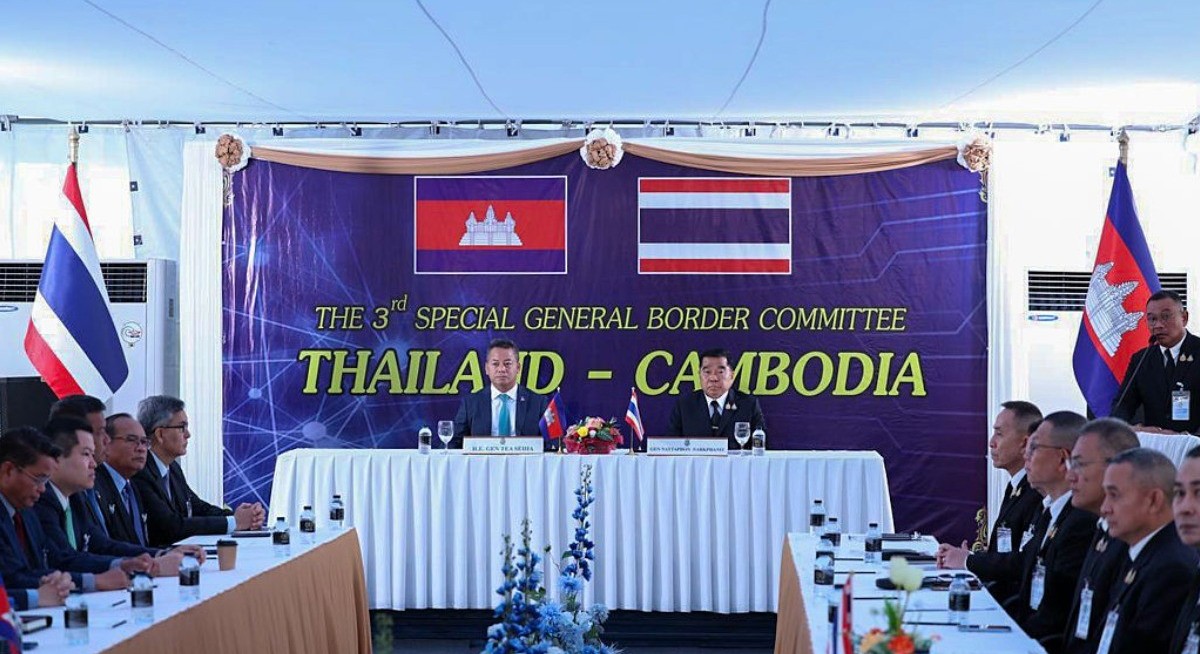


(Dec 29): China took thinly veiled swipes at President Donald Trump’s efforts to end a border clash between Thailand and Cambodia, with Beijing seeking a role as a peacemaker between the Southeast Asian neighbours.
In meetings on Sunday with both sides a day after a 72-hour ceasefire was announced, President Xi Jinping’s top diplomat appeared to contrast China’s approach to the conflict with Trump’s economic threats.
“China’s efforts to promote peace and dialog never impose on others or overstep its bounds,” Foreign Minister Wang Yi told his Thai counterpart Sihasak Phuangketkeow at a meeting in China’s southwestern Yunnan province. Wang held separate talks the same day with Cambodian Foreign Minister Prak Sokhonn. All three met on Monday.
The Global Times, a nationalist tabloid with an often less-diplomatic tone, amplified the message in an editorial: “Unlike many past mediations dominated by the West, China does not adopt a condescending approach, impose political conditions, or seek geopolitical advantages.”
The meetings underscore competition between the US and China over influence in Southeast Asia, with both powers seeking credit for easing the conflict. Trump has portrayed the ceasefire as a US-led success, while China is casting itself as a neutral mediator and implicitly challenging Washington’s narrative of leadership in the region.
Thailand and Cambodia agreed to an immediate ceasefire on Saturday — their second in six months — after the latest round of border clashes killed dozens of soldiers and civilians, while displacing more than half a million others.
See also: China holds military drills around Taiwan after US arms deal
Trump played a major role in tamping down the first round of fighting, halting hostilities in July with public threats of punishing tariffs. The conflict is one of eight the US leader has taken credit for ending as he makes an aggressive bid for a Nobel Peace Prize, and he has wielded further trade threats when the conflict has rekindled.
Trump heralded the latest ceasefire, saying in a social media post that the US, “as always, was proud to help!”
Before fighting spiked again earlier this month, China had engaged both sides but kept a relatively lower profile, in line with its general policy of not publicly intervening in conflicts. But Beijing has sought to publicise its efforts much more this round.
See also: Trump praises Zelenskiy after talks that yielded no breakthrough
In a press release issued after the joint meeting between China, Thailand and Cambodia in Yunnan, China said its military will keep in touch with Thais and Cambodians and will provide support to help cement the ceasefire as needed.
Bangkok signalled it was open to Beijing’s approach after Sunday’s meetings, with the foreign ministry saying in a statement that “the Thai side appreciated China’s role and understanding in supporting peace between Thailand and Cambodia through Asian way”.
Wang also told both that Beijing is willing to support a ceasefire observer mission, organized by the Association of Southeast Asian Nations, as well as to provide humanitarian assistance. China provided about US$3 million in aid to Cambodia, the Phnom Penh Post reported. Thailand said it had received a similar offer but hasn’t decided whether to accept it, Prime Minister Anutin Charnvirakul said on Monday.
The status of the ceasefire was in question on Monday, with Thailand reporting that a soldier in a mine clearance team lost a leg in a mine blast in a disputed area of Si Sa Ket province. The Thai army said in a statement that “preliminary assessments suggest there are still a large number of mines planted by Cambodian forces in the area, particularly in zones that Thailand took control of before the ceasefire was declared”.
It added that it will submit information to the Asean observer team “to verify and establish the facts within the framework of the ceasefire agreement.” As part of the latest agreement, Thailand has said it would consider releasing 18 captured Cambodian soldiers if the ceasefire is maintained for 72 hours.
Both the Thai and Cambodian governments and their armed forces likely benefit from taking hard lines against each other. Anutin dissolved parliament this month, paving the way for a February election and betting that the conflict with Cambodia will bolster support for his conservative party. His defence minister, Nattaphon Narkphanit, said on Sunday that Thailand’s acceptance of a “conditional ceasefire” was a strategic move rather than a concession.
Thailand’s military has also sought to frame the conflict as a war on scam centers operating across the border in Cambodia, targeting large compounds suspected of housing cybercrime operations that both Washington and Beijing want shut down.
Uploaded by Felyx Teoh




