




Amid that war, US President Donald Trump’s imposition of punitive tariffs on American friends and foes alike represents a tactical retreat in the face of China’s advance. The Chinese benefit from the discomfiture of those countries that were inclined to believe till now that America is the only direction in which globalisation can travel. No economic decoupling has occurred between America and China, but it is abundantly clear that they are now gladiatorial rivals in the global market, adversaries which are no longer on the same side of history.
Cold War 1.0 ended in 1991 with the implosion of the Soviet Union. In 2025, it is obvious that Cold War 2.0 is well underway, with the combatants this time being ideological rivals within the ambit of capitalism. Therein lies the significance of these unfolding times.
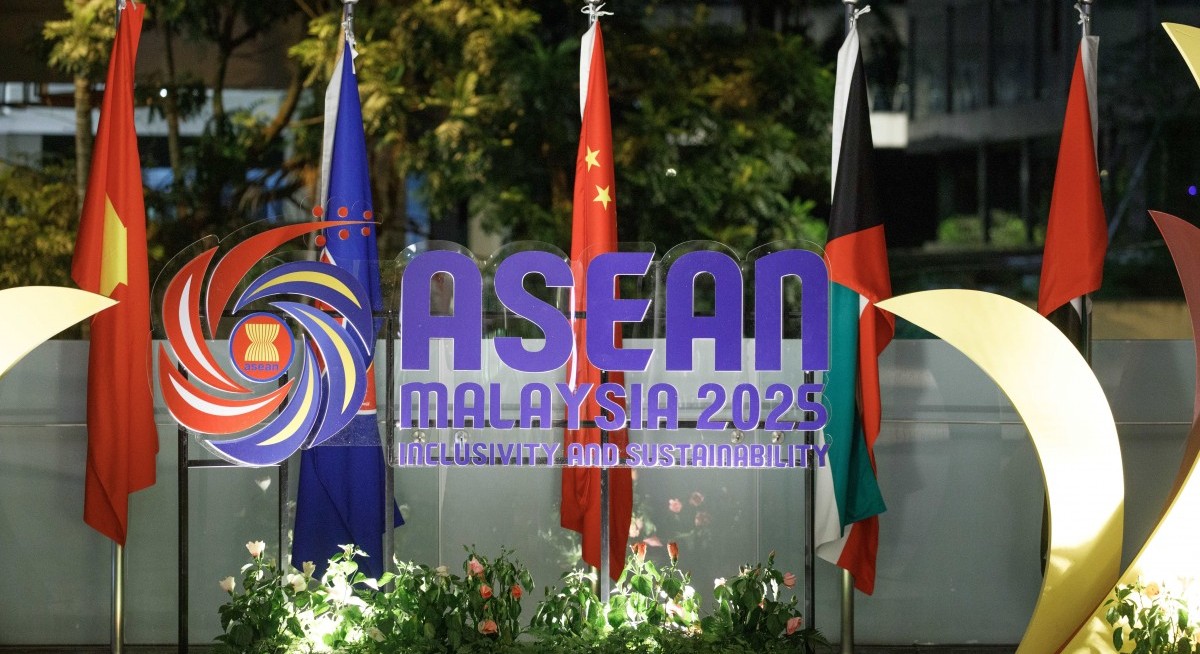
Those ties impinge on Southeast Asia insistently. Asean began its life in 1967 as a Cold War organisation that sided with the US. Asean expanded in stages after the end of that war to include all the nations of Southeast Asia. That expansion reflected the widening global consensus that a liberal trade regime was beneficial to countries large and small because, among other reasons, it gave the great powers, including Russia and China, a common stake in the well-being of smaller, less powerful countries.
Globalisation lifted all boats. It did not do so equally, but it did lend the energy of economic waves to all nations. In that spirit, Southeast Asia’s transformation in the years since 1991 has been remarkable.
See also: Turkey’s US$37 bil defence firm says foreign orders doubled
Now, as Cold War 2.0 touches the shores of maritime Southeast Asia and ripples through the political economies of continental Southeast Asia, countries in this region are being forced to rethink their international postures. Asean states say they do not wish to take sides between America and China, but the real question is whether those two great powers will allow Southeast Asia to remain autonomous — or whether the region will return to its unenviable position as a cockpit of great-power rivalry. The die has not yet been cast, but the Great Game of power politics has begun.
State of play
An important 2025 report suggests where Southeast Asia is positioned in this power play. The Australian Lowy Institute’s Southeast Asia Influence Index defines influence as “the capacity of a partner country to shape or affect the behaviour of Southeast Asian countries by non-kinetic means” — that is, without the use or threat of force.
See also: Qatari LNG ship struck in Hormuz, testing US-Iran deal
The index focuses on activities capable of generating influence. The report makes the following points: China, which is “everywhere” in the region, is its leading external partner but not the dominant one. “China has an overall influence score of 65 out of 100, a one-point lead over its nearest rival, the US.”
America is the second-most influential partner for the region, but the Trump Administration’s policies “will further erode” US influence in Southeast Asia.
Then, in an interesting observation, Lowy says that Southeast Asian nations are collectively “more important to each other than to any external partner”. What this means is that relations between direct neighbours “often matter more than competition among external powers”.
In this external context, Lowy believes that Japan leads the four Indo-Pacific powers of Australia, India, Japan and South Korea within the larger circle that contains America and China. Beyond the circle, Canada, France, Russia and the UK are peripheral Southeast Asian players, but they can “exert sharp influence”.
All in all, no “Southeast Asian country is within the uncontested sphere of influence of a single external partner, but several countries are highly exposed to China in specific sectors such as tourism, investment or trade”.
Clearly, China is not a hegemonic power because it has not yet replaced American hegemony, but it is on the way to becoming one.
Another 2025 report, produced this time in Southeast Asia, makes similar points. In the assessment, based on a research project and published by Singapore’s Asia Research Institute in September, the main finding is that “while most Southeast Asian states remain clustered in the centre of a US-China continuum”, what is noticeable is a “gradual but clear movement” away from America and towards China over a 30-year period. That is because of the interplay of domestic politics, economic opportunities, expectations of American power and geography.
Sink your teeth into in-depth insights from our contributors, and dive into financial and economic trends
The most significant factor is economic opportunity, in which China holds the upper hand. Economics, in turn, is contoured by geography, a pertinent example being the Mekong region.
By comparison, America is a geographically distant power. “No doubt, this has not prevented America from playing an important stabilising role as an offshore balancer. Yet the stark reality is that distance cannot but prompt concern for the reliability and sustainability of the US commitment to regional security.”
These concerns are not new. Ever since the beginning of the post-World War II order in 1945, there have been doubts over America’s staying power in Asia. They came to the fore during the Vietnam War, when US reverses led to the proclamation of the Nixon Doctrine in 1969. It stated that while the US would honour its treaty commitments and provide military and economic assistance, its allies would be primarily responsible for their own defence. The policy sought to reduce the number of American troops deployed abroad while maintaining US involvement through financial and military aid. Well, Vietnam fell to the communists in 1975.
The point is that external powers can choose when to intervene and when to withdraw. Local powers may or may not intervene, but they can never withdraw. China is the greatest of local powers for medium and small states in Southeast Asia.
Enter the G2?
Something that could be important in this evolving context occurred this year. “The G2 WILL BE CONVENING SHORTLY!” Trump wrote just before he headed into a summit with Chinese leader Xi Jinping in South Korea on Oct 30.
On Nov 1, Trump posted on Truth Social: “My G2 meeting with President Xi of China was a great one for both of our countries. This meeting will lead to everlasting peace and success. God bless both China and the USA!”
Quite apart from the delicate diplomatic issue of God having to bless (largely Christian) America and (avowedly atheist) China simultaneously, not least amidst muscular tariff blows and ruinous arms races on earth, the secular question that arises in many minds is: Is America ceding global peer status to China?
That is because the G2 — or Group of Two — has an interesting political past. The concept was proposed by the American economist C Fred Bergsten in 2005 to urge the world’s two major economies to communicate with each other, but it came to stand for the recognition of a power equilibrium between them. China, then the weaker side in the global bargain, welcomed the idea, but America, the stronger side, rejected it.
The tables have turned two decades later. The President of America has accepted the term.
An important report in the AP describes how Chinese commentators have immediately and triumphantly picked up on Trump’s use of the term “G2”. The report cites Housha Yueguang, a popular blog account known for its nationalist leanings: “Trump’s G2, to some extent, is that the US has accepted the reality that it no longer has the unipolar position but wants to build a bipolar world with China. It means Europe is no longer important, let alone Japan or India.”
American allies are terrified. The AP report quotes Mira Rapp-Hooper, a former Biden Administration official, as warning that Trump’s use of the term may provoke “significant anxiety in allied capitals” fearing that the Trump Administration “will cut deals with China that may leave them at a disadvantage.” The term will alarm countries such as Japan, Australia and India because of its implosive potential to make America defer to China in Asia, overriding the interests of other Indo-Pacific nations.
To say the least. If even Europe, Australia, Japan and India can be sacrificed at the altar of the G2, what about Southeast Asia, which is not a single powerful country but a regional grouping of sovereign nations?
No matter how much Asean coheres in the sense of each member taking other members more seriously than the rest of the world takes them collectively, that coherence will be tested severely in a G2 world.
There, Southeast Asia — China’s historical Nanyang — would belong naturally to the Sinic sphere of influence.
As a quid pro quo, perhaps Latin and South America would be granted continued protection of the US and its North American partner, Canada.
My assessment is that America and China will not co-rule the rest of the world. The differences between them that I mentioned at the beginning of this column are inherently structural and are too severe to make any real rapprochement possible.
Détente, yes — as once between the US and the Soviet Union — but not a commonality of interests. China will exploit (as any other country would) every weakness in the American position, whether only apparent or genuinely real, to marginalise Western influence in global affairs here and now. America will wait for China to become a global overreacher, thereby securing its own downfall. This is the Great Game for the long term.
In the medium term, Southeast Asia will pay the price.
The only solution, if there is a solution, that I can foresee sounds like a platitude, but it is true. The Lowy Institute’s comment — that Southeast Asian nations are collectively “more important to each other than to any external partner” — should be taken as a strategic compliment and not a put-down.
What has happened is that Southeast Asia, institutionalised in the form of Asean, has become a discreet security domain, that is, one in which intramural security relations provide some buffer against external threats, for example, caused by great-power realignments. That is why Lowy insists that relations between direct neighbours “often matter more than competition among external powers”.
That being the case, Asean is on the right track. It can do little, even collectively, to influence relations between the US and China. However, what is imperative is that bad blood between the world’s two most powerful countries should not vitiate relations within Asean.
Well, that is my bottom line. Southeast Asian countries do not owe their existence to either America or China. Likewise, they owe their future, individually and collectively, only to themselves.
That was true this year. It will always be true.
The writer is founder and CEO of Pereira International, a Singapore-based political and strategic advisory consulting firm. An award-winning journalist, he was an undergraduate at the London School of Economics and Political Science and a graduate alumnus of the Kennedy School of Government at Harvard University. He is also a member of the Board of International Councillors at the Center for Strategic and International Studies in Washington DC. This article reflects the writer’s personal views




