




Traders had already braced for weaker EV growth this year on lower government subsidies, reflected in a build-up of bearish bets since November. Still, the pace of demand deterioration has caught many off guard. Adding to the strain, soaring costs for battery materials and memory chips are likely to squeeze automakers’ margins even further.
“Investor sentiment is extremely negative,” said Xiao Feng, a co-head of Chinese industrial research at CLSA in Hong Kong. “The deeper worry is that we will see large-scale earnings downgrades this year, raising doubts about the EV makers’ long-term ability to generate profits in China’s domestic market.”
Exports remain a bright spot, but Chinese car manufacturers still rely heavily on the fiercely competitive domestic market, where consumers remain skittish. Morgan Stanley notes that most local automakers expect first-quarter volumes to drop 30% to 40% from the December quarter.

See also: China EV maker Voyah drops 13% in HK debut without fresh funds
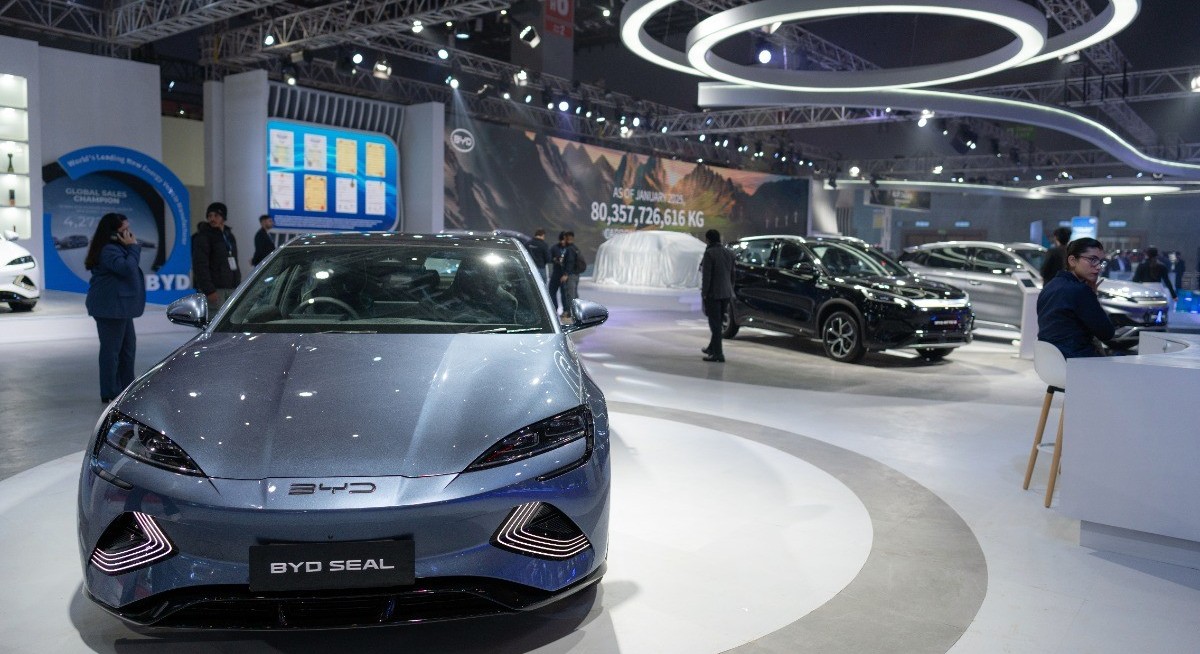
January sales underscored that even market leaders aren’t immune. BYD’s domestic deliveries for the month halved versus a year ago to 109,569 units, while last year’s outperformer XPeng Inc reported a more than 30% decline in total deliveries.
More troubling for investors is the profit impact of surging raw material costs while EV makers are still burning cash on promotions to lure buyers. The price of lithium for EV batteries has more than doubled over the past three months, while copper and aluminium have also surged. The supply crunch in memory chips is making intelligent auto components more expensive.
“Cost inflation is the main risk,” said Joanne Cheng, an investment manager for Chinese equities at Aberdeen Investments. “Whether auto OEMs (original equipment manufacturers) can pass through to retail customers while competition remains fierce is a question.”
See also: Honda’s car troubles began long before its bet on EVs — Bloomberg analysis
Market estimates show additional cost per vehicle could reach about US$1,000 or more for some premium models. Bernstein research indicates mass-market brands with weaker margins like Xpeng, Li Auto Inc and Nio Inc are more vulnerable, while BYD is better positioned thanks to its in-house parts supply.
There are some positive developments for the industry. Signs of improving trade ties with Canada and the European Union augur well for continued export momentum. Automakers are also venturing into such emerging tech areas as AI, humanoids and robotaxis that could help drive share prices.

For now, though, the sector’s struggles are a boon for short sellers. Bearish positioning in EV stocks on the Hang Seng Tech Index has climbed sharply since November, diverging meaningfully from the broader Hang Seng benchmark, according to S3 Partners.
The upcoming earnings season may offer investors more clarity, while valuations have already come down somewhat. EV stocks gained in Hong Kong on Friday after Nio said it likely posted its first quarterly profit.
BYD shares now trade at around 16 times forward earnings estimates, below their three-year average of 18. Even so, for investors like Gareth Pan, a senior investment manager at Pictet Asset Management, it’s still “too early to step in”.
“We remain on the sidelines given the cautious full-year outlook,” Pan said. While there are potential opportunities for export growth as well as increased usage of advanced-driver assistance systems and robotaxis, EV stocks are not attractive at current levels, he added.
Uploaded by Tham Yek Lee




