


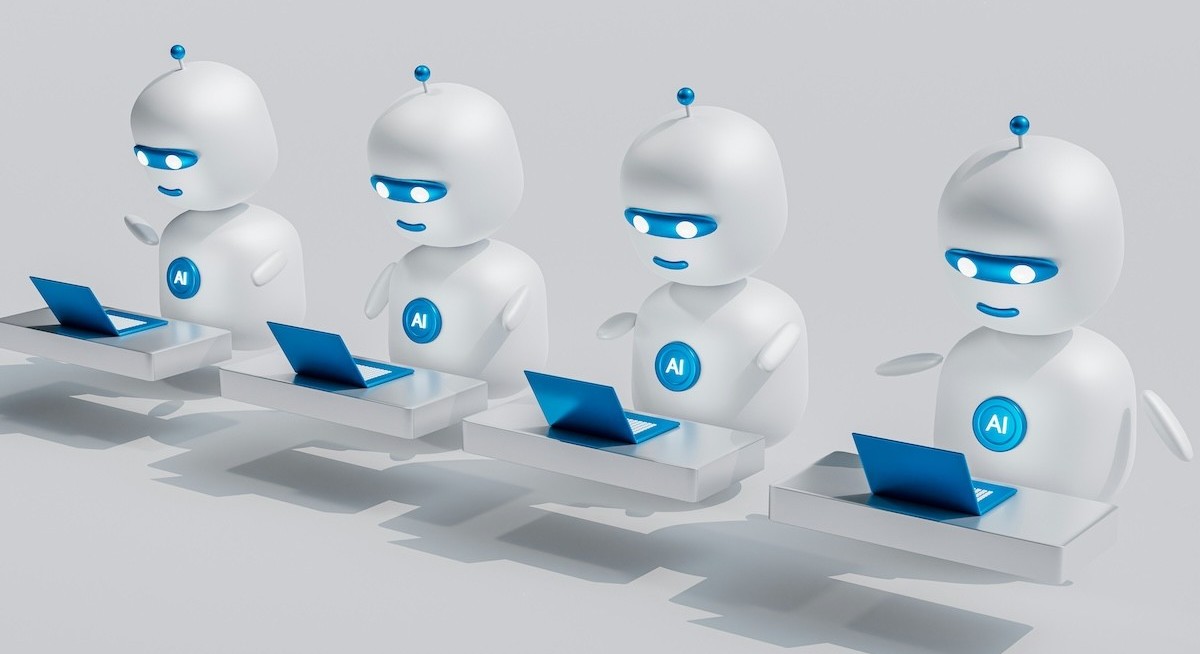


This leads to a critical question: is AI at work truly a productivity breakthrough or just another trending tech? The answer lies not in the amount of investment or the amount of tools adopted, but in choosing the right one to deploy and embed it thoughtfully and effectively.
From tool fatigue to orchestration
Businesses turn to AI to boost operational efficiency, reclaim their time, and work smarter. By streamlining file searches, resurfacing past conversations, and managing routine tasks, daily users reclaim about 6.3 hours each week.
However, the challenge many organisations face today is not a lack of tools. It is actually too many of them. With work spread across emails, chat threads, shared drives, and personal devices, important knowledge becomes scattered and difficult to retrieve. Simply adding another tool on top does not solve the problem; in fact, it often makes it worse.
See also: Anthropic accuses Alibaba of ‘illicitly’ accessing AI models
AI only reduces information sprawl when it is designed to simplify rather than complicate. The right approach is to have AI act as a unifying layer that connects different platforms and formats to help people find, organise, and protect their work. Capabilities like universal search make this possible by looking through files, links, and media across various platforms in one place, and returning results based on meaning and context, not just keywords.
When integrated well, AI becomes a workplace orchestrator rather than another source of noise. For example, before an employee’s day begins, AI could compile the latest updates such as which files have been amended, what decisions were made overnight, and which projects have progressed. By identifying key contributors and locating the right documents instantly, employees can start the day informed and ready to act.
Cutting through the hype of AI assistants
See also: Thailand seen as Southeast Asia’s surprise AI stock winner
With the plethora of AI tools on the market, the real challenge for organisations is knowing how to separate those that add value from those that merely add noise. The best way to tell if an AI assistant is genuinely useful is to look at whether it saves time, reduces complexity, and improves accuracy. Useful assistants help users find information quickly, organise it in a way that is easy to navigate, and protect it through existing access controls. When integrated seamlessly, it should feel like a natural extension of the workflow.
In contrast, tools that simply layer on new features without solving a real problem tend to create more work. Another window to open, another system to manage. This is why interoperability is key. AI should work across existing platforms, not force users into a new, isolated workflow.
When evaluating AI tools, IT leaders should ask themselves:
- Does this tool integrate seamlessly with my team's existing workflows?
- Does it reduce the need for context-switching?
- Does it help people focus, or distract them further?
When implemented thoughtfully, AI assistants can help unlock smarter, more seamless ways of working that empower people rather than overwhelm them.
Building trust through ethical AI
Selecting the right AI tool drives efficiency, but trust is equally important to maintain long-term success. As AI gets deeply embedded into systems, concerns about privacy and data security inevitably surface. These worries are especially common among users who are newer to AI tools. In fact, an Ipsos report found that seven in 10 of Apac consumers are concerned about how their information is being collected by companies. This further pushes the organisation to build trust through ethical AI as adoption scales.
To stay ahead of the latest tech trends, click here for DigitalEdge Section
Ethical AI has to be more than a statement of intent. It has to be built into how technology is built and deployed. This means collecting only what is truly necessary, being transparent about how data is used, and ensuring that no user content is used to train AI models without permission. It also means putting strong access controls in place so that sensitive information is never exposed to the wrong people or systems.
Ultimately, trust is built by giving users confidence in how their data is being used, and AI works in their interest, not against it. Transparency, data minimisation, and user control are central to this process. When employees understand how their information flows, where it is stored, and who has access, trust in AI grows — along with the willingness to embrace it as a reliable partner in the workplace.
The promise of AI in the workplace is only real when it simplifies rather than complicates, and earns the trust of users. By acting as an orchestrator across tools, platforms, and data, AI helps to reclaim time, unify workflows, build trust, and free up time for more strategic work.
AI is neither a miracle nor a myth. It is a reliable tool that empowers people, enhances decision-making, and drives meaningful impact across the organisation. Ultimately, organisations that succeed will be those that focus on creating AI experiences that truly work for humans.
Luke Simmons is the head of Apac Sales at Dropbox




