


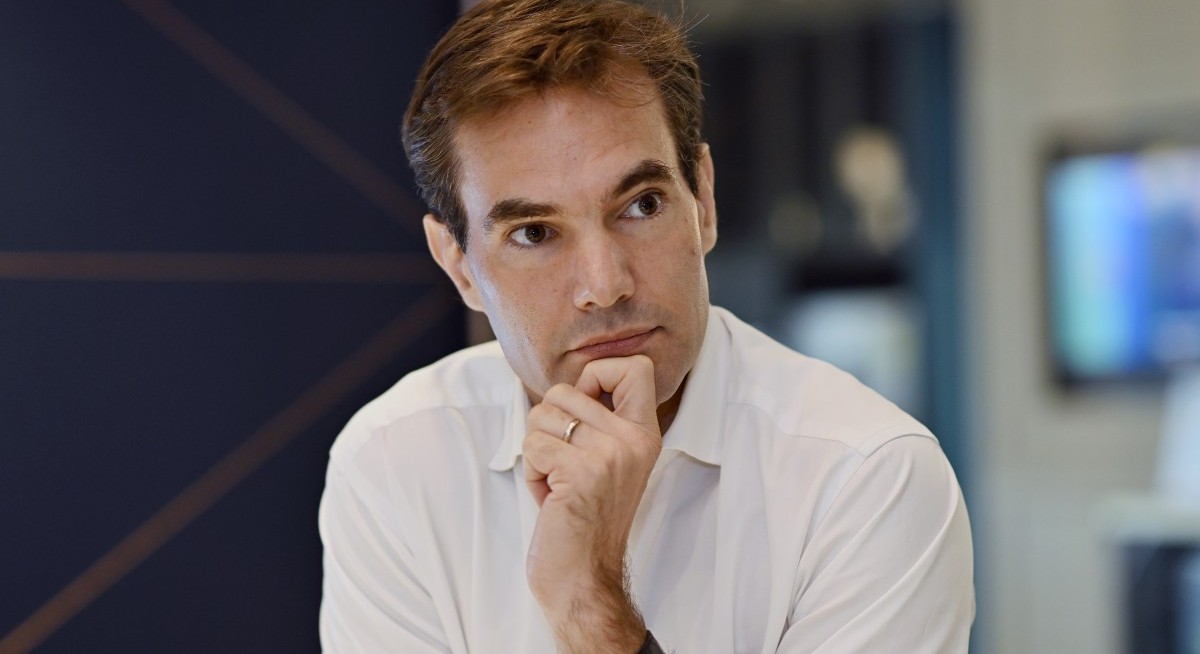


While inflation is “still somewhat elevated” in the US, a “reasonably stable” environment across most markets is good news for REITs and real estate, says Kehr to City & Country. “[They] tend to perform quite well because you do see positive rental growth come through.”
The situation could not have been more different 18 months ago. “Inflation and interest rates spiked so quickly and so aggressively that rent growth — which normally compensates real estate for inflation — took longer to materialise. So, you had two-and-a-half years of negative earnings growth for real estate, and that was obviously reflected in REIT valuations as well, and in the interest of institutional investors for REITs.”
Kehr is one of 16 individuals at CenterSquare, including analysts and portfolio managers, watching the REIT markets worldwide. Founded in 1987, the real estate investment firm set up a Singapore office in 2006. Its “core markets” in this part of the world today are Japan, Singapore, Australia, China, Hong Kong and South Korea, according to Kehr.
While Kehr declines to name the firms in CenterSquare’s “100% institutional client base”, he notes “a material uptick” in institutional interest as REIT performance improved in recent months. “Moving into 2026 and looking at where the market stands in terms of demand-supply dynamics for real estate and what interest rates are doing, we are still pretty optimistic that more positive momentum should hold.”
See also: Local firms powering Singapore’s strong green revenues
Japan real estate outperformed
Japan and Hong Kong take centre stage in CenterSquare’s research note titled “Asia-Pacific real estate takes flight in 2025”, co-authored by Kehr and released in October 2025.
Real estate was one of the year’s top performers in Japan, outpacing the broader Topix despite heightened macro volatility, reads the report.
See also: ‘Generational’ investment opportunity in green economy: LSEG
In January 2025, the Bank of Japan (BOJ) raised its benchmark rate from 25 basis points (bps) to 50 bps — its third hike in one year — after a multi-year low of –0.1%. The BOJ further raised rates by 25 bps to 0.75% on Dec 19, 2025 — its highest level in 30 years.
While rate hikes usually weigh on the property sector, Japanese real estate has historically outperformed in the month following a hike, according to CenterSquare. “The rarity of policy rate moves, combined with the BOJ’s telegraphed and gradual approach, makes the hikes a signal of stability rather than stress, often sparking relief buying.”
CenterSquare notes a “gradual mindset shift” away from decades of deflation. “This inflation is slowly being realised through rent growth across real estate sectors. We saw it first in the hotel sector, where landlords successfully passed through higher costs post-Covid-19. Multi-family followed last year, and office is now joining the trend. Even logistics — where supply has been less tight — is seeing more inflation-linked lease structures.”
Tokyo’s office market has tightened dramatically, says CenterSquare. “Vacancy rates, which peaked in 2023, dropped below the key 5% threshold in late 2024, marking the point at which landlords regained pricing power, and have since fallen under 3%.”
In the Japanese REIT universe, over a third of assets under management is in the office sector. “Hence, the office sector’s fortunes have an outsized impact on the valuations of listed real estate companies in Japan,” write Kehr and his team.
Separately, the Tokyo Stock Exchange has pushed companies trading below book value to improve capital efficiency and shareholder returns. Developers — long undervalued and asset-heavy — have been undertaking asset disposals, boosting buybacks and unwinding cross-shareholdings, notes CenterSquare.
Shareholder payout ratios have risen from 50% to 60% over the last decade, while buybacks in the 2024-2025 fiscal year jumped nearly 90% y-o-y. “Together, these reforms are creating a virtuous cycle of stronger balance sheets, higher valuations and more investor engagement,” notes CenterSquare.
Hong Kong headwinds clearing
Coming from a low base, Hong Kong real estate has staged “an equally notable turnaround”, according to CenterSquare, with property stocks surging over 24% in 1H2025.
This follows years of sharp declines: office vacancies surged above 20% as rents fell sharply, and prime retail rents collapsed to 2005 levels as tourism dried up and locals increasingly shopped across the border in Shenzhen.
By late 2024, capital values for office in Central, Hong Kong’s business district, were down nearly 50%, and for prime retail were down almost 40% from their peaks.
As a result, Hong Kong office and retail landlords came into 2025 trading at valuations well below historical averages, almost 70% below stated net asset values (NAVs) and up to 40% below their historical NAV discounts — “levels that priced in structural decline rather than cyclical weakness”, write Kehr and his team.
Kehr is now “generally fairly constructive” on Hong Kong real estate. “[It] has faced sort of a plethora of different headwinds over the last couple of years, and it seems that most of those headwinds have started to dissipate somewhat.”
A ‘positive’ 2026
Kehr says he believes the year is “generally quite positive” for REITs. “By and large, the interest rate environment today is a lot more stable than what it was over the last couple of years; [rates] are a lot more manageable today than they were, say, three or four years ago.”
Inflation, too, is “at a level where it’s not a threat”, he adds. “It has normalised, and it is positive, which is important because that does tend to reflect a growing economy and positive rental growth. So, from that point of view, I think the environment looks very conducive for REITs; it allows REITs to continue to generate positive earnings growth.”
Hypothetically, where would Kehr deploy $100,000 right now?
“Had you asked me a year ago, I would have said Hong Kong, but Hong Kong has done quite well in 2025, and our expectation is that… they should improve, but it’ll be a slower improvement,” he answers.
Elsewhere, the rate outlook in Australia is making investors “cautious”, he adds, while Singapore is “a safe port of call”.
The best bang for your buck could lie with Japan. According to Kehr, the country is undergoing a “paradigm shift” from a deflationary to an inflationary environment. “Real estate companies have started to kind of get their head around what that means in terms of how they need to manage their real estate, and you’re starting to see that reflected in much higher sustained rental growth.”
He adds: “That shift on the ground is quite material and quite different from what I have seen over 15 years of covering that market.”
Next week in City & Country: Kehr discusses whether C-REITs will overtake the US, and the risks facing large data centres
For more investing strategies and breaking news, visit City & Country’s microsite at theedgesingapore.com/cityandcountry




