


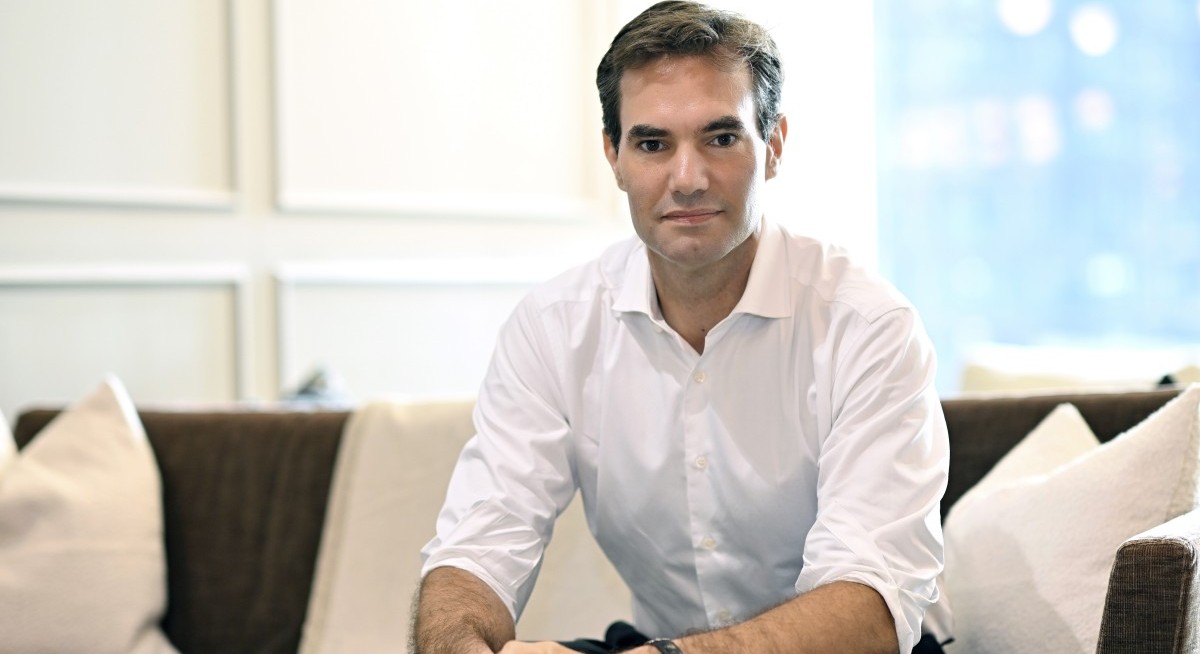


“They’re just in the trial years like Singapore 25 years ago, but once this asset class grows, it can be as big as the US,” said the Singaporean billionaire who co-founded real estate fund manager ARA Asset Management in 2002.
Never mind that the market cap of US REITs was some 40 times larger than that of C-REITs in September 2025; Lim said the C-REIT market — launched only in June 2021 — can triple in value “overnight” if regulators drop their ongoing phased rollout across sub-sectors like industrial, elderly care facilities and consumption (or retail).
Still, Lim said Chinese regulators are not overly conservative. “I think they are being careful… The biggest fear for any government, including Singapore, is that asset owners keep all the good assets and place the lousy ones into a REIT.”
US still king
See also: Chinese hospitality is the ‘best asset class’ in real estate right now: John Lim
Could the US REIT market — the world’s largest by a wide margin — one day be pipped to the post by China’s deep market? Joachim Kehr, Asia-Pacific head at CenterSquare Investment Management, is not writing off the US just yet.
“The US capital markets today account for 25% of global GDP, give or take; if you look at equity markets, they account for something like 60% of global equity markets. It’s the same in the REIT space as well; US REITs account for about 63% of global REITs. My point is that the US is a big economy, but when it comes to equity markets and capital markets, it’s actually punching well above its weight,” says Kehr to City & Country.

See also: CenterSquare’s Apac head eyes Japan real estate as deflation ends
That is a reflection of the “economic dynamism” in the US regulatory environment, adds Kehr, “which arguably is a lot more liberal than what you would find in other markets”. “Certainly, it’s more liberal than what you have in China today.”
China could, “at some point in the future”, grow to be a large REIT market, says Kehr. “[But] there are a lot of adjustments and reforms that would have to happen for China — or any market — to rival the US… Overtaking the US is a tall order.”
Rise of alternatives
Even the US — “the leader for REITs and general equities” — has transformed over the past two decades in terms of the emergence of alternative real estate, says Kehr, a former real estate securities analyst at BNP Paribas.
Office, retail and logistics assets — the traditional “hallmarks” of a REIT market, have conceded to the rise of healthcare, single-family rental and data centre assets, he adds. There are even prison REITs in the US. “Today, the office sector in the US accounts for something like 3%–4% of the overall US REIT universe; it has shrunk tremendously… The US has created this blueprint of this emergence of alternative real estate, and we’re now seeing that play out in other parts of the globe, like Asia.”
Investors have been “very receptive” to the living sector and worker accommodation, says Kehr, who joined Philadelphia-headquartered CenterSquare in 2011. “That’s reflected in the share price and the outlook continues to be quite positive, in part driven by the demand for that type of real estate.”
Centurion Accommodation REIT, which debuted on the Singapore Exchange (SGX) in September 2025 with a portfolio of worker and student accommodation assets, ended the year some 15% above its IPO price.
In comparison, REITs with data centre assets have “struggled, performance-wise” across Asia, says Kehr. This is despite intense discussion over the purported future demand for artificial intelligence (AI).
“It’s very difficult to underwrite what the demand is actually going to look like. Also, the speed of some of the leasing announcements that have come through have probably been slower than what people or investors would have liked,” he adds.
With a portfolio of six data centre assets across the US, Vienna and Singapore, NTT DC REIT marked the largest REIT IPO on the SGX in a decade when it debuted in July 2025 with a market cap of around US$1.03 billion. However, it sank below its offer price of US$1 a week after its listing and stayed there until September. After notching a high of US$1.07 in October, units in NTT DC REIT ended the year 2% above its debut.

A NextDC data centre in Sydney. OpenAI partnered with the Australian data centre operator to build a A$7 billion ($6.04 billion) large-scale computing cluster in Sydney, accelerating its expansion into the Asia Pacific
Data centre risks
Large data centres in non-prime locations, leased to hyperscalers, are “probably the least future-proof”, says Kehr. “[These are] on long-term, say, 10- [to] 12-year lease contracts, at the end of which it’s unclear whether this data centre is still going to be viable because it’s in a non-prime location.”
No one knows where AI will be a decade from now, he adds. “Chances are that the equipment is going to be totally outdated, so you’re going to be facing a massive capex bill in order to retrofit that data centre or you’ll take a massive cut on the rent. A lot of these out-of-town data centres that are in non-prime areas are currently being built or being used for AI training. So, the question is: Five [to] 10 years from now, how much AI training is still going to be needed?”
Like traditional real estate, location matters for data centre assets, says Kehr. “If you have data centres that are located near communication hubs [or] urban centres, the chances are that there’s always going to be some use, whether it is for cloud storage, AI inference or any other future use that we don’t yet know of… When we invest in data centres, we obviously have a preference for REITs or developers that have data centres in those prime locations.”
New data centre developers, however, claim that it is easier to get access to power in “tertiary” or “non-prime locations”, adds Kehr. “They can bring these data centres to market fairly quickly, relatively quicker than a developer in a prime location. That story sounds good for the time being, but it’s exactly that question: How are these data centres going to perform three [to] five years down the road, when some of that demand might start to shift or evolve or just dissipate? You may be stuck with a multi-billion-dollar asset in a tier-three location with no prospective tenant, and that’s obviously what you really want to avoid.”
For more investing strategies and breaking news, visit City & Country’s microsite at theedgesingapore.com/cityandcountry




