


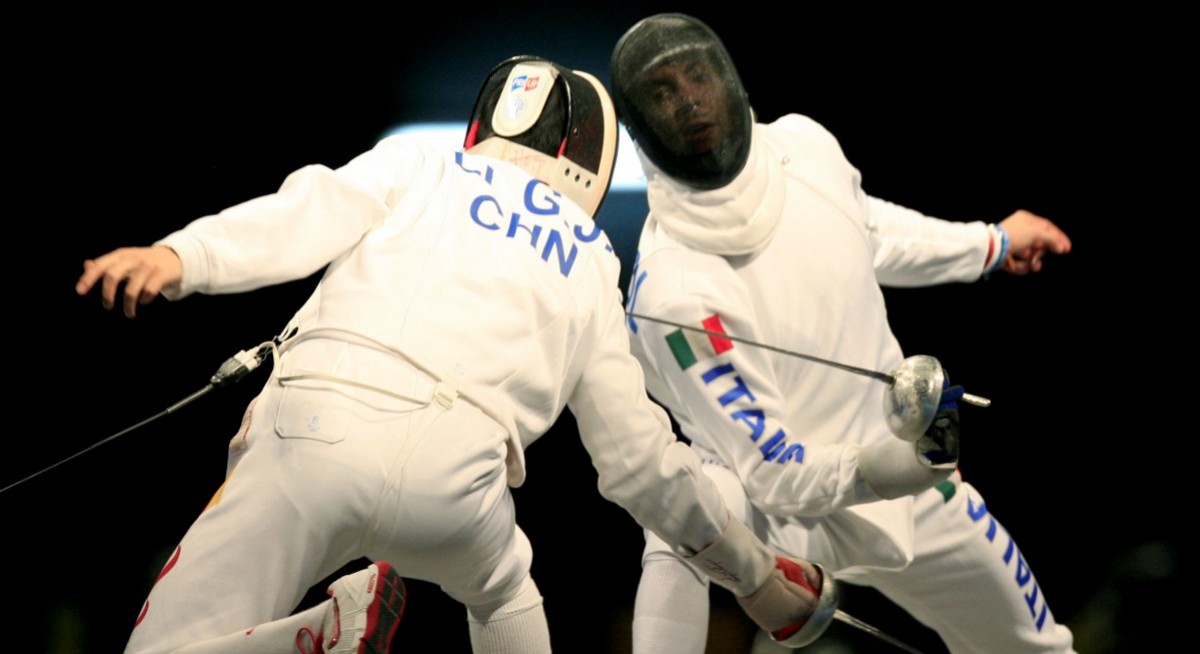


My colleague was ready to apply the Trump approach of bully, bluster and threats. He was going to walk away from a very lucrative offer unless he received a complete and unconditional agreement that the feature would be included in the software.
That’s when I kicked him, not once, but several times under the table. Thank goodness he took the hint and shut up.
In China, an agreement that “we will do our best” is not a negotiating tactic designed to increase margins or shift profits. It is a statement of fact that recognises the future is always uncertain. It is also directly related to the concept of face. Put simply, commercial delivery often depends on a multifaceted supply chain over which no individual entity has total control.
“We will do our best” is being honest in the face of uncertainties and allows for adjustment in the future if needed.
See also: DeepSeek plans to double staff across all departments
It also protects my “face” or reputation. If things go wrong due to the actions of others, I have done my best and my face is preserved.
Western overconfidence often fails to recognise this complexity, leading to cost overruns and delays. Because these possibilities were ruled out in favour of “we will do this”, which leaves no room for error, the result is often confusion and costly litigation.
In China, the term “we will do our best” is not an admission of failure. It is not an indication that the project lacks full support. It is not due to a lack of enthusiasm. It most certainly is not a reason to withdraw from the contract negotiations.
It is a recognition that the full implementation may rest on government approvals or the speedy issuance of appropriate licences. External events may disrupt the project’s delivery. Suppliers may be disrupted or unforeseen difficulties may arise.
See also: China's central bank plans overnight reverse repo in next stage of policy shift
The “we will do our best” response recognises that so many items in the supply and development chains are beyond our control. This response acknowledges the risk of failure rather than ignoring the possibility. This response sets the scene for adjustments and modifications as required as the project develops.
The “we will do our best” has powered China’s economy for decades of growth. It is an approach that will power your commercial agreements with Chinese partners. Accept this fact and there is no need for anyone to kick your ankle under the table.
Technical outlook of the Shanghai market
The Shanghai index is making a slow climb back to the strong resistance level near 3,888. This signals the potential resumption of the long-term uptrend. If this is successful, the new uptrend continuation will likely not have the same strength as the previous one.
The rally rebound started from near 3,835. This is not a historical support level. It is a rebound that starts in mid-air. These rebounds are less reliable than those that start from near-historical support levels.
A sustained close above 3,888 and a successful test of this level as a support feature will confirm a bullish outlook.
The sustained close below 3,888 is a signal of trend weakness, but not a signal of a trend change.
For more stories about where money flows, click here for Capital Section
Here’s an update on the notes from last week on what we expect to develop.
A successful rally rebound will move above resistance near 3,888.
Currently, the index value is hovering around this resistance feature.
A rally will also move above the long-term uptrend line, currently near 3,934. This depends on the market’s ability to break out above resistance near 3,888. A move above the trend line is very bullish, and the index could move quickly above the previous highs and the consolidation zone near 4,000.
The ultimate upside target remains the trading band projection target near 4,100.
Any trend weakness or strength will be confirmed with the Guppy Multiple Moving Average (GMMA). The long-term group of averages has turned down, but the degree of compression is limited. Investors were shocked, but they, too, have rallied in a new buying effort. We look for the long-term GMMA to turn upward and confirm the continuation of the uptrend.
The downside picture is clearer. There is no decent support until around 3,700. A reaction away from 3,888 has 3,700 as the downside target. This is the base of the lower edge of the previous trading band.
The Index has not yet started a downtrend, but the uptrend momentum has weakened. Caution is required until proof of a sustained rally is provided with a sustained close above 3,888 and the value of the uptrend line.

Daryl Guppy is an international expert in financial technical analysis. He has provided weekly Shanghai Index analysis for mainland Chinese media for two decades. Guppy appears regularly on CNBC Asia and is known as “The Chart Man”. He is a former national board member of the Australia-China Business Council




