


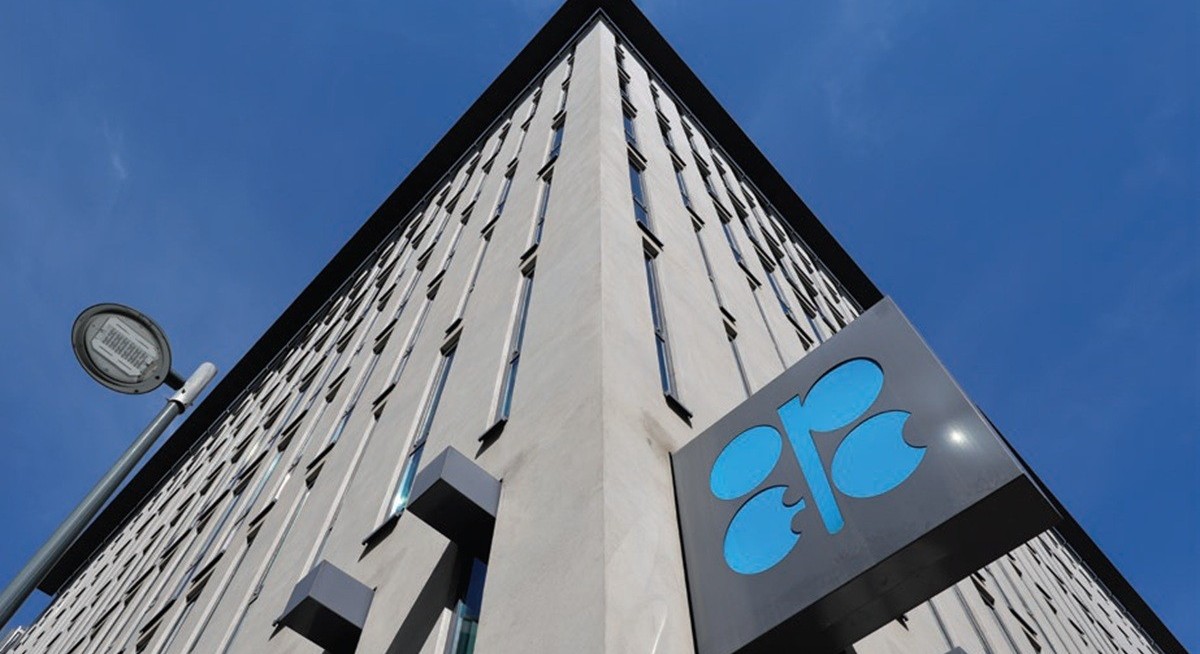


Their goal was to ensure a stable oil supply and market prices commensurate with the needs of producing countries and host nations despite the sheer dominance of the Seven Sisters, a consortium of seven multinational oil companies.
Opec argued that crude oil, a national resource that powered the world economy, should be priced fairly. That way, producing countries could secure a higher percentage of profits, which could then be used to build and develop their nations.
The Seven Sisters, a legacy of the colonial powers, had secured most of their oil concessions before the Opec members became independent. They operated on production terms that heavily favoured them. They not only wanted to keep their larger share of profits but also sought to control and dominate the international market at the expense of the producing countries.
The Seven Sisters — the Anglo-Iranian Oil Company (now BP), Royal Dutch Shell, Standard Oil of California (Chevron), Gulf Oil and Texaco (later acquired by Chevron), Standard Oil of New Jersey (Esso) and Standard Oil of New York (Mobil), both now part of ExxonMobil — dominated the global oil industry from the 1940s to the 1970s.
See also: Oil tanker booked in Persian Gulf at 897% of benchmark rate
They controlled 85% of the world’s oil reserves before Opec emerged as a power broker, using oil as a political tool in the aftermath of the first oil crisis in 1973 caused by the Arab-Israeli war.
In the oil and energy industry, the West described Opec as a cartel whose monopoly needed to be broken. Opec, meanwhile, maintained that it was simply an organisation seeking to balance the oil market by managing supply to ensure fair and stable prices, commensurate with producers’ economic needs. This strategy involved maintaining a price point that gave reasonable returns to the producers and investors while ensuring market stability and the sustainability and security of supply for the world.
To the West, Opec was a commodity cartel that used nationalisation as an unfair means to enter the industry. Conversely, to the producers’ group, the Seven Sisters were an oligopoly that still wanted to control market share and refused to acknowledge the producing countries’ right to a fairer share of their own resources.
See also: Oil holds drop as more tankers cross Hormuz after peace talks
Now, the Seven Sisters have become four: Shell, BP, Chevron and ExxonMobil. Opec, meanwhile, has grown to 12 members — now one less with the exit of the United Arab Emirates (UAE) effective May 1 — and expanded its cooperation with 10 other countries, including Russia, Mexico and Malaysia, under the framework known as Opec+.
Among the non-Western producing nations, their national oil companies (NOCs) have also emerged as global players, so much so that in 2007, Financial Times named Aramco (Saudi Arabia), Gazprom (Russia), CNPC (China), NIOC (Iran), Petrobras (Brazil), Petronas (Malaysia) and PDVSA (Venezuela) as the new Seven Sisters.
Today, ownership and dominance in the international oil and gas industry is more balanced between the Opec and non-Opec countries (notably the developed world), and between the NOCs and multinational oil companies.
Yet, Western governments, particularly the US, still see Opec as an adversary, a bloc that can control and disrupt the energy market.
The current Israel-led war against Iran is an example. While it is not a war on Opec itself, Iran alone has caused a massive energy crisis, now seemingly bigger than the first oil crisis in 1973-1974 and the second in 1978-1979, by shutting down the Strait of Hormuz. That choke point has already deprived the world of a free flow of 20% of crude oil and liquefied natural gas supply since Feb 28.
What began as a supply risk has already morphed into an energy crisis. Brent crude has consistently breached the US$100 ($127) per barrel mark, reaching US$111 last week. Prices on physical spot markets have reached as high as US$160 per barrel during the conflict.
The consequences are rippling through the global economy. Higher fuel and transport costs and rising fertiliser and petrochemical prices ultimately mean more expensive food and goods for the public.
Sink your teeth into in-depth insights from our contributors, and dive into financial and economic trends
This is why US President Donald Trump made it clear during both his presidencies that Opec is an organisation to be confronted. He accused Opec of “ripping off the rest of the world” by inflating prices, despite the fact that many recent price spikes were largely driven by geopolitical tensions created by Washington and Tel Aviv.
His response was to push his “drill, baby, drill” doctrine, encouraging American oil companies to maximise domestic production despite environmental opposition at home.
The objective was clear: to reduce dependence on Opec and weaken its pricing power. In many ways, the US shale revolution was Washington’s long-term strategy to fight Opec.
It has been partly successful. The US is now the largest producer of crude oil in the world, surpassing Russia and Saudi Arabia in 2018 and has remained so since. While it is still a net importer of crude oil (pre-war), it is a net exporter of refined petroleum products. It is also the world’s largest producer of natural gas and an exporter of LNG, with Malaysia among its buyers.
Now, it appears that strategy may have found an unlikely ally within Opec itself, the UAE.
UAE to break Opec’s grip?
Throughout its 66-year history, Opec has remained steadfast despite many internal disagreements. But many believe it could be different this time, that UAE’s exit could be the beginning of the end of Opec.
But I beg to differ. The UAE is an important producer; there is no doubt about that. It is ambitious and increasingly confident in its own production capacity. It wants a bigger quota and greater room to monetise its investments. Like many producers, it wants to take advantage of the spike in demand when the Israel-US war on Iran ends, and the choke point of the Strait of Hormuz reopens.
Within Opec, the UAE and Saudi Arabia are the only two members with huge spare capacity to feed demand-hungry markets, notably the Far East. Opec’s quotas currently limit the UAE’s production to between three million and 3.5 million barrels per day (bpd).
Free from Opec, it could pump up to five million bpd by 2027, according to its Energy Minister Suhail Al Mazrouei. The UAE no longer wants to play the role of price stabiliser in an organisation that fails to protect its long-term interests.
But leaving Opec is not cost-free. Outside the group, the UAE may gain production flexibility, but it may also lose influence over the very pricing mechanism that determines the value of its barrels. Independence in production does not automatically translate into greater revenue if the prices collapse in a disorderly market.
This is why past defections did not render Opec ineffective. Qatar left in 2019 to focus on gas, yet Opec endured. Smaller producers like Ecuador, Angola and Indonesia also exited, but the organisation adapted. Opec was never about unanimity; it was about enough cohesion among the largest producers to shape expectations.
This is where the Saudis fit into many of Opec’s past battles. As the largest exporter of crude oil in the world, Saudi Arabia can export up to seven million bpd. It still holds the largest spare capacity within Opec, about two million bpd, to respond quickly to market demand.
Even if the UAE left, Opec does not act alone. Through Opec+, it has brought major non-members, including Russia, which is one of the world’s top three exporters of crude oil and natural gas, into a broader supply management framework. Opec is now less about formal membership and more about strategic coordination among heavyweight and lightweight exporters.
The energy transition, too, has not made Opec irrelevant, even if its share of the global market has dropped to 33% from a high of 56% during the first oil crisis.
Still, in terms of barrels per day, Opec’s production stands at about 29 million bpd (before a supply disruption caused by the war), the same level as during the 1973-1974 energy crisis. If anything, under-investment in oil and gas production worldwide has increased the strategic value of low-cost producers in the Gulf and the rest of the Middle East.
As long as the world still runs on oil — and it will continue to do so for decades more — despite the rhetoric of energy transition and the move toward renewable energy, someone must manage supply shocks, spare capacity, price stability and, in peacetime, supply security. No institution other than Opec has emerged to do that job effectively.
The West and leaders like Trump may continue to dislike Opec because it limits the freedom of consuming industrialised nations and their oil majors to dictate terms.
But dislike is not the same as irrelevance. Every crisis, from the 1973 embargo to today’s Strait of Hormuz tensions, reminds the world that Opec still matters.
The UAE’s exit may test Opec, force a recalibration of quotas and expose tensions between national ambition and collective discipline.
But that is not a collapse; that is how Opec has always evolved. Its history is not one of permanent unity but of repeated adaptation.
And as in many of Opec’s battles, the Saudis never blink first. If the producers — including the UAE and the US — want a price war, the Saudis are always ready to give one, opening their production taps and flooding the oil market.
Cheap oil in the range of US$30 to US$40 a barrel makes drilling and production — more so in deep water — in many parts of the world uneconomic. Even the lower-cost US shale producers can no longer “drill, baby, drill”.
For more than six decades, Opec has survived wars, sanctions, member exits, price crashes, supply and demand shocks, shale revolutions and the emergence of alternatives and renewable energy. Its critics keep preparing its obituary, but Opec still writes the final script.
First published in the May 4 issue of The Edge Malaysia. Azam Aris is its editor emeritus.




