


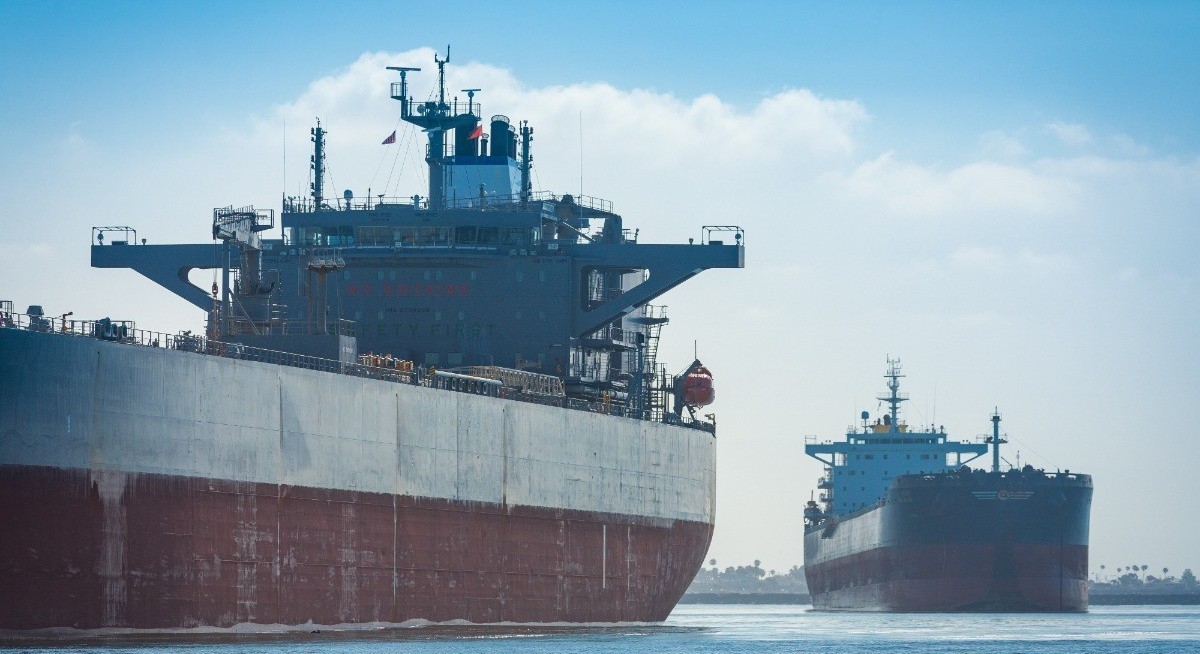


The Middle East: a welcome pause but unresolved issues will create difficulties
Oil prices have already fallen sharply following the news that the US and Iran had agreed on a memorandum of understanding to settle their conflict. This will provide immediate relief to the world economy as energy costs fall and disruptions to supply of key commodities ease — recall that it was not only oil and gas supplies that were obstructed by the closure of the Strait of Hormuz but also petrochemicals, plastics, helium, fertilisers and aluminium. In addition, greater clarity on geopolitical risks in the Middle East will allow businesses to feel more confident about investment and hiring.
It is also the case that neither the US nor Iran has any appetite for further hostilities. In America, political leaders are gearing up for the mid-term elections which will determine control of Congress. Trump is keen to bring oil prices down, cool inflation and shift voters’ attention away from what most observers agree has been a strategic blunder.
Similarly, Iran is exhausted and its economy is in dire straits. The country needs a respite from confrontation so as to focus on reconstruction, replenishing its military equipment, placating its unhappy citizens and improving its battered relationships with virtually all its neighbours.
See also: Europe tries to take on China without launching new trade war
Thus, even if a final agreement on the difficult unresolved issues is not achieved within the 60-day timeframe stipulated, it is quite likely that they will agree to extend the period for negotiations instead of resorting to more violence.
Still, there are several reasons why we need to temper our hopes for just how much relief the agreement will bring:
Israel’s leaders, backed by a majority of its citizens, do not see the US-Iran deal as serving its interests. It would feel more secure only if what remains of Iran’s nuclear and missile capabilities is destroyed and Hezbollah in Lebanon can no longer serve as an effective Iranian proxy that constantly threatens Israel’s northern regions. The chances of Israeli military actions in Lebanon provoking an Iranian reaction remain high. While the US and Iran will avoid fighting each other again, occasional outbreaks of fighting between Iran and Israel are possible.
See also: EU lawmakers approve US trade deal ahead of Trump deadline
Moreover, the deal that the US and Iran hope to finalise on June 19 leaves all the contentious issues to be negotiated later. Resolving differences on how to deal with Iran’s nuclear programme, its missile development ambitions and its funding of militias across the region will be complicated and a breakdown in talks is possible. There are likely to be disputes over how much of Iran’s frozen assets should be returned to it and how quickly.
Some media commentaries portray Iran as emerging victorious from the war. But the Iranian regime remains deeply unpopular with its own restive population. Once its citizens see that their country is no longer under attack, the economic hardships they are suffering and the longstanding resentment of large segments of the population against the regime could result in another round of protests and instability within Iran.
In other words, there is more than enough that can go wrong in the Persian Gulf region. This means a high risk premium will remain in the price of oil. Episodes of military tensions are still likely and the region will remain unsettled. Oil prices will remain up to around 20% higher than pre-war levels and the supply disruptions from the fighting will continue to trouble the oil market because it will take many months to restore production and persuade shippers to risk entering the Persian Gulf.
The world economy will also face other challenges that are likely to emerge even if the war ends.
Trade frictions are worsening
Our last column discussed the likelihood of a new trade war. Since then, the US has indeed ramped up tariffs and other restrictions. The US Trade Representative is threatening a new series of tariffs, based on Section 301 of the Trade Act of 1974. The grounds for action — such as allegations that trading partners have not done enough to tackle forced labour — are mostly spurious. The impression given is that the US administration is determined to find enough new tariffs on whatever grounds to fill the massive fiscal hole caused by its tax cuts. Sectoral tariffs are also likely to be announced.
There is also a greater danger of a major clash between the EU and China over trade as the backlash against China’s export surges grows. In the past week, we have seen several Western-based institutions issue reports criticizing Chinese industrial and trade policies. For example, the OECD alleges that China grants subsidies to its companies that are between three and eight times the average received by OECD firms. The report estimates that about 60% of the increase in China’s share of global exports since 2005 can be explained by such subsidies. The EU is scheduled to decide on retaliatory measures against China in the coming weeks. Since China will almost certainly hit back at Europe, a trade war between the two blocs looks likely.
Economic growth at risk from financial market turbulence
The global economy has been remarkably resilient in the face of the energy shock and other headwinds. A major and disproportionate reason for this has been the extraordinary boom in AI-related capital spending. If the excitement over AI is punctured and companies cut back on related investment spending, global economic growth would be at risk. In fact, a disappointment in AI capital spending is a distinct possibility:
Sink your teeth into in-depth insights from our contributors, and dive into financial and economic trends
First, there is too much uncertainty over when the gains from AI will actually materialise and which segments of the AI supply chain will emerge as the actual winners. Given this uncertainty, it is certainly the case that the surge in AI investments is based on expectations that are highly volatile and which could be easily disappointed. Indeed, history tells us that financial markets can get ahead of reality during such technological revolutions.
Second, the immense amounts being raised by firms in the AI space through debt and equity issuance are likely to drain liquidity from markets and eventually limit the ability to fund the unprecedented scale of investment in this area. So far, equity raising by SpaceX (US$86 billion or $110.67 billion) and Alphabet (US$85 billion) and Anthropic’s bond issuance of more than US$30 billion seem to have been absorbed by the market. But even larger issuances are approaching, with IPOs for Anthropic and OpenAI and Meta’s plan to raise “tens of billions” of dollars in an equity placement. It will not be long before the markets suffer from indigestion from all these super-sized fund raising.
Third, bond markets are showing signs of strain due to the growing fiscal deficits and public debt in the US and Europe. Inflation remains sticky and central banks are leaning towards raising rates rather than cutting them, as Europe and several emerging economies have shown. In the US, the Federal Reserve Bank faces a quandary — its incoming chairman Kevin Warsh had been inclined to cut rates but a large number of voting members of the monetary policy committee would resist that. If the Fed is divided and seen as slow to tackle inflation, long-term interest rates would rise, adding to the turbulence in bond markets. That, too, could compromise the ability to fund the AI spending boom.
Separately, another reason for concern for global economic activity is the Chinese economy. In May, fixed asset investment as a whole fell while retail sales also contracted. These outcomes were far worse than expected, reflecting a deepening malaise in domestic demand in China. Despite the weakness in the demand side, the supply side, however, showed modest strength with industrial production and services activity both growing at more than 4%. The difference is explained by Chinese exports which are booming. But as discussed above, increasing protectionism is going to make it harder for China to export its way out of its weak domestic economy.
Don’t forget the weather
Several weather forecasters are warning about severe weather patterns that could also pose a risk to the global economy. For example, the Japan Meteorological Agency reported that an El Niño has formed across the equatorial Pacific, for the first time since 2023. It further warned that this could grow into a “super” event. As the El Niño intensifies in coming months (it is expected to peak around December or January), food production could plunge and food inflation is likely to soar.
Conclusion
The sombre conclusion from what we discuss above is that despite some good news, some of the big swing factors that determine growth in the world economy and in our region could come under a cloud.
First the good news — as imperfect as the US-Iran deal is, there is enough in it to bring energy costs down from the highs reached in March and April. Even if oil prices remain higher than pre-war levels, this is still a relief to the world economy.
But, second, easing of military tensions in the Middle East will not alter trends in the financial sector. Fiscal trajectories remain worrisome and capable of creating ructions in the bond markets. There are signs of late-cycle behaviour in financial markets which usually precedes a sharp correction.
Third, financing constraints could well limit the ability to fund the massive wave of AI-related investments that are currently supporting global growth which has been excessively reliant on the AI capital spending boom, which itself is built on highly volatile expectations. There is more than a good chance of a hiccup in such expectations which could cause companies to cut back on their ambitious spending plans.
Fourth, it will be increasingly difficult for China to have a weak domestic economy at the same time as an extraordinarily strong export sector. There has been a structural shift in Europe’s willingness to allow Chinese competition to hollow out its key industries which Chinese policy makers may be underestimating. Add in the next wave of American protectionism and you get a perfect storm for China’s ability to continue boosting its export growth.
In short, there is a growing risk of a disappointment in global growth which would, of course, be bad news for our region.
Manu Bhaskaran is CEO of Centennial Asia Advisors




