




Abagnale’s skills went beyond impersonation. He mastered the personal banking system in that era. This was long before PayNow. Cheques were the major form of payment in those days.
Banks were paper-filled buildings in the pre-computer age. Abagnale found that blank bank deposit slips were not filled out with account numbers. He printed his own account number on these slips. He then put them on the bank’s counter. Customers, assuming they were official, used them to deposit cash. The money was then credited to Abagnale’s account. He later forged cheques by faking the numbering.
The con artist had exploited the interoperability problem. This is when two computer systems cannot “talk” to each other. They cannot share data or work together.
It is like trying to plug a Singapore hair dryer into an Australian wall outlet. The hair dryer’s plug doesn’t fit into the outlet and you need a special adapter. In the digital world, this means data gets stuck in “silos”.
See also: Robinhood latest fintech to cut jobs, eliminating 300 roles
Abagnale did not hack a single institution. He rode the seams between them. Airlines and banks have their own ledgers. They have their own rules of verification.
His tricks worked because the system was modular without being connected. A Pan Am uniform acted as a form of identity. A fake cheque became a promise. One node cannot verify the other.
Fintech may deter the Abagnales of today. Fintech’s modern miracle is not their apps. It is the plumbing behind them.
See also: Digital banks eye regional growth, continue clawing towards profitability
These platforms built connectors. There is a unified form of identification. In Singapore, there is the SingPass system. India has the UPI, which provides digital identities for over a billion people.
Interoperability was the source of leakage and friction. In the fintech world, it has become the growth engine. For example, in the Grab app, its wallet links to a card, and the card links into the wider payment network. From there, money flows smoothly to merchants. It can also flow back again through refunds in real time. There are no forms, phone calls, or a three-day “processing window”.
Even if the infrastructure underneath is messy, fintechs hide that complexity. They offer one simple interface. It can run on many different back-end systems. There is the same experience across markets. It is like having a plug that works in Singapore, as well as abroad.
Interoperability helped fintechs scale. This is not the only force behind Revolut, Nubank and Klarna’s rise. The other driver is distribution. The smartphone has become the branch. The app store is like Orchard Road. Growth stopped depending on physical reach. It started depending on product design.
There is also unit economics built through software. Once the Grab platform is built, the cost of adding each new customer is minimal. Revenue is then layered in. There are subscriptions and merchant fees that are invisible to the user.
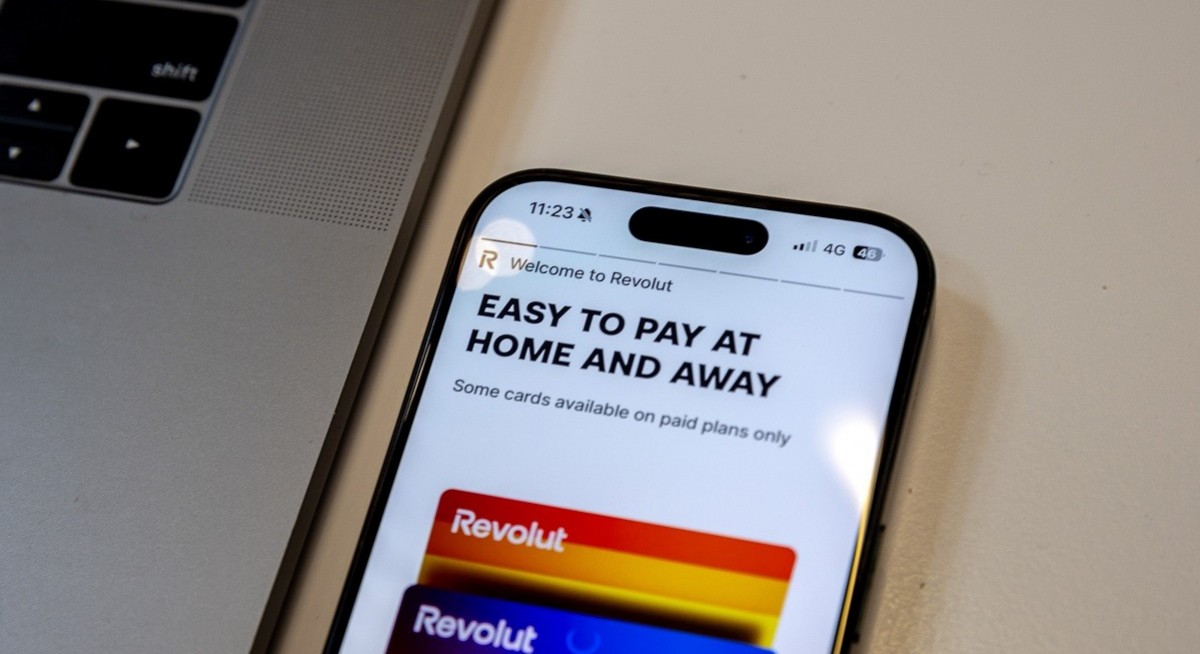
Revolut is an app that lets you hold and spend money. You can exchange currencies cheaply and manage basic banking in one place. It was founded in 2015 and is now a giant among fintech players.
Revolut has onboarded over 70 million retail customers. This figure is up from 52.5 million at end-2024. The company is no longer a “challenger bank”. It has a scale that is comparable to Visa, allowing users to carry a bank in their pocket. A November 2025 secondary sale pegged Revolut at about US$75 billion ($96.3 billion). This is two-thirds higher than a year earlier.
Sink your teeth into in-depth insights from our contributors, and dive into financial and economic trends
Singapore’s fintechs are thriving in a smaller market. They are also built on interoperability. YouTrip, which makes forex transactions cheaper, scales cross-border spend. It raised US$50 million in a Series B round. Atome scales lending rails through a BNPL (buy now, play later) platform, which connects users with merchants. Krystal, a private banking app, links banks and customers.
If Abagnale were a con artist today, he may not bother with his crimes. He would see more value in the fintech explosion.
Nirgunan Tiruchelvam is head of consumer and internet at Aletheia Capital and author of Investing in the Covid Era




