




Heavy dilution is common in RTOs. Legacy shareholders in listed shells are rarely left with much, since the business being injected is usually worth far more than the empty shell it’s merging into. But 1.3% is thin even by that standard, and what happens to the rest of the pie is where this deal gets more interesting.
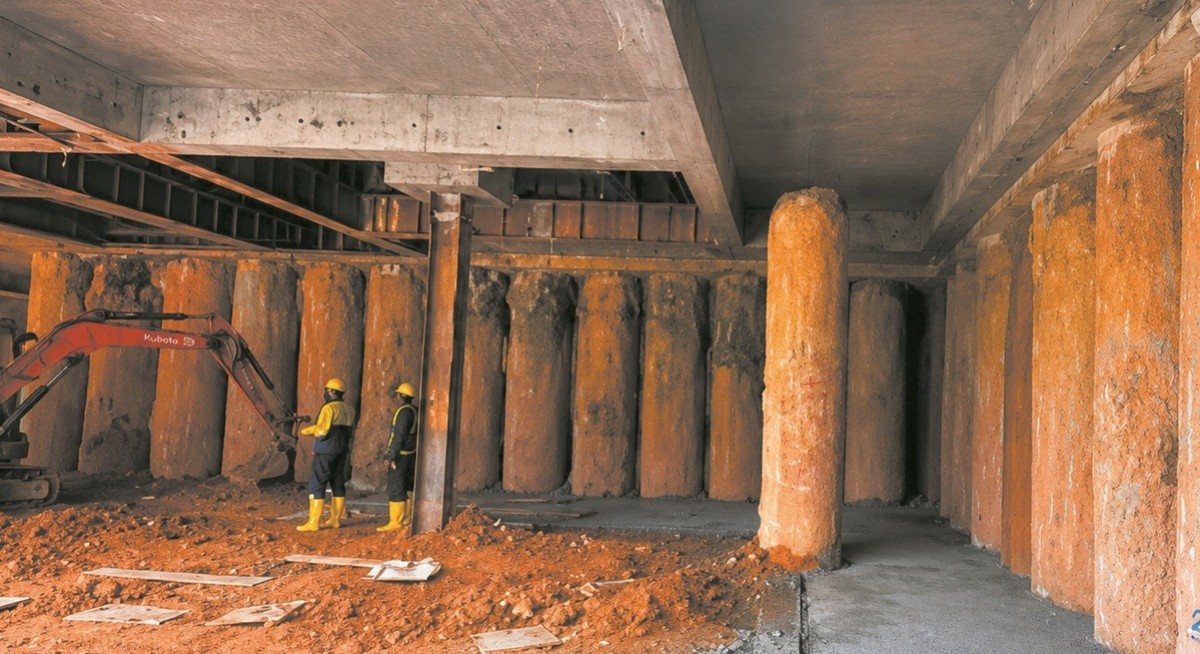
The vendor, LBD Engineering, will hold about 60.2% of the listed entity, to be renamed Metrocon Holdings. The Melaka malls and Southeast Asian hospitality ambitions that once defined Hatten will be gone, replaced by bored piles, secant walls and jet grouting. It is a legitimate business, by all accounts, just not the one Hatten’s shareholders signed up for.
Hatten’s shareholders will get there via a massive consolidation of every 830 existing shares into one. That ratio shows just how small many holdings already are. Based on Hatten’s shareholder list, 930 or nearly 28% of its 3,354 shareholders have fewer than 830 shares each. Even so, all 930 of them will have their holdings rounded up to one consolidated share apiece.
Before trading was suspended in August 2024, Hatten had 1.86 billion shares on issue, trading at 1.17 cents each, for a market cap of about $21.7 million. After consolidation, that becomes roughly 2.24 million shares.
See also: SGX cuts loose Scientific Beta for 23 mil euros
The company still has to issue several more rounds of new shares to pay for the RTO, settle old debt, repay deal financing, and meet minimum public float rules. Each round further dilutes existing shareholders. By the time all the new shares are issued, long-suffering Hatten investors will be left with just 1.3% of the enlarged company.
None of this is hidden. It is disclosed precisely and exhaustively in the circular, although many may not pore over it. The question is not whether the disclosure exists, but whether the safeguards around the RTO actually protect shareholders as intended.
How Hatten got here
It is worth remembering what Hatten was before it became a vehicle for someone else’s piling business. Hatten built its name on Melaka real estate: malls, hotels, condos and serviced residences. It even set its sights on becoming a leading Southeast Asian developer riding the rising tide of regional demand for integrated developments.
See also: Hock Lian Seng issues profit warning; expects to report operating loss for 1HFY2026
But the Covid pandemic upended that ambition. Melaka’s tourists vanished, emptying Hatten’s malls and hotels and gutting its revenue. By mid-2020, two Hatten subsidiaries needed a court-sanctioned debt moratorium to hold off creditors.
Hatten figured bricks and mortar were no longer the way to go. Instead, it threw its weight behind blockchain, the metaverse and non-fungible tokens. Its empty mall footprint, it reckoned, could be reborn as crypto real estate.
But the pivot never produced the cash flow Hatten needed. What began as a subsidiary-level rescue in 2020 eventually caught up with the parent company. Trading in Hatten’s shares was suspended in August 2024 and judicial management followed a few months later.
Under Catalist rules, a suspended issuer has 12 months to submit a resumption proposal or face delisting. Hatten needed three extensions to get there, pushing the deadline to June this year.
The scale of the cleanup is clear in the RM322 million ($102 million) liabilities to be extinguished via a scheme of arrangement, the court-sanctioned process the judicial managers will use to wipe out what Hatten owes creditors.
That is why the pro forma numbers look almost triumphant: net tangible assets per share improve from negative $37.64 to positive 7.23 cents and loss per share flips to a positive 46.46 cents once the old debt is gone and Metrocon’s earnings are consolidated.
The judicial managers will point to this as proof that the rescue worked, at least for the company as a legal entity. What it does not show is how much of that recovery reaches shareholders who held on through the suspension, versus the scheme creditors, the funder who financed the RTO costs and LBD Engineering, all of whom will be paid in new shares to make the restructuring happen.
Sink your teeth into in-depth insights from our contributors, and dive into financial and economic trends
One of those new parties deserves a closer look. Skyone Holdings, wholly owned by one Goh Chai Hoe, lent Hatten $700,000 to cover the RTO’s expenses. Skyone was introduced by a business associate of Hatten’s former chairman and controlling shareholder, Colin Tan.
The circular discloses no relationship between Skyone and LBD Engineering or Metrocon. Yet its stake is anything but token. Skyone will hold 12% of the enlarged company — second only to LBD Engineering — and well ahead of the remaining Hatten legacy shareholders.
‘Fair and reasonable’
According to W Capital Markets, the independent financial adviser (IFA) to the judicial managers, the financial terms of the RTO are “fair and reasonable”. The whitewash resolution, the waiver of shareholders’ right to a general offer once LBD Engineering crosses the 60.2% control threshold, is also “not prejudicial” to independent shareholders.
That opinion is methodologically grounded. W Capital benchmarked the deal’s implied shell premium, about $11.1 million, against six comparable RTOs since 2020, and found it sits above the $9.3 million average. In other words, Hatten’s shell fetched a reasonable price relative to precedent.
Still, the IFA’s opinion is narrower than it sounds. By its own admission, W Capital did not examine Metrocon’s underlying business and financial risks or its prospects as a going concern. Those are relegated to the section on risk factors for shareholders to assess.
That is not unusual. Singapore’s Takeover Code has long confined whitewash opinions to deal mechanics and pricing, not business merits. The IFA’s job was to assess whether the terms of the RTO was fair relative to comparable shell rescues, not whether it was good for shareholders, or whether 1.3% of a debt-free company was appropriate compensation for what was lost since Hatten’s suspension.
Shareholders also have limited room to disagree. Approval of the whitewash resolution is a condition for completion. Vote it down, and the acquisition doesn’t happen. That’s not a criticism of the structure. Distressed situations rarely offer clean choices. But it means “fair and reasonable” is the bare minimum, not a stamp of approval.
Related on all sides
What happens after completion deserves as much scrutiny as the deal itself. LBD Engineering won’t just be Metrocon Holdings’ controlling shareholder. It is already the largest customer, accounting for 59%, 49% and 64% of Metrocon’s revenue over FY2023 to FY2025.
LBD Engineering is also a key supplier. It provided up to 35% of Metrocon’s construction materials in the last three years. What’s more, most of the heavy machinery Metrocon uses is rented from LBD Engineering and a sister company, LBD Machinery, after Metrocon sold its own equipment to those same two entities in 2024.
Metrocon’s proposed interested person transaction mandate covers exactly such dealings, and more: piling and geotechnical work, soil disposal, equipment and vehicle rental, labour supply, and dormitory rental.
All of that runs through LBD Engineering, LBD Machinery, and Thong Huat Brothers, the last of which is majority-owned by Alvin Lim, the man who controls LBD Engineering and is set to become non-executive chairman of the new listed entity.
The mandate exists because these dealings recur constantly in Metrocon’s operations, and seeking shareholder approval each time would be impractical. But since the same people sit on both sides of these deals, it needs a way to prevent pricing from simply favouring the controlling shareholder.
To guard against that, every transaction under this arrangement requires quotes from two outside providers with no stake in it, with Metrocon going with the cheaper one. This is reviewed by an audit and risk committee that doesn’t yet exist and applies only to amounts above $100,000.
On paper, this is standard Catalist practice for companies where one shareholder calls the shots. In substance, Lim will chair the board responsible for policing these related-party deals, while also controlling the company on the other side of these transactions. That relationship runs through most of Metrocon’s revenue and a third of its cost base.
The people proposed to run the enlarged group are worth a closer look, too. LBD Engineering is a family business: Lim Ban Dian holds 53.9%, while his son Alvin Lim holds the remaining 46.1% and will helm the board. Tan Kean Seng, Metrocon’s current chief executive, becomes executive director and CEO of Metrocon Holdings.
The proposed chairman and CEO are described in the circular as personally “pivotal” and “crucial” to the business, meaning the group’s fortunes will be tied to two men whose commercial interests, through LBD Engineering, sit on both sides of the ledger.
Succession planning is a common risk for any founder-led business. What’s not-so-common here is how much rides on one person. Post-RTO, Lim is chairman, but he also controls Metrocon’s biggest customer and its main equipment supplier. If something happens to him, all these ties could be at risk.
Selling below value
A curious detail turns up in the numbers. The $28 million purchase consideration is less than Metrocon’s independent business valuation of between $34.64 million and $39.65 million.
Usually, it’s the opposite that draws scrutiny in RTOs: vendors accused of overpricing a business to extract inflated consideration shares from a captive shell. Here, LBD Engineering agreed to sell Metrocon for less than its own valuers valued the business.
There are benign explanations. A lower price means fewer consideration shares at 26 cents each, resulting in less dilution for Hatten’s shareholders than a higher price would have.
It is also possible LBD Engineering simply values the listing vehicle more than it does the extra few million dollars a higher price would have brought. Or the independent valuation may simply reflect more upbeat assumptions than the negotiated price.
Whatever the case, the circular does not explain the gap. Given how precisely everything else in the circular is spelt out, that gap stands out, and it’s reasonable to ask why at the upcoming EGM.
What’s the vote really about?
Strip away the mechanics and the July 22 EGM comes down to a single, mostly unavoidable choice.
Vote for the whitewash resolution, the consolidation, and the share issuances, and Hatten becomes Metrocon Holdings, a cash-generating business with an $85 million order book, inside a shell finally free of RM322 million in liabilities. Vote against it, and Hatten’s lifeline is gone, most likely leaving the firm to face delisting with no alternative rescuer in sight.
The terms of the RTO may be fair and reasonable, but whether $28 million, a 60.2% stake for one family, and a web of related-party transactions add up to a good outcome for shareholders remains an open question.
Metrocon itself is a legitimate business with a credible growth story. That is not in dispute. What is worth being clear about is the difference between saving a company and protecting the shareholders who helped build it, and the numbers show which one this deal does.




