


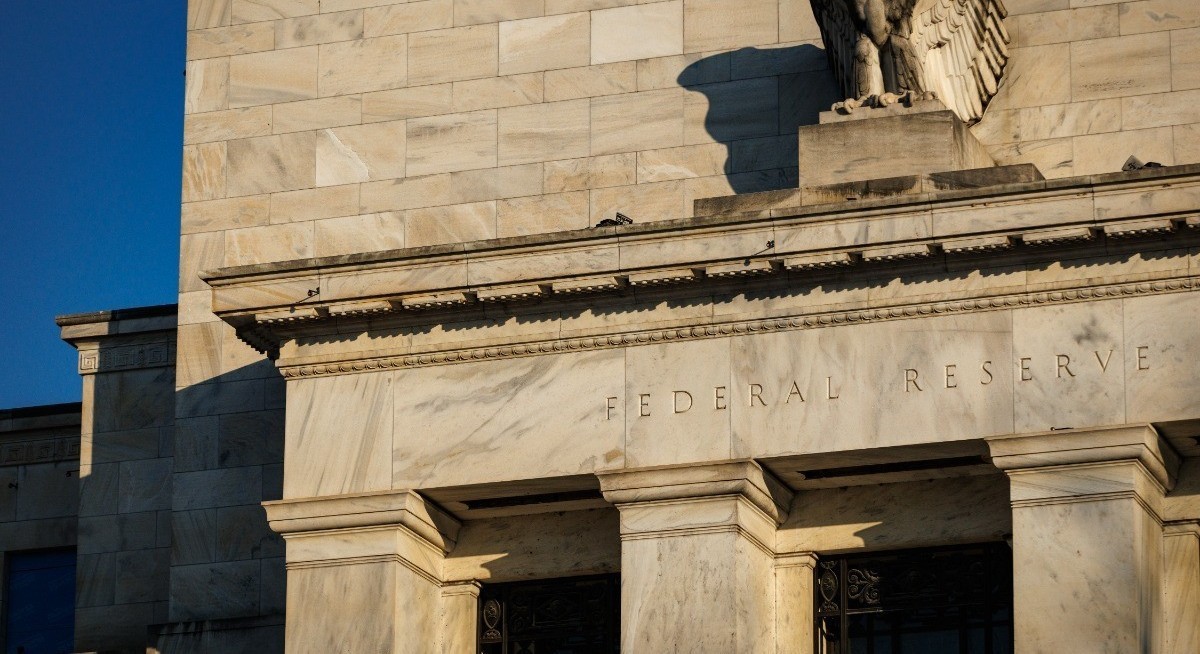


When the gold standard was in operation, central bank balance sheets comprised mostly gold, some government bonds and private bills. In 1940, just before the US entered World War II, the Fed’s balance sheet reached a historic peak of 23% of GDP, of which 85% of assets were gold certificates, due to gold inflows from war-torn Europe. Its composition shifted to more government bonds to finance the US government’s fiscal deficit arising from explosive wartime military spending.
Post-war, the link to gold caused the Fed’s balance sheet to decline to 7% of GDP, but after US president Richard Nixon de-linked the dollar from US$35 per ounce of gold in 1973, the balance sheet again took on more government debt. However, orthodox monetary policy kept the balance sheet at the 5% to 7% level until the 2007/08 subprime and global financial crises, when the balance sheet of the Fed, European Central Bank (ECB) and Bank of Japan (BoJ) exploded due to quantitative easing (QE), or balance sheet expansion. Today, the Fed’s balance sheet is back to 24% of GDP (having reached a peak of 36% during Covid-19), while the ECB’s exploded to an unprecedented 70% of GDP during the Covid period and is now around 50% of GDP.
The BoJ was the pioneer of QE, having expanded its balance sheet to 30% of GDP in 2001. Under Abenomics (2013–2019), its quantitative and qualitative monetary easing (QQE) not only bought stock market index funds (exchange-traded funds or ETFs) but also pushed the balance sheet to the current levels of 130% to 135% of GDP.
Modern monetary policy faced a situation of growing government fiscal deficits, in which central banks shifted towards managing inflation expectations and maintaining sufficient liquidity to sustain stable job growth. Managing expectations is done through what central banks call forward guidance, which explicitly announces their future policy intentions or the economic conditions required for them to change rates. As former Fed chairman Ben Bernanke said, “Monetary policy is 90% communication and only 10% action.”
It is historically noteworthy that the size of the Fed’s balance sheet today, at roughly 24% of GDP, is the same as that at the end of WWII, similar to the US government debt of roughly 100% of GDP then and now. This suggests that central banks are essentially accommodating fiscal laxity, holding massive shares of national debt to influence broader economic conditions.\
So, will the Fed’s monetary policy change after Kevin Warsh takes over as the Fed chairman from Jerome Powell? Warsh served on the Fed’s board during the 2008 crisis. What is fascinating today is his partnership since then with Stan Druckenmiller, the legendary fund manager who learned his hedge fund skills with George Soros, famed for speculating against the Bank of England in 1992. The US Treasury secretary today is Scott Bessent, Druckenmiller’s protégé during that historic speculation. In short, yesterday’s poachers are today’s gamekeepers, with unrivalled experience in modern financial market speculation and business.
Warsh’s first public statement that “inflation is a choice” is another classic case of central bank mumbo-jumbo on forward guidance. Is inflation determined by the market, or can the central bank manipulate interest rates and its balance sheet to influence inflation?
See also: MAS and ABS to enhance Singapore’s national instant payments infrastructure
Warsh favours using a different metric, the Trimmed Mean Personal Consumption Expenditures Index, rather than the Fed’s current index, the Standard Core PCE, to measure underlying inflation, which, by implication, will determine the Fed’s interest rate target.
In layman’s language, using the Trimmed Mean PCE Index, you strip out all the short-term shocks from the data and end up with an inflation index that is lower than the traditional Fed benchmark metric.
In short, this tool suggests that Warsh favours lower expectations of a Fed rate hike in June, with the probability of a delay to December. That is after the November congressional elections. Market nervousness has pushed Treasury yields to over 4.6% per annum for 10-year Treasuries.
Clearly, slower interest rate hikes under the Warsh Fed suit the US Treasury, whose US$39 trillion ($50 trillion) overhanging debt cannot tolerate higher interest rates, which are costing over US$1 trillion annually and pushing the deficit above 7% of GDP. The International Monetary Fund’s (IMF) comfortable deficit zone is 3% of GDP.
Fiscal deficits are not worrying if the spending is “productive”, meaning it adds to growth, because higher GDP growth will reduce the deficit over time. But if GDP slows because a large chunk of the deficit is due to military expenses, such as fighting the Iranian war, then we are likely to have stagflation, meaning higher inflation but stagnant growth.
In a nutshell, growth in the US today depends on massive investments in AI, ramping up onshore manufacturing to improve military prowess, and reducing reliance on imported materials. The stock market boom is underpinned by the top 10 tech companies investing in AI software and chips.
At the same time, unemployment is rising as AI is causing non-skilled middle-class white-collar workers to be laid off. Higher oil prices, with gasoline prices nearing US$5 per gallon, more than 50% above pre-Iran war prices, will eat into household income, with higher fertiliser and food prices. Mortgage rates, linked to 30-year Treasury rates, are now higher, slowing the residential mortgage market. Student loans and credit card debt, which make up a large part of household debt, are now more expensive, causing cuts in spending, even as wage increases are unevenly spread.
Sink your teeth into in-depth insights from our contributors, and dive into financial and economic trends
Central banks, therefore, are facing an uncertain period of multi-directional stress, with tools that may not be adequate to address the primary cause of inflation: the rising fiscal deficit relative to national resources. Lenders to the US are already diversifying their debt into other currencies, commodities or domestic stock markets. That is causing de-dollarisation. People tend to forget that interest rate changes also affect exchange rates, which, in turn, affect market confidence.
The latest IMF Fiscal Monitor issued a stark warning that global public debt is on track to hit 100% of GDP by 2029, driven largely by the world’s two largest economies, China and the US. To avoid debt distress, fiscal consolidation by cutting subsidies and unnecessary expenditure, improving domestic savings, and institutional reforms are necessary and unavoidable measures. Most politicians are unlikely to take such painful measures.
For central bankers, doing nothing and just waiting for new data to validate action seems the safest way forward. Raising interest rates will be vastly unpopular with the government and borrowers. But that was exactly what then Fed chairman Paul Volcker did to shock inflation out of the system in the Carter-Reagan years, bringing vigour back to the US economy.
That is the painful test that Warsh and his fellow central bankers will face in the coming days.
Andrew Sheng writes on global issues from an Asian perspective. This article first appeared in the June 1 issue of The Edge Malaysia.




