




(June 24): Singapore will likely hold monetary policy at its meeting next month and consider further moves later in the year after weaker-than-expected inflation data for May, according to economists.
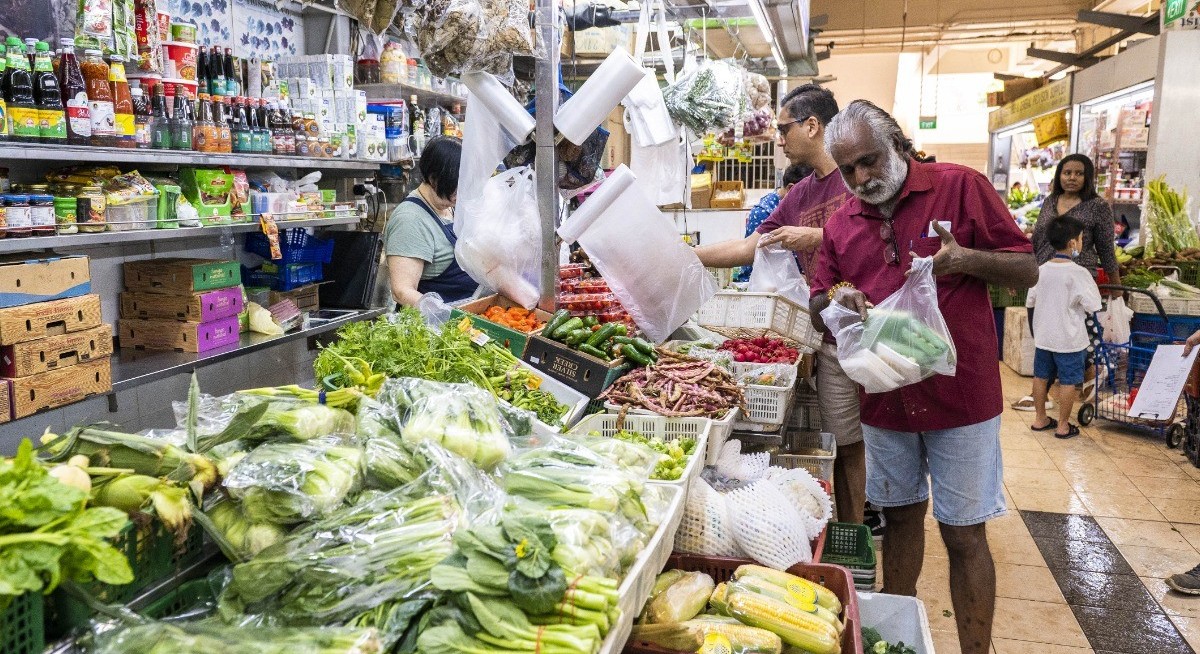
The city state’s May core inflation was unchanged at 1.4% even as the Middle East conflict has pushed up prices of oil and fertilisers. That’s the same pace as April and slower than the 1.6% median estimate in a Bloomberg News survey, suggesting Singapore has been relatively insulated from the oil crunch.
Analysts say that the benign inflation data points to Singapore’s central bank likely holding back on any tightening of the monetary policy in its upcoming July meeting. With price pressures largely contained and growth risks clouded by an uncertain global trade environment, economists say policymakers have scope to stand pat while monitoring how global trade tensions impact the trade-reliant economy.
The Monetary Authority of Singapore (MAS) in April tightened its policy settings and raised its forecast for core inflation to 1.5%-2.5% this year, from 1%-2% previously. Singapore’s central bank, which uses the currency to manage monetary policy, is due to announce its next policy decision no later than July 31.
Here’s what economists said:
Barclays Bank plc economist Brian Tan
See also: Singapore’s core inflation steady at 1.4% despite oil crunch
- The MAS will likely stand pat through 2026 as policymakers have been surprised by how mild inflation has turned out to be.
- We believe the MAS would prefer to see the inflation outcomes it was anticipating to materialise first before considering any further moves.
United Banking Overseas Ltd (UOB) economist Jester Koh
- The MAS will remain on a prolonged pause through 2026 into 2027, maintaining the current policy band setting.
- There is some risk of a 50-basis-point slope steepening in July or October, driven by rising imported inflation pressures, to prevent a broadening of inflationary pressure that could de-anchor inflation expectations, or by a re-escalation of conflict in the Middle East that leads to a resurgence in energy prices.
See also: Switzerland loses top competitiveness ranking to Singapore
Maybank Securities Pte Ltd economists Chua Hak Bin and Brian Lee
- A wait-and-see might be warranted for the July round, with the option to respond if any major inflation shocks does materialise by the next meeting in October.
Oversea-Chinese Banking Corp Ltd (OCBC) economist Selena Ling
- There is no urgency for the MAS to tighten monetary policy at the upcoming July meeting if the core inflation trajectory eases into the first half of 2027.
- Yet, it is premature to fully discount a tightening move in the second half of 2026.
Bank of America economists Kai Wei Ang and Rahul Bajoria
- Risks to the inflation outlook seem less skewed to the upside than before.
- Aside from the softer tone in the latest consumer price index outlook, other reasons for the MAS to hold policy unchanged in July include the recent retreat in global oil prices and the more hawkish outlook from the US Federal Reserve, which could tighten global financial conditions.
Uploaded by Tham Yek Lee




