


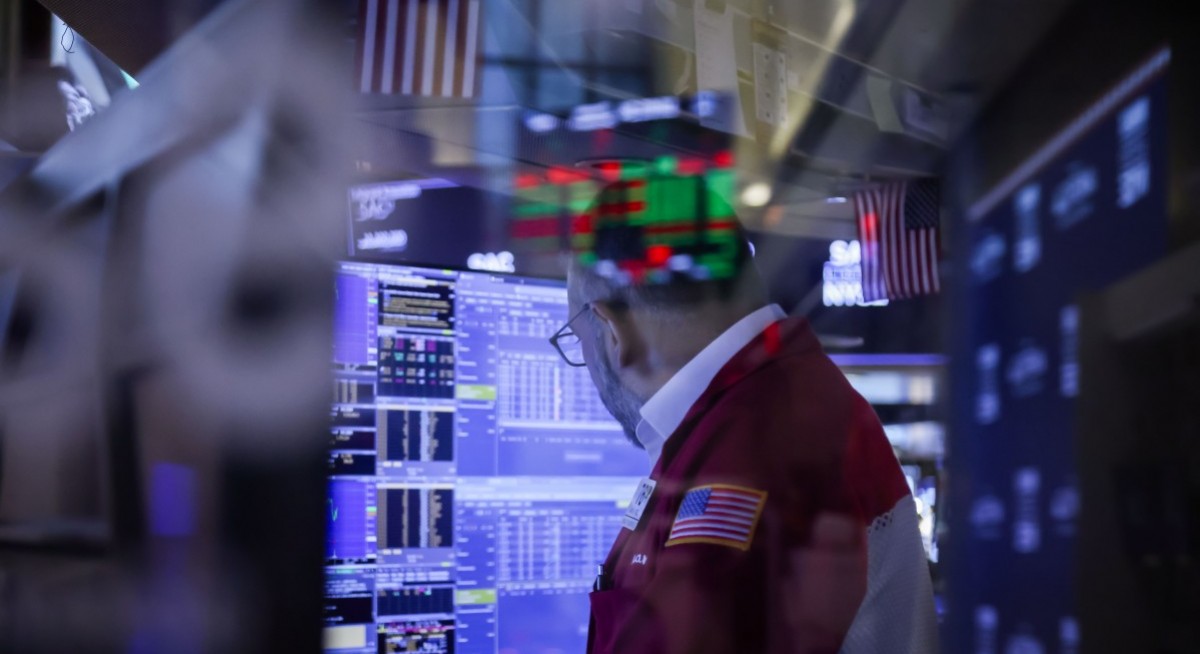


Treasury two-year yields edged down amid bets the Fed will cut rates twice next year to support the job market even as inflation shows signs of stickiness. The dollar barely budged, but closed at the lowest since October.
“Investors appear indecisive about making bold moves ahead of a heavy plate of high-profile economic data,” said Jose Torres at Interactive Brokers.
Following the Fed’s latest decision to slash rates, the November jobs report — due on Tuesday — is expected to show a sluggish labor market. The reading will also include an estimate of October payrolls — figures that were delayed by the federal shutdown.
The fallout from the longest-ever government closure extended to another key indicator: the consumer price index scheduled for Thursday.
See also: US consumer sentiment rises unexpectedly to a six-month high
With the Fed still appearing to be more focused on labor-market weakness than inflation, we’re likely facing a “bad news is good” scenario for the jobs report, according to Chris Larkin at E*Trade from Morgan Stanley.
“As long as the numbers don’t suggest employment is falling off a cliff, the markets may embrace soft data because it could lead to a more-dovish Fed,” he said.
Fed Governor Stephen Miran argued the policy stance is unnecessarily restrictive. Fed Bank of New York president John Williams said policy is well positioned for next year following last week’s reduction. His Boston counterpart Susan Collins noted the rate decision was a “close call” as she’s concerned about high inflation.
See also: Traders chase ‘AI resistant’ stocks as disruption fear hits tech
The S&P 500 closed below 6,820. Megacaps were mixed, with Apple Inc falling while Tesla Inc climbed. Small firms underperformed. In late hours, B Riley Financial Inc said it filed its overdue second-quarter report with US regulators in a step toward staying listed.
The yield on 10-year Treasuries was little changed at 4.18%. Bitcoin sank below US$86,000. The yen gained on bets the Bank of Japan will hike rates this week. Oil slipped.
Moderate weakness in this week’s US job numbers could feed bullishness toward stocks by increasing the probability of further Fed rate cuts, according to Morgan Stanley strategist Michael Wilson.
“Markets are looking for a soft print,” said Fawad Razaqzada at Forex.com. “Any downside surprise could see expectations for the next Fed rate cut pulled forward, while a hawkish surprise could lift the dollar sharply.”
A survey conducted by 22V Research shows that expectations for the market reaction to Tuesday’s jobs data are about evenly distributed: 29% said “risk-on”, 36% “risk-off” and 36% “mixed/negligible”.
At Evercore, Krishna Guha notes that the worse the data, the more the market will bet that the Fed will abandon its attempt to pause following the December rate reduction.
However, Guha cautions against thinking that — absent a very extreme outcome — the report will be decisive in terms of whether the Fed cuts again in the near term.
To stay ahead of Singapore and the region’s corporate and economic trends, click here for Latest Section
“We think the December print — the first relatively clean print after the shutdown — will have a much bigger bearing on whether the Fed might still cut in January,” he concluded.
There are obvious data-quality concerns given that the Bureau of Labor Statistics has been playing catchup following the government shutdown, according to Ian Lyngen at BMO Capital Markets. Therefore, investors might take a more cautious view to trading this week’s key data prints.
“However, in light of the lack of fundamental information regarding the performance of the real economy during the shutdown, the insights within the payrolls and inflation reports will nonetheless set the tone for the US rates market as year-end, holiday-trading mode quickly approaches,” he noted.
If market expectations are right, that could set the stage for another solid run for Treasuries, which are headed for their best year since 2020.
Against that backdrop, traders are building options positions that would pay off if market sentiment shifts to a rate cut in the first quarter. For now, another reduction isn’t fully priced in until mid-year, with a second one in October.
To Elias Haddad at Brown Brothers Harriman & Co, the Fed has room to deliver the 50 basis points of easing priced-in by Fed funds futures over the next 12 months.
“The decline in the hiring rate suggests labour demand is weak and points to downside risk to this week’s non-farm payrolls release,” he added.
“This year is a little different given the delayed releases of various economic data points thanks to the recent shutdown”, wrote Susquehanna International Group’s Christopher Jacobson. “That arguably sets the stage for greater volatility, particularly this week.”
Derivatives strategists at JPMorgan Chase & Co including Bram Kaplan note that the S&P 500 options market is moderately underpricing the upcoming payrolls report compared to historical volatility around releases.
Markets are bracing for a roughly 0.7% move in either direction on the print, according to data compiled by Bloomberg.
Even as it appears that the Fed is more focused on the labour market at this time, the market is still hungry for inflation data, according to Rick Gardner at RGA Investments
At HSBC, Max Kettner says that while he remains “aggressively risk-on” into next year, 2026 might well turn out rockier than the past eight months.
“We think the biggest risk in the coming months is a significant rise in US rates vol,” he said. “However, in our view, this is unlikely to be a theme for the coming weeks.”
Kettner noted that Treasury yields are still quite far from the “danger zone” — the area where risk asset valuations are increasingly hit by higher yields.
Citigroup Inc.’s Scott Chronert sees the S&P 500 climbing to 7,700 points by the end of 2026, with robust earnings and expectations of easing monetary policy at the heart of the forecast.
“A generally supportive Fed is a key assumption in our playbook,” Chronert wrote in a note.
Meantime, Oppenheimer Asset Management strategists maintained an overweight call on US stocks, saying they “expect the US economy and markets to lead the world economy into some kind of a new normal”.
The team led by John Stoltzfus expects the rally to broaden in 2026 as economic fundamentals remain supportive of continued revenue and earnings growth.
“We believe investors should position to gain from the expected equity rally in the coming year, adding exposure to tech, healthcare, utilities, and banking for those under-allocated to the US market,” said Mark Haefele at UBS Global Wealth Management.
Haefele expects the S&P 500 to reach 7,300 by June next year and 7,700 by the end of 2026.
Uploaded by Isabelle Francis




