


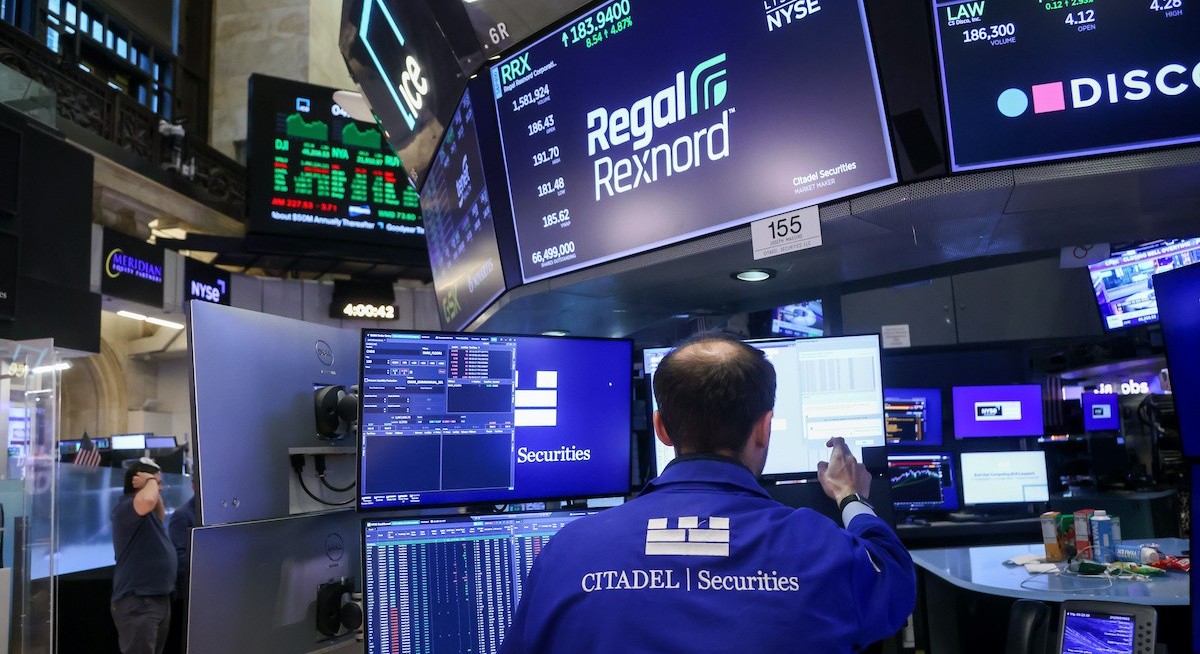


(March 26): Stocks and bonds rose while oil fell as traders weighing the viability of US-Iran ceasefire talks sent markets to a series of swings.
The S&P 500 advanced for a second time this week as US efforts to end the war gathered pace, eclipsing news that Iran rejected a truce proposal and maintained its military strikes. Brent settled around US$102 a barrel. Treasuries pared their March losses. Gold climbed.
President Donald Trump has been pushing for talks with Iran in a bid to halt a conflict that’s approaching the four-week mark. But the initiative has been clouded by uncertainties over the likelihood for a deal.
The White House said the US has been in productive talks with Iran in the last three days. Washington has compiled a plan stipulating the Islamic Republic dismantle its main nuclear facilities and use a reduced missile arsenal in self-defense only, according to people familiar with the matter.
But Tehran is signaling little willingness to compromise. A move by the US to start indirect talks is illogical and not viable at this stage, semi-official Fars news agency reported.
Iran has its own conditions for a ceasefire, state-owned Press TV added, citing an unnamed senior security official. The nation wants guarantees the US and Israel won’t resume their attacks as well as reparations for damages and recognition of its authority over the Strait of Hormuz.
See also: Oil falls, US stock futures climb on Iran hopes
“Markets are positioning for a conflict resolution, despite lingering strategic ambiguity,” said Elias Haddad at Brown Brothers Harriman & Co. “Ultimately, Iran’s response to the US de-escalation pivot will decide whether peak fear is behind us or still ahead.”
“There’s really no way to know at this point what the facts are regarding the state of negotiations, so expect more whipsaw action as things continue to progress,” said Bespoke Investment Group strategists. “While Iran still holds some cards, the chips are stacked heavily against them.”
Geopolitics is still in the driver’s seat, but the bigger story may be the stock market’s resilience, according to Mark Hackett at Nationwide.
See also: S&P 500 slips with oil climbing, mounting private credit concerns
“We haven’t seen a major drawdown, and that suggests retail investors are continuing to buy into weakness,” he said. “If tensions begin to ease, institutions may have to move quickly off the sidelines, and that could create a powerful rebound.”
It’s important for investors to not get overly bearish, especially during geopolitical events, which can change course at any time, according to Paul Stanley at Granite Bay Wealth Management.
“Markets may remain volatile for the next several weeks until earnings season begins in mid-April, as earnings season may help the markets refocus back to fundamentals, the economy and AI,” he said.
Optimism over earnings partly explains the S&P 500’s strength in the face of fighting in the Middle East.
Analysts estimate companies in the gauge will grow their profits by 11.9% in the three months through March, according to data compiled by Bloomberg Intelligence. That compares to a forecast of 10.9% before the war.
Corporate highlights:
- JetBlue Airways Corp is considering the option of selling itself to a competitor, Semafor reported, citing people familiar with the matter.
- Meta Platforms Inc is cutting several hundred jobs as part of a restructuring effort that’s impacting several teams at the company, including sales, recruiting and the Reality Labs hardware division.
- Arm Holdings plc, which made its name licensing technology to semiconductor makers, said it will sell its own chips for the first time — a move forecast to generate about US$15 billion annually within five years.
- Merck & Co agreed to buy Terns Pharmaceuticals Inc for US$6.7 billion, giving the multinational company access to a promising new leukemia treatment as it faces the patent expiration of its bestselling cancer drug.
To stay ahead of Singapore and the region’s corporate and economic trends, click here for Latest Section
What Bloomberg strategists say...“The conditions for a squeeze higher are in place: Sentiment is washed out, hedging remains heavy, systematic and long-short funds have already de-risked, and much of March’s negative technical pressure eased after last Friday’s options expiration.”—Michael Ball, Macro Strategist, Markets Live.
Some of the main moves in markets:
Stocks
- The S&P 500 rose 0.5% as of 4pm New York time
- The Nasdaq 100 rose 0.7%
- The Dow Jones Industrial Average rose 0.7%
Currencies
- The Bloomberg Dollar Spot Index rose 0.2%
- The euro fell 0.4% to US$1.1561
- The British pound fell 0.4% to US$1.3364
- The Japanese yen fell 0.5% to 159.48 per dollar
Cryptocurrencies
- Bitcoin rose 1% to US$70,727.54
- Ether rose 0.9% to US$2,166.95
Bonds
- The yield on 10-year Treasuries declined four basis points to 4.32%
- Germany’s 10-year yield declined seven basis points to 2.96%
- Britain’s 10-year yield declined 12 basis points to 4.84%
Commodities
- West Texas Intermediate crude fell 1.2% to US$91.25 a barrel
- Spot gold rose 1.3% to US$4,535.84 an ounce
Uploaded by Jason Ng




