


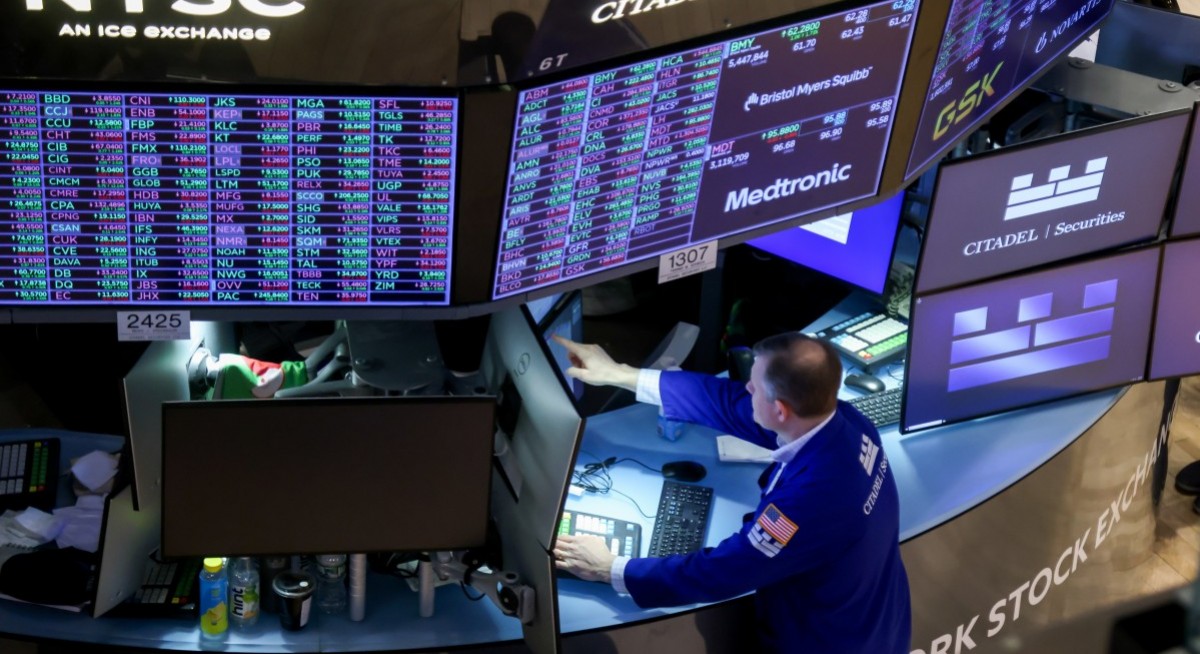


(March 24): A possible de-escalation in the Middle East conflict rippled through markets, with oil falling and stocks rising as President Donald Trump said he’d postpone strikes on Iranian energy infrastructure after what he described as productive talks toward ending hostilities.
Brent dropped over 14% before trimming losses as Iran denied the discussions, but it closed below US$100. The S&P 500 added about 1%. Bond yields and the dollar retreated, with traders backing off some of their more hawkish Federal Reserve bets, pricing in a few basis points of easing this year.
“The market woke up to some potentially good news,” said Chris Larkin at E*Trade from Morgan Stanley. “But follow-through on any relief rally will likely require tangible follow-through on the geopolitical front. We’re still living in a headline-driven market.”
The reversal came after Trump had given Iran until Monday evening New York time to reopen the Strait of Hormuz. The US president said he was offering a five-day reprieve, pointing to new talks with Tehran he believed could broker a deal that would resolve the conflict.
“I just want to have as much oil in the system as possible,” Trump said, adding that prices will “drop like a rock” once a deal is achieved.
The abrupt shift caught traders off guard. There had been little sign of diplomatic progress before the US president’s post.
See also: US stocks drop to six-month low on angst over prolonged war
Trump said a “top person” is representing Iran in the discussions but that the individual was not Supreme Leader Mojtaba Khamenei. He also suggested the US and Iran could jointly control the Strait of Hormuz, adding the key waterway could be open very soon “if it works.”
“Although this change in rhetoric is an encouraging development, we think the clearest indication of meaningful de-escalation will be whether crude oil flows through the Strait of Hormuz are able to recover,” said Brock Weimer at Edward Jones.
The positive reaction in stocks to a delay on strikes was not surprising given how “oversold” the market had been, according to Jay Woods at Freedom Capital Markets.
See also: Micron’s capital spending growth overshadows booming sales
“The conditions for a rally are very high — if geopolitical tensions ease — considering one of the largest short positions on US stocks that we’ve ever seen,” said Citadel Securities’ Scott Rubner.
Entering Monday, more than 50% of stocks in the S&P 500 were “oversold” versus just 5.4% that were “overbought”, according to Bespoke Investment Group. The last time we saw readings this extreme was in April during the tariff tantrum.
“It is impossible to tell whether this signals genuine progress towards an off-ramp for the war, or Trump ‘zig-zagging’ to buy time and keep oil from breaking out towards US$150,” said Krishna Guha at Evercore. “It should though offer at least a brief respite on rates — possibly more.”
While it is not hard to see a no-cut scenario for the Fed in 2026, Guha says he continues to bet cuts are far more likely than a hike.
Uploaded by Isabelle Francis




