


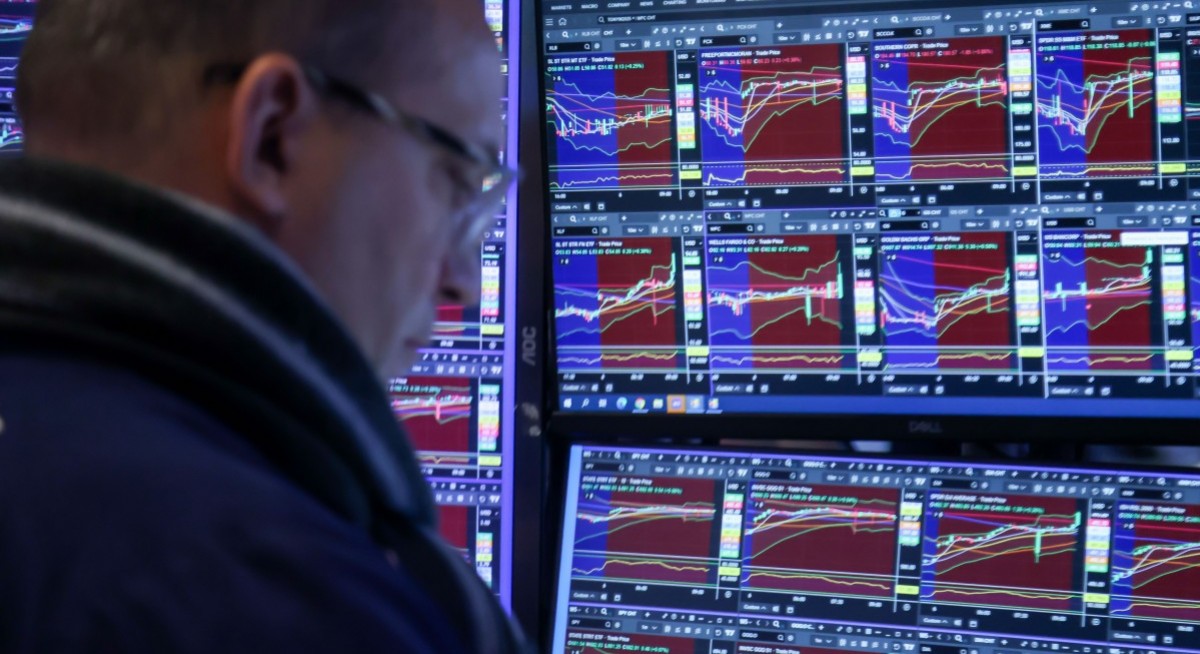


(Feb 19): A rebound in stocks gained traction amid easing jitters around artificial-intelligence disruption while a slew of data showed the US economy is holding up. Treasuries fell for a second straight day. Oil jumped.
About 320 shares in the S&P 500 rose. That’s even as minutes of the last Federal Reserve meeting showed “several” officials suggested the central bank may need to raise rates if inflation stays above their goal. After a rout fueled by AI concerns, investors are seeking signs of a bottom. A gauge of chipmakers climbed 1% and an ETF tracking software firms jumped 1.3%.
While AI fears have pummelled share prices of companies across several industries in recent weeks, several stock pickers have been looking at buying opportunities as they survey the wreckage.
The software stock sell-off is likely “overdone” as that was a largely knee-jerk reaction, with investors trying to figure out the winners and losers from AI, according to Paul Stanley at Granite Bay Wealth Management.
“While AI is very promising, investors should not assume that all companies will win on the AI front,” he said.
Retail traders spent a record amount snapping up software shares on Citadel Securities’ platform, which began tracking the data in 2017. “The magnitude, persistence, and breadth of buying activity have materially exceeded prior peaks,” said Scott Rubner, the firm’s head of equity and equity derivatives strategy.
See also: New York Times stock hits all-time high after Buffett’s blessing
Equities also gained as data showed US industrial production climbed in January by the most in nearly a year. Orders for business equipment rose in December by more than projected while housing starts hit a five-month high.
Meantime, minutes of the Federal Open Market Committee’s Jan 27-28 meeting revealed that a “vast majority of participants judged that downside risks to employment had moderated in recent months while the risk of more persistent inflation remained.”
“From our perspective, the minutes support our view that rate cuts are off the table for the foreseeable future,” said Charlie Ripley at Allianz Investment Management.
See also: Berkshire cuts Amazon stake, makes bet on New York Times
The S&P 500 rose to around 6,880. The yield on 10-year Treasuries climbed two basis points to 4.08%. A US$16 billion ($20.28 billion) sale of 20-year bonds drew lackluster demand. The dollar gained 0.5%.
Oil rallied as traders weighed whether talks between the US and Iran will be enough to avert conflict, following a report that American military intervention could come sooner than expected. Gold hovered near US$5,000.
Despite Wednesday’s equity gains, the S&P 500 has been struggling to breach the 7,000 level since it first made its push toward that level back in October.
“US stock indices have regained their upside momentum,” said David Morrison at Trade Nation. “But will this prove strong enough to keep buyers engaged, and protracted enough to drive the S&P 500 above key resistance at 7,000?”
Bank of America Corp clients dumped US equities last week, with single-stock outflows reaching US$8.3 billion — the third highest since records began in 2008. There were outflows in nine of the 11 sectors, led by financials and consumer staples. Industrials, tech and consumer discretionary also saw large outflows.
Big tech carried the market over the past three years, and sustained broadening in the market’s sector participation is extremely important for the overall health of the bull market, noted Stanley at Granite Bay Wealth Management.
“We view the stock market as currently being in a ‘shaken, not stirred’ state,” said Craig Johnson at Piper Sandler. “Investors need to embrace the rotation as this year shapes up to be more of a ‘stock picker’s market’.”
To stay ahead of Singapore and the region’s corporate and economic trends, click here for Latest Section
Despite the recent breakdown in the “Magnificent Seven” megacaps and software makers, there hasn’t been much evidence of the broader market rolling over, according to Mark Newton at Fundstrat Global Advisors.
“Moreover, sentiment has turned more negative in the last week, given the volatility in equities,” he said. “However, I feel that the resilience of equity indices themselves is truly what to highlight as being a relative positive in 2026.”
As market structure continues to be dominated by Commodity Trading Advisors, fund flows, and an increasing share of retail investors, Chris Senyek at Wolfe Research says volatility is likely to continue in the near-term, especially given the heightened sensitivity of stocks to AI disruption and other headline risk.
“One of the most frequently asked questions we’ve received recently from investors has been: What changes the market’s view on AI disruption?,” he said. “With hyperscaler capital expenditures growing at a breakneck pace, we see bottlenecks in data center buildout likely emerging over the coming quarters.”
Whether these bottlenecks are related to power generation, material costs, or regulatory hurdles, a cut/delay in spending would likely serve as a positive catalyst to areas of the market that have seen downward pressure due to AI concerns, namely software stocks, he said.
“Investors should review current exposures to US technology and communication services and consider hedging or diversifying exposures that are above benchmark levels,” said Ulrike Hoffmann-Burchardi at UBS Global Wealth Management.
In such a case, she says investors should consider diversifying toward preferred areas of the market where we see superior risk-reward, including industrials, banks, healthcare, utilities, and consumer discretionary.
Meantime, the highly-anticipated IPO boom may take a little longer to materialise as the market for new issuances limped into a seasonal quiet period.
Postponed listings from broker Clear Street Group Inc and Blackstone Inc-backed Liftoff Mobile Inc and broader stock market volatility left a sour taste in growth investors’ mouths as the window for initial public offerings before annual audits came to an end last week. The jolt of delayed deals paired with choppy performances across the class of 2026 kept a lid on what’s been the busiest start to a year since the go-go days of 2021.
Also capturing Wall Street’s attention is the upcoming options expiry later this week.
The US listed-options market is set for US$3 trillion of contracts by notional value to roll off on Friday, the largest ever for an expiration date in February, according to data from Citigroup Inc.
Uploaded by Isabelle Francis




