


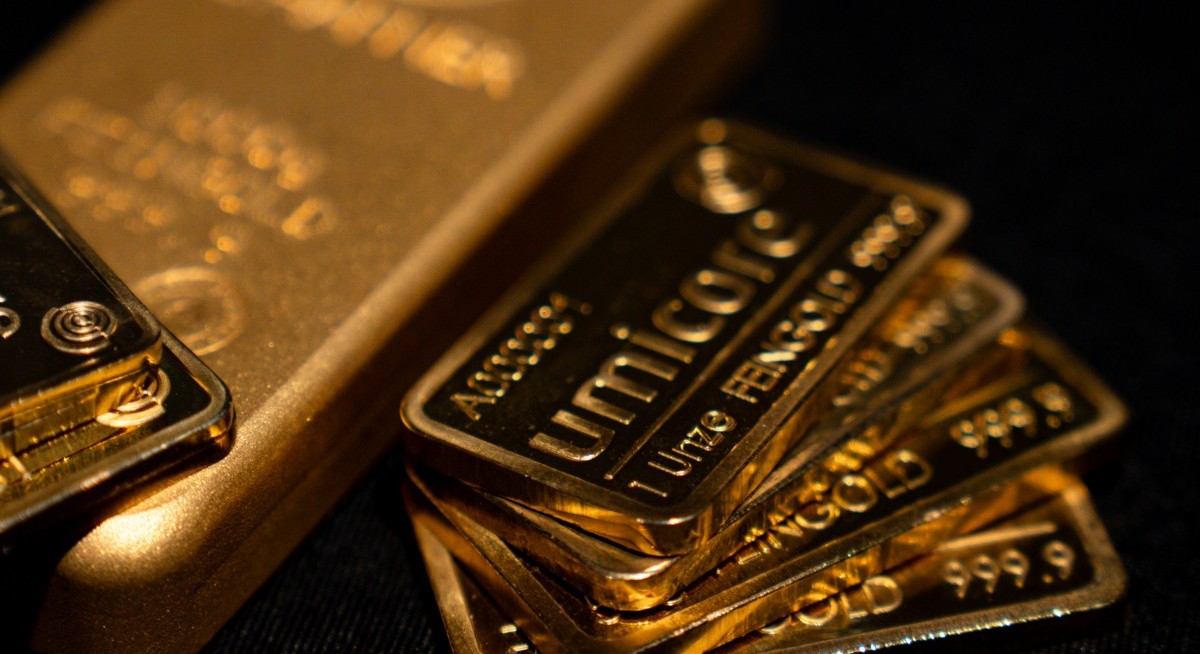


(Feb 3): Stocks climbed after solid factory data bolstered optimism about Corporate America while losses in gold and silver moderated after a dramatic rout. Bonds fell. The dollar saw its biggest two-day gain since April.
The S&P 500 closed near its all-time highs, with economically sensitive sectors leading the way as manufacturing activity expanded the most since 2022. The Russell 2000 index of small firms rose 1%. While gold dropped, it pared an earlier plunge. Oil slumped as geopolitical premiums faded after President Donald Trump said Washington is talking with Iran.
Following nearly a year of contraction, the demand-related spike in factory activity is welcome news. Sustained growth would help provide reassurance that manufacturing is on the mend after languishing the past three years.
“Manufacturing activity seems to be emerging from a cold winter,” said Brian Jacobsen at Annex Wealth Management. “We’ve seem signs of life before, only for manufacturing to dip again, but with new orders growing, maybe this revival is real.”
The report suggests the Federal Reserve could remain on hold for an extended period as the central bank has successfully reinvigorated the manufacturing sector, according to Florian Ielpo at Lombard Odier Asset Management.
“This development is fundamentally positive for corporate earnings, benefiting both US stocks and global equities with exposure to US growth momentum,” he said. “In the near term, it reinforces the ‘Goldilocks’ narrative of solid growth with contained inflation.”
See also: US stocks muted as Warsh nomination continues to weigh on market
Following the manufacturing data, traders slightly reduced bets on rate cuts from the Fed, which last week paused reductions. Money markets show the next cut coming in July.
The Bureau of Labor Statistics will not release the January jobs report on Friday as scheduled due to the partial government shutdown.
The S&P 500 added 0.5%. A gauge of tech megacaps barely budged. Walt Disney Co sank after a tepid forecast. In late hours, Palantir Technologies Inc gave a bullish revenue outlook.
See also: US stocks slide after Trump’s Fed chair pick, hotter PPI data
The yield on 10-year Treasuries rose four basis points to 4.28%. The dollar added 0.3%. Bitcoin climbed about 2%.
The Institute for Supply Management’s manufacturing index rose to 52.6 from 47.9. Readings greater than 50 indicate expansion, and the latest figure topped all projections in a Bloomberg survey of economists.
“The surge in the ISM Manufacturing Index in January suggests that after years of malaise, perhaps the manufacturing sector might be turning a corner,” said Alexandra Brown at Capital Economics. “While the headline index is still at a level that historically has been consistent with weak sub 2% growth, growth has been stronger than implied by the index for the past three years.”
Despite the optimistic survey results, the commentary by survey respondents remained downbeat, she noted.
“The surprisingly strong ISM Manufacturing survey this morning caused a selloff in Treasuries,” said Mark Streiber at FHN Financial. “But featured survey responses and the Institute for Supply Management’s caveat take the wind out of January manufacturing index’s sails.”
To Vail Hartman at BMO Capital Markets, the move in Treasury yields is on the verge of opening the door for buyers to come in.
“We maintain that a move back to last week’s peak of 4.30% will be an attractive entry point to bring in sidelined investors awaiting a dip-buying opportunity,” he said.
To stay ahead of Singapore and the region’s corporate and economic trends, click here for Latest Section
Wall Street also kept a close eye on precious metals, which clawed back some losses after another heavy selloff in Asian trading hours, as traders took stock of the abrupt unwinding of a record-breaking rally.
“Commodity price action is more about positioning shakeout of weak or leveraged hands than a change in the fundamental story,” said Darrell Cronk at Wells Fargo. “It’s a market to watch for vulnerabilities and extremes.”
Gold and silver plummeted Friday after Trump said he’d nominate Kevin Warsh to succeed Jerome Powell as Fed chair. Markets see Warsh as more inclined than other candidates to fight against rising price pressures. That stance may translate into monetary policy aiding the dollar, eroding the so-called debasement trade that had caused gold to soar.
“Hawkish perceptions on Warsh appointment still linger,” said Cronk. “We expect Warsh to support a more dovish stance with difficulty shrinking the Fed balance sheet of any materiality. We still believe two interest-rate cuts for 2026 are in the offing.”
Fed Bank of Atlanta President Raphael Bostic says he didn’t project any interest-rate cuts for 2026.
“For me, I didn’t have any,” he said at an event hosted by the Rotary Club of Atlanta, referring to Fed’s projections published in December. “We have so much momentum in the economy that we need to keep our policy rate in a mildly restrictive stance.”'
“The return of ‘Buy America’ sentiment is poised to continue weighing on precious metals’ performance on balance,” said Jose Torres at Interactive Brokers.
He bets that gold and silver are likely to decline further following a ferocious rally that was initially sparked by fundamentals but has since detached from the driving themes of “Sell America” and a focus on relatively accommodative global central banks that enable excessive fiscal deficits and generate currency debasement.
The dramatic movement in precious metals served as a reminder that emotion remains a driver of investor decision making, according to Mark Hackett at Nationwide. He notes that volatility is showing up in some surprising places at the same time that gold and silver are behaving more like “speculative trades” than safe havens.
“The same investors who chased Bitcoin last year rotated into precious metals looking for the next big return, and now those trades are unwinding,” he said. “It’s a barbell market — sharp moves at the extremes — while diversified equity portfolios are still holding up, which tells you this is more about positioning and sentiment than a broad move away from risk.”
With earnings season is in full swing, Jason Pride and Michael Reynolds at Glenmede noted that after strong earnings results in 2025, that momentum is expected to continue into 2026 for most equity classes.
Robust earnings and well behaved inflation should counter geopolitical and other risks, according to JPMorgan Chase & Co strategists led by Mislav Matejka, who see more broadening in equities this year, with a constructive view on cyclicals, value and small caps.
Corporate America’s earnings outlook for 2026 remains solid, according to Goldman Sachs Group Inc strategists. Of the S&P 500 members that have posted 2026 earnings-per-share forecasts, more than half have guided above analyst expectations, exceeding a historical average of 40%, strategist Ben Snider said.
Morgan Stanley strategists led by Michael Wilson see an opportunity to add exposure to consumer discretionary stocks trading at cheaper prices, saying they’re poised for a rebound amid healthy household balance-sheets.
If history is any guide, the S&P 500’s advance last month implies a high likelihood that US stocks are in for another positive year. Since 1945, whenever the gauge rose in January, it posted an average return of 16.2% for the full year, said Sam Stovall at CFRA Research, citing the Stock Trader’s Almanac.
And since 1990, he noted that following a positive January, the S&P 500 recorded a 12-month price gain of 13.2% — while the top three sectors outpaced the market. Last month, consumer staples, energy, and industrials led the way.
“The S&P 500 closed January with a modest 1.4% gain, which carries bullish implications for the rest of the year. However, mid-term election years are often less robust, supporting our own modest expectations for a ‘rotational bull market, with a lowercase ‘b’,” said Craig Johnson at Piper Sandler.
Johnson noted that while February brings a seasonal slowdown in market returns, investors should not mistake a seasonal pause for a change in trend.
“The major indices are likely to ‘back and fill’ around their 50-day moving averages as this ‘rotational bull market’ remains intact,” he added.
Uploaded by Isabelle Francis




