


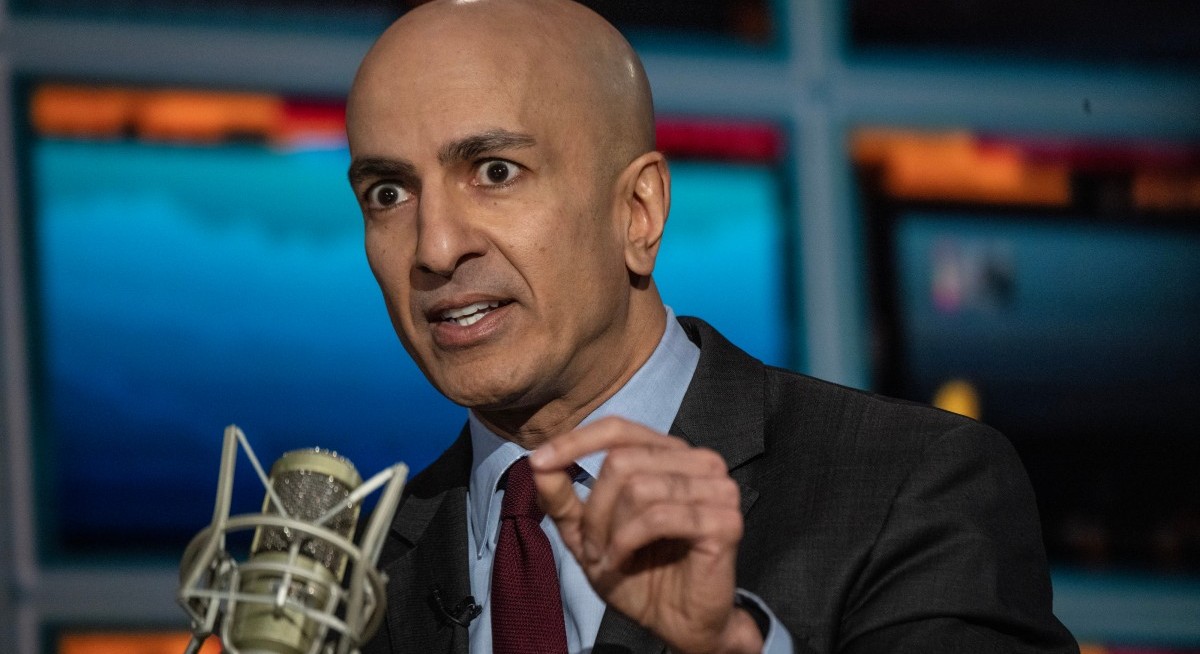


(May 8): Federal Reserve Bank of Minneapolis President Neel Kashkari said the conflict in the Middle East has added uncertainty to the outlook for interest rates.
“Given the uncertainty around the Iran war, I actually don’t know what the future holds,” Kashkari said Thursday during an event in Marquette, Michigan. “If the Strait of Hormuz is closed for an extended period of time, it may well be that the next move might need to be up in interest rates.”
Kashkari was one of the three policymakers who dissented at last week’s meeting in opposition to wording that suggested the Fed’s next move was likely to be a cut. In an essay published last week, he said he backed the decision to hold rates steady but thought officials should signal that the next rate action could be either a cut or a hike depending on what happens with the economy.
“We voted against the forward guidance because we just didn’t want to signal that the next move was likely down,” he said of the dissents at the event Thursday.
The quasi closure of the Straight of Hormuz since the US and Israel attacked Iran at the end of February has caused an oil shock and sent energy prices soaring around the world.
After five years of inflation running above the US central banks’ target, Kashkari said he’s “very cautious” about where prices are headed.
See also: US productivity growth cools on rebound in hours worked
“We cannot let elevated inflation be the new normal,” he said.
Uploaded by Isabelle Francis




