




While no immediate duties were announced, the government floated the possibility of future ones. The initial tariff level will remain zero for 18 months, increasing on June 23, 2027 “to a rate to be announced not fewer than 30 days prior to that date”, the USTR wrote in a Federal Register notice.
“China’s targeting of the semiconductor industry for dominance is unreasonable and burdens or restricts US commerce and thus is actionable,” the notice said.
Liu Pengyu, a spokesperson at the Chinese Embassy in Washington, responded to the US notice by saying China remained opposed to the “abuse of tariffs” and asserting that global semiconductor supply chains are shaped by market dynamics and business choice.
“To politicise, instrumentalise and weaponise trade and tech issues and destabilise the global industrial and supply chains will benefit no one and will eventually backfire,” he said in an emailed statement. “We will take all measures necessary to firmly safeguard our lawful rights and interests.”
See also: Nvidia-led boom set to turn chips into trillion-dollar industry
The decision to hold off on imposing new tariffs is the latest signal that the Trump administration is seeking to stabilise ties with China and solidify the deal that Trump and Xi struck in October in South Korea. Under that agreement, Washington and Beijing agreed to stave off astronomical tariffs and relax export restrictions on technology and critical minerals.
The USTR was legally required to publish the results of the 301 investigation, which began last December, within 12 months of being initiated. Last year, Biden ordered the tariff rate on Chinese semiconductors to double to 50% by the end of 2025 under a separate Section 301 probe. By preserving the option to further hike the duties, Trump is creating another potential point of leverage should his tariff deal with Xi fall apart.
“The US Trade Representative will continue to monitor the efficacy of this action, the progress made towards resolution of this matter, and the need for any additional action,” the notice said.
See also: TikTok hit by EU ultimatum over addictive design dangers
The office found that China “has employed increasingly aggressive and sweeping non-market policies” to bolster its semiconductor industry and moved to create foreign dependency on its products in a way that disadvantages US commerce.
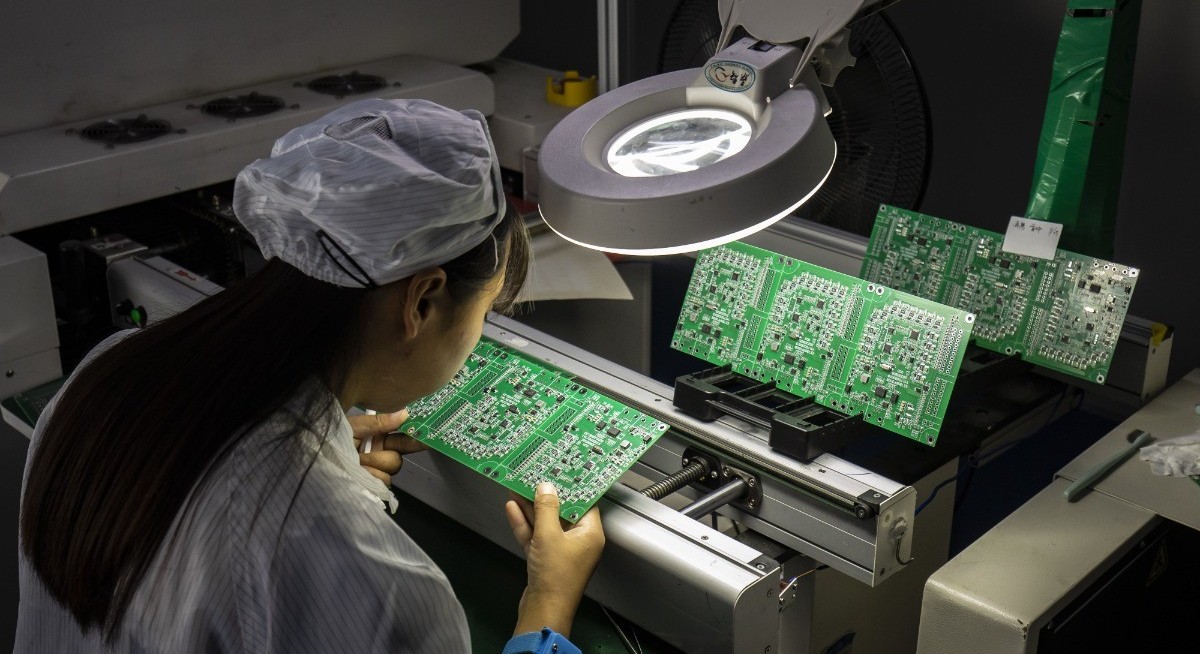
Tuesday’s announcement centres on so-called foundational chips — also known as legacy or mature-node semiconductors — made in China. While not as advanced as the chips driving artificial intelligence, the older technology is ubiquitous across a wide range of applications including autos, airplanes, medical devices and the telecommunications industry.
The products covered by potential new duties include diodes, transistors, raw silicon, electronic integrated circuits and other inputs. As of now, the would not apply to finished products, such as computers and smartphones, that contain Chinese chips.
US and European authorities have grown increasingly concerned that China holds too much sway over the legacy chip supply chain. Those concerns lie at the centre of a bitter dispute between the Netherlands and China over Nexperia Holding BV, a Chinese-owned chipmaker that provides critical components for the auto industry and that Dutch authorities briefly attempted to seize on national security grounds in October.
Uploaded by Tham Yek Lee




