


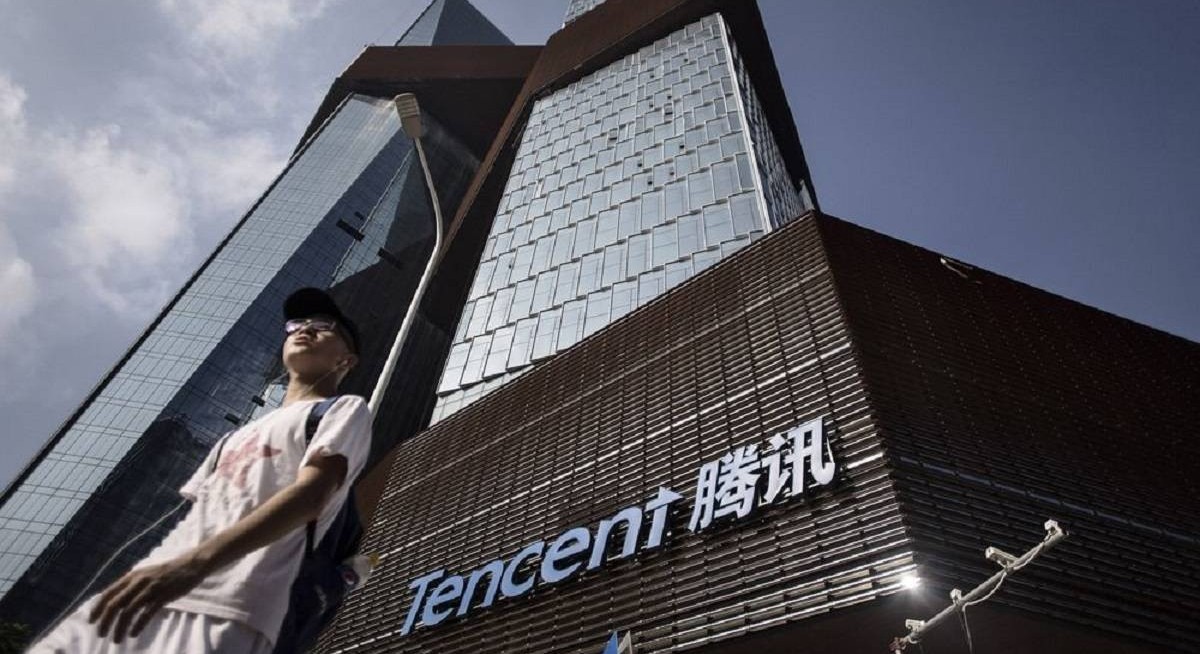


(March 19): Tencent Holdings Ltd’s shares plunged after the company declared plans to curtail buy-backs and failed to deliver a clearer vision of how it will profit off China’s new-found love affair with agentic artificial intelligence (AI).
Investors also fretted about margins after China’s most valuable company said it plans to at least double investments in AI to more than CNY36 billion (US$5.2 billion or $6.7 billion) in 2026 — a big gamble on OpenClaw-style agents to try and catch up with Alibaba Group Holding Ltd and ByteDance Ltd in an increasingly combative arena.
Tencent plans to bankroll that outlay by curtailing the aggressive buy-backs that have helped buoy its stock in recent years, as well as from growth of its gaming and ad businesses. Tencent’s revenue grew 13% in the December quarter — its fifth straight period of double-digit growth.
Those numbers failed to impress investors that had boosted Tencent’s market value by some US$30 billion over the past week, betting on its ability to capitalise on a nationwide enthusiasm for agentic AI. Executives didn’t provide concrete investment targets or specific products to whet that appetite. The stock slid as much as 6.5% in Hong Kong, the biggest intraday fall in almost a year.
“The market is in a mood to punish the big AI capex spenders unless there is a good reason not to,” said James Cordwell, an analyst with Rothschild & Co Redburn. “Warning that margins could be down next year and the buy-back curtailed, without any definitive answer as to how returns will be earned on the capex, is certainly not going to be good enough to earn a free pass.”
Tencent is trying to capture a shift to AI agents that could reshape leadership of the world’s biggest internet arena. The Shenzhen-based company has in recent days rolled out a slew of products capitalising on the viral OpenClaw framework, and it is developing a WeChat-native AI agent designed to help 1.4 billion users automate tasks from hailing a ride to booking hotels.
See also: Xiaomi shares jump on AI model buzz, upcoming SU7 model facelift
It is considered well positioned to build agentic AI because it sits on a trove of user data and controls access to a universe of Chinese apps via WeChat. Such services also tend to perform best when granted access to users’ information, like message logs. Tencent doesn’t have a timeframe for launching that feature, executives said on a post-earnings call on Wednesday.
The initiatives mark Tencent’s most serious push into generative AI since an initial post-ChatGPT wave. On Wednesday, the company said it will reduce the scale of share buy-backs in 2026 to help bankroll spending on new AI products, without elaborating. Investments in the foundational Hunyuan model and ChatGPT-style Yuanbao came to about CNY18 billion in 2025, executives said on the call.
In a sign of Tencent’s renewed focus, the normally publicity-shy Ma used his own WeChat feed to promote OpenClaw-inspired agentic tools, according to local media reports.
See also: US tells companies to secure Microsoft system after Stryker hack

Revenue jumped to CNY194.4 billion for the three months ended December, just edging past projections after gaming revenue surpassed expectations. Net income rose a better-than-anticipated 14%.
OpenClaw “helps us consolidate our services, and functions”, founder Pony Ma told reporters on a call after results surfaced. “It provides great inspiration for the development of our WeChat-based ecosystem.”
While Tencent has stopped short of setting lofty targets for AI infrastructure and talent acquisition, some investors argue that its track record for delivering consumer products justifies a rerating of its shares, which have lagged Alibaba’s since last year. Since it released agentic AI services QClaw and WorkBuddy this month, Tencent has gained more market value than any other Chinese firm.
More broadly, it’s playing catch-up as it seeks to challenge a growing list of low-cost, efficient open-source AI models from agile newcomers like DeepSeek. That effort is now led by former OpenAI researcher Yao Shunyu, who was appointed as the chief AI scientist in December. Tencent will release its next-generation Hunyuan model in April, after restructuring its research team to improve quality of training data.
“Tencent’s strength lies in Weixin’s (WeChat’s) entrenched role across communication, discovery, payment, and fulfilment,” JPMorgan Chase & Co analysts including Alex Yao wrote in a note last week. That’s a high bar for rivals, he added.
The company is also keen to buy more AI accelerators, including foreign chips “which are now becoming available again”. That may be a reference to Nvidia Corp, which said it’s revving up production of H200s for the Chinese market.
To stay ahead of Singapore and the region’s corporate and economic trends, click here for Latest Section
Tencent’s overall capital expenditure rose 3.2% to CNY79.20 billion in 2025 — still a fraction of the roughly US$650 billion that US hyperscalers are ploughing into AI.
Beyond AI, video gaming remains Tencent’s primary engine, with its international division growing at a significantly faster clip. Last year, the company scored premium hits like Dying Light: The Beast, while mobile mainstays such as Honor of Kings continue to drive player spending.
WeChat serves as the glue that ties the enterprise together. Executives hope that by integrating agentic services, the ubiquitous app will continue to function as the gateway for users in the AI era.
Last week, Apple Inc lowered the fees it collects from app developers in China — including a reduction in the rate for WeChat mini-programmes to 12% from 15% — in response to potential antitrust intervention from Beijing’s regulators.
Analysts estimate the reduced fees will boost the company’s earnings by a low-single-digit percentage this year. It’s a positive first step and any incremental gains could go towards new AI investment, chief strategy officer James Mitchell said.
All three of Tencent’s business units have “compelling AI stories”, said Cordwell of Rothschild & Co Redburn. The advent of OpenClaw handed the company a “get out of jail free card in the Chinese AI battle against the best model (Qwen) and the most popular chatbot (Doubao)”, he added. “We would certainly be recommending taking advantage of any weakness.”
Uploaded by Tham Yek Lee




