




“There’s going to be issues around semiconductor supplies, and it’s going to affect everyone,” Wonjin Lee, the president and head of global marketing, said in an interview. “Prices are going up even as we speak. Obviously, we don’t want to convey that burden to the consumers, but we are going to be at a point where we have to actually consider repricing our products.”
Lee spoke from the CES in Las Vegas, where Samsung is showing off its vast range of electronic products, from tiny wireless earbuds to 130-inch wall-dominating TVs. Like most consumer-facing brands at the show, Samsung is pitching its vision of a more interconnected, artificial intelligence (AI)-enhanced line-up of products — and confronting the rising cost of production.
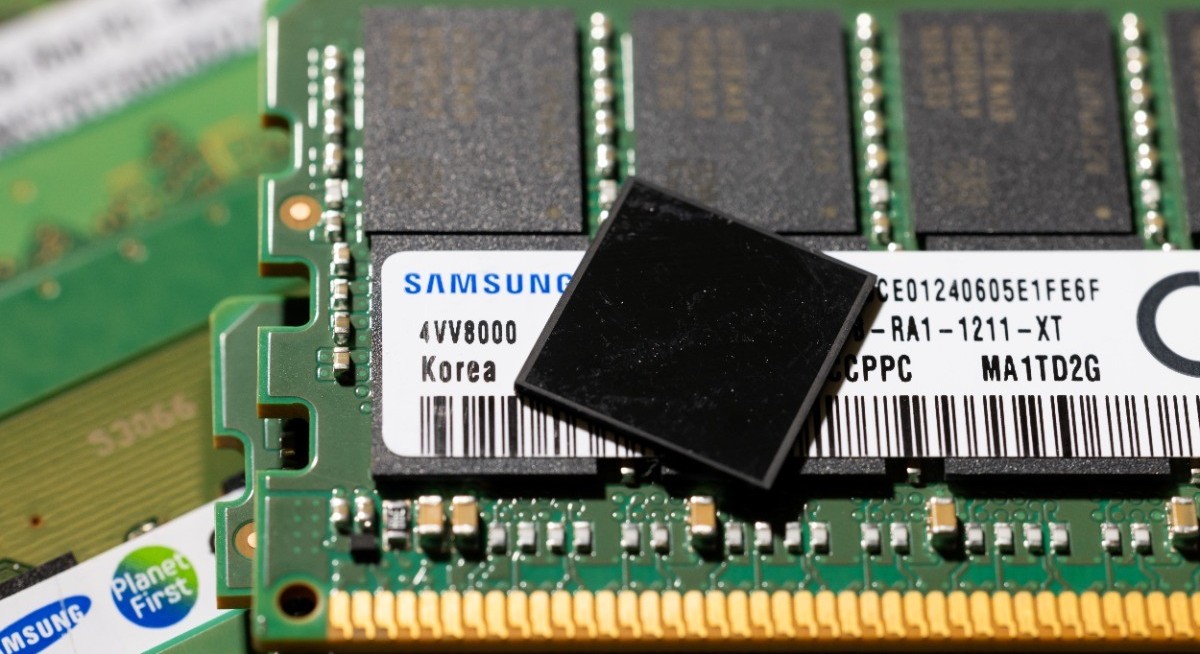
The AI data centre buildout boom has brought about unprecedented demand for high-bandwidth memory, a lucrative product that’s lifted Samsung and fellow memory maker SK Hynix Inc’s stock prices to new highs, and constrained supply lines for other uses.
Major brands including Dell Technologies Inc and Xiaomi Corp have warned about potential price increases, while others including Lenovo Group Ltd last year began stockpiling memory chips in anticipation. Counterpoint Research in November forecast a 50% price rise for memory modules through the second quarter of this year.
See also: Nvidia-led boom set to turn chips into trillion-dollar industry
Samsung is better positioned than competitors who aren’t able to manufacture memory for their own products, and Lee sees the company outpacing the broader market.
“We are more optimistic about the outlook of 2026 than what we have experienced last year,” he said. “Mobile phones, with the emergence of AI, I think people are looking at upgrading their products to be able to leverage the new technologies.”
Uploaded by Tham Yek Lee




